
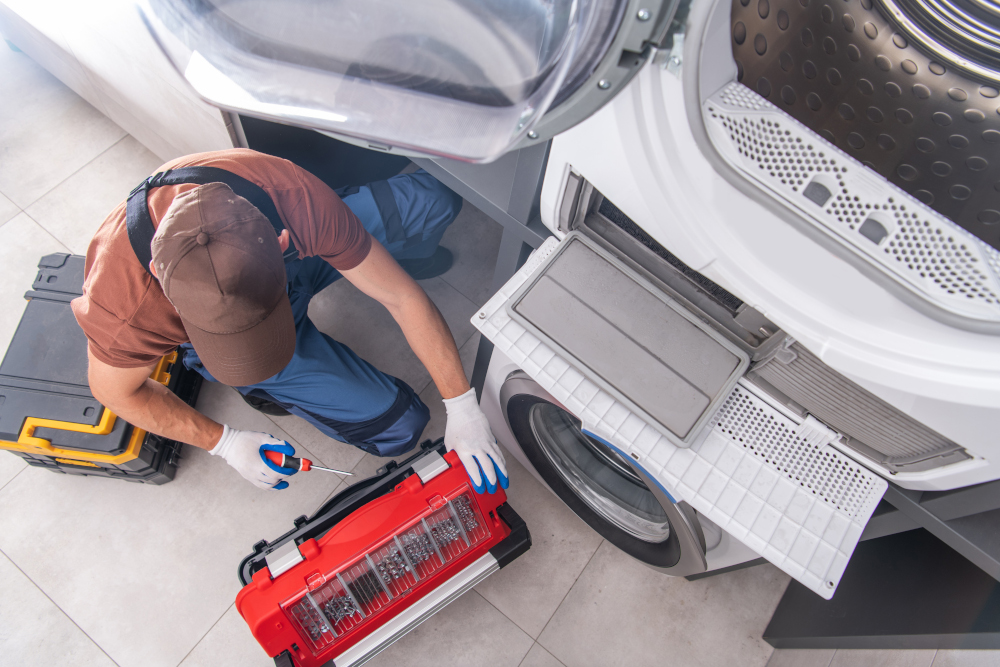
A little movement during the spin cycle is normal, but a washer that walks across the floor or bangs loudly needs attention. If your washing machine is shaking violently in Stittsville, first redistribute the laundry, then check that the washer is level and all four feet rest firmly on the floor.
A washer that lurches with every spin can be unsettling. An overloaded or uneven load is a common cause, and a few careful checks can help narrow it down. Balance the laundry, check the washer’s level from side to side and front to back, and adjust its leveling legs if needed. If it still shakes, the problem may be inside the washer rather than under it.
Key Takeaways
- A little movement during the spin cycle can be normal, but walking, banging, or loud vibration calls for a closer look.
- Redistribute an overloaded or uneven load before adjusting the washer’s feet.
- Use a level to check the washer from side to side and front to back, then adjust its legs until all four corners sit firmly.
- If shaking continues after these checks, or the drum feels loose, the problem may need professional washer repair.
Adjusting leveling legs
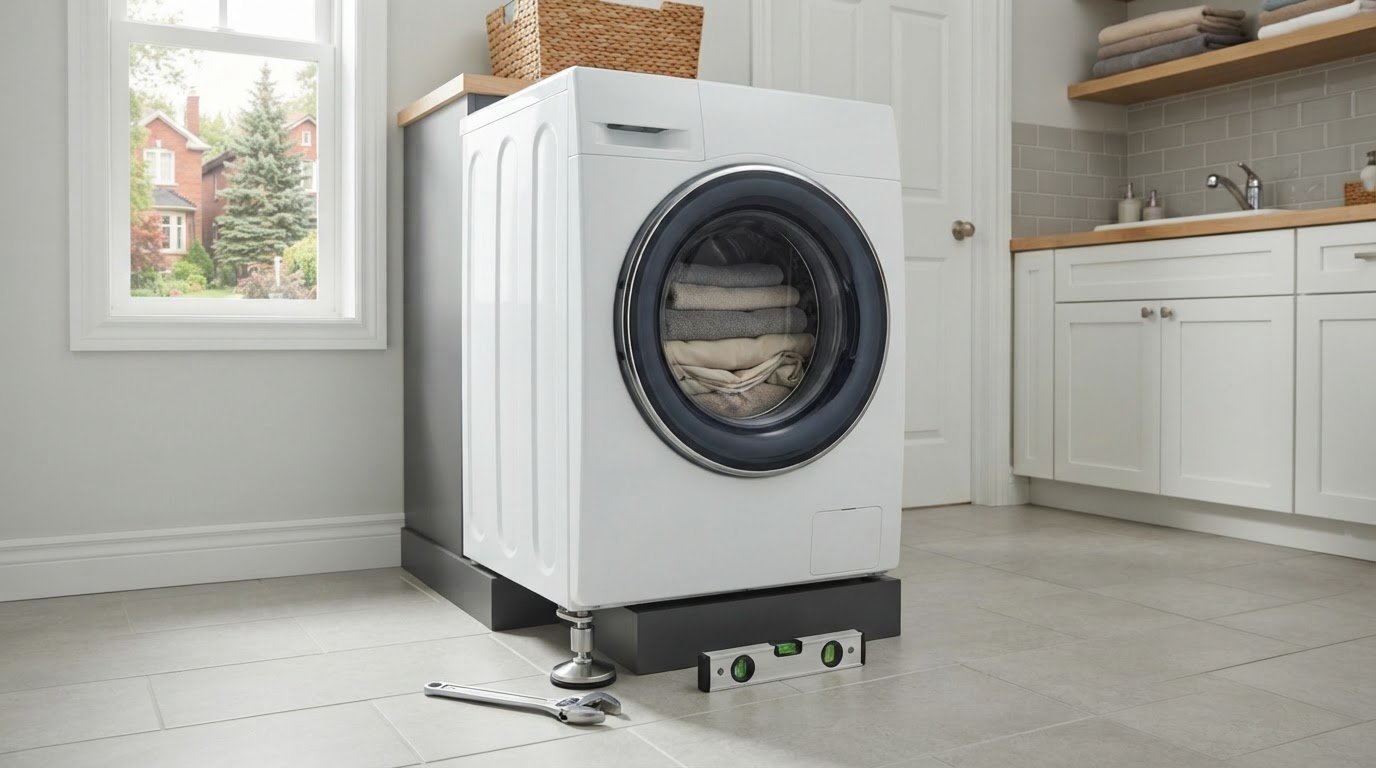
To fix a washing machine shaking violently in Stittsville, check whether all four feet touch the floor. Adjust the feet, then use a level to check the washer’s position.
-
Adjust the levelling legs
Stop the washer before adjusting its feet. Use a wrench or pliers to raise or lower each leg until it touches the floor. Make small adjustments, then gently press opposite corners to check for rocking. If a corner lifts, adjust that leg again. Each foot needs firm support, or the washer may shift as the drum spins.
-
Reduce shaking during the spin cycle
After adjusting the legs, test the washer’s stability. Gently press each top corner; the cabinet should stay steady rather than rock. A firm base helps limit movement as the drum spins, but adjusting the legs won’t correct every source of vibration. If your washing machine is still shaking violently in Stittsville while level, another cause may need attention.
- Choose a suitable tool for the adjustment. A 9/16-inch or 14-mm open-end wrench, or an adjustable wrench, can turn the feet. Turn each leg only as needed, then recheck the washer’s contact with the floor. If the legs have lock nuts, tighten them against the cabinet once the washer sits firmly on all four corners. This helps keep the settings in place.
- Check the adjustment with a level and repeat if needed. Place it across the washer, then turn it front to back to check both directions. Once the washer is level and steady, run a spin cycle and watch its movement. Stop using it if it walks across the floor. A loose basket or drum, or suspected internal trouble, needs professional service rather than repeated leg adjustments.
Checking whether a washer is level
Use a level across the washer’s top to check it from side to side and front to back. For shipping bolts, suspension rods, and shock absorbers, follow the manufacturer’s instructions and inspect only accessible areas. Have a service professional assess suspected internal problems.
- Place a level on a flat section of the washer’s top. Check it from side to side, then turn it front to back. Both checks matter: a washer can appear level in one direction while tilting in the other. Keep the level steady and note which edge sits lower before adjusting the feet.
- Observe the washer’s position while it runs, from a safe distance. If it walks across the floor, stop using it until it has been checked. Movement can damage the hoses and floor. Never try to hold the machine in place during a spin cycle, and check its position only after it has stopped.
- If the washer was recently installed, check the rear for shipping bolts. Remove them before use to prevent serious vibration, noise, and possible permanent damage. Follow the washer’s instructions to identify and remove them. Don’t mistake ordinary cabinet fasteners for shipping bolts, and don’t force a bolt that won’t turn.
- For guidance on suspension rods and shock absorbers, consult the washer’s manual. Don’t open panels or reach inside to inspect internal parts. Worn shock absorbers can leave the basket or drum off-balance, but a service professional should assess suspected internal problems. A loose basket or drum also needs professional attention.
- After checking the level and accessible installation details, run a spin cycle and watch from a safe distance. Note whether the washer stays in place, starts moving, or makes a thumping or loud vibrating sound. If it shifts, stop the cycle and recheck its position. Continued movement suggests a problem beyond a simple visual level check.
Treat continued walking as a clear signal to stop using the washer. Don’t run another cycle or keep testing it while it remains unchecked. Walking across the floor can damage the hoses and floor, so leave the washer unused until it has been assessed.
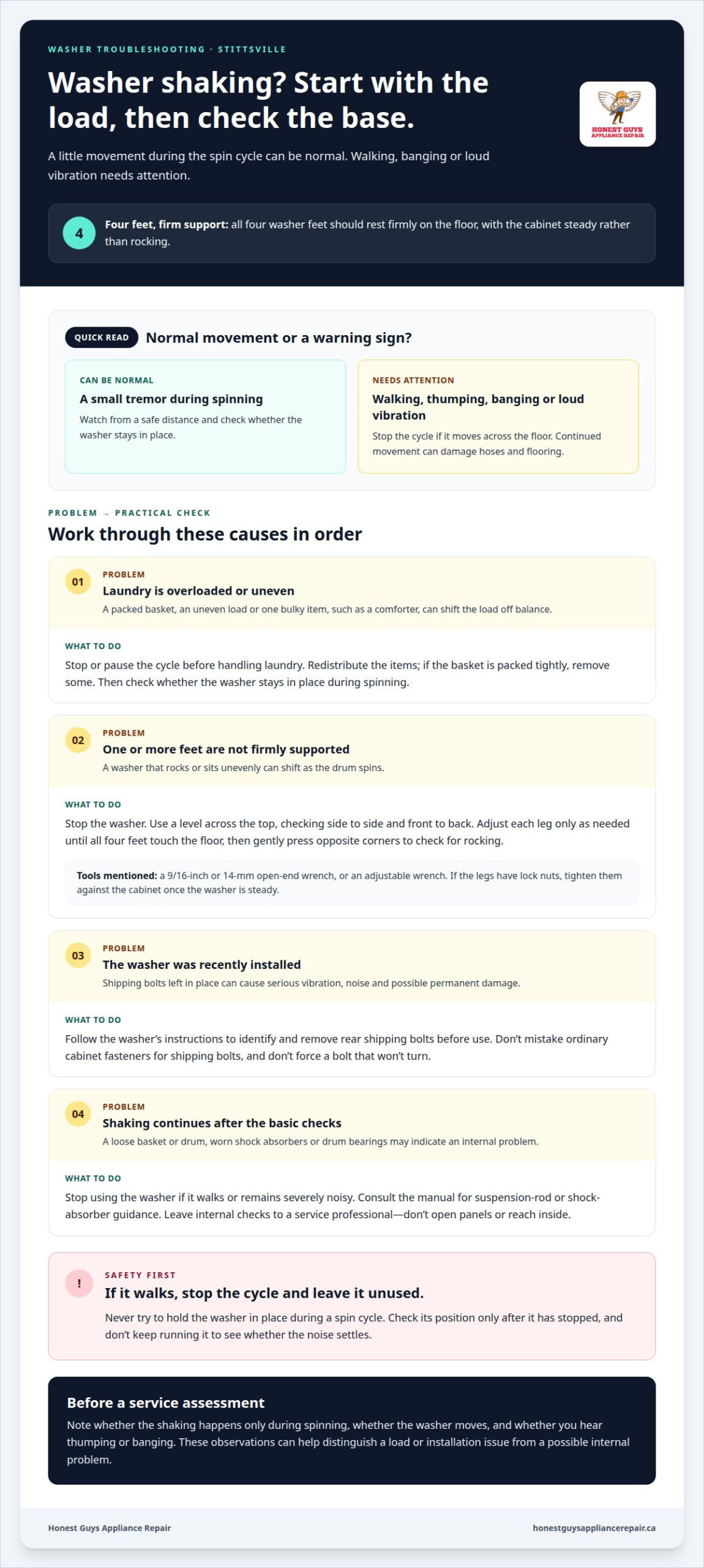
Normal versus excessive washer shaking
A small amount of movement during the spin cycle is normal. Walking, thumping, banging, or loud vibration signals a problem that needs attention.
-
Assess the severity of the shaking
Watch the washer during a spin cycle from a safe distance. Note whether it stays in place or moves across the floor. A slight tremor is different from repeated thumping or loud vibration. Stop the cycle if the washer walks, since movement can damage its hoses and the floor. Don’t keep running it to see if the noise settles.
- Compare the sound and movement with the laundry load. A little shaking can occur during spinning, but banging or strong vibration shouldn’t be dismissed as normal. If the washer started shaking after installation, check whether its shipping bolts were removed. Remove those bolts before use to prevent serious vibration, noise, and possible permanent damage.
-
Decide whether to keep using or replace the washer
Stop using a washer that shakes violently or walks across the floor. Check the load and level only after the cycle stops; continued movement can damage hoses and flooring. If the washer remains noisy after these checks, arrange a professional assessment. Worn shock absorbers or drum bearings can leave the basket or drum off-balance.
- Base a repair-or-replace decision on the washer’s condition and the fault. A correctable load imbalance or leveling problem calls for a practical first step, not automatic replacement. Repeated severe shaking, a loose drum, or suspected internal damage needs diagnosis. Consider replacement if the washer has recurring problems or cannot operate reliably after the cause is identified.
- Before arranging service, note what happens: whether the shaking occurs only during spinning, whether the washer moves, and whether you hear thumping or banging. Share these observations with the repair professional. They can help distinguish a load or installation issue from worn suspension parts or drum bearings, so the next step targets the likely cause.
Overloaded or unbalanced laundry loads
An overfilled basket can shake as the washer spins. A single bulky item, such as a comforter, can also shift the load off balance.
-
Check for an overloaded laundry load
Pause the cycle before rearranging the laundry. If the basket is packed tightly, remove some items and set them aside. An overfilled washer may not move clothes evenly during spinning, which can cause shaking. Follow the washer’s loading guidance and leave enough room for the items to move freely. Don’t force extra laundry into a full basket.
-
Balance the laundry load
Spread the remaining items around the basket instead of leaving them piled on one side. A heavy comforter can gather into a dense lump as it absorbs water. Add other suitable laundry to distribute the weight, or wash the bulky item separately if it keeps bunching. Restart the cycle and listen for banging as the spin begins.
- Notice which items are in the load when the shaking starts. A large, absorbent comforter can hold a lot of water and clump together, unlike a mixed load of smaller garments. If the washer bangs only with that item, redistribute it before assuming the machine is faulty. Keep the basket within the washer’s loading guidance.
- Stop the cycle if the washer starts thumping or moving. Wait until it stops before opening the door or adjusting the laundry. Separate items that have twisted together, then spread them around the basket. Remove some if the load looks crowded. Restart only when the clothes are more evenly arranged, and watch whether the washer stays in place.
- Pay attention to whether correcting the load changes the result. If a smaller, evenly spread load spins without banging, the load likely contributed to the shaking. If severe movement continues despite redistributing clothes, the cause may not be laundry balance. For ongoing shaking, arrange professional washer repair rather than repeatedly running a violent spin cycle.
Washing one large, bulky item or a very absorbent item such as a comforter can unbalance a washer. An overfilled basket can also cause shaking. Removing some items and spreading out the remaining load may help.
Honest Guys Appliance Repair: Dryer Repair
Honest Guys Appliance Repair provides dryer repair for homeowners dealing with a dryer fault. A shaking washer is a separate issue, and the load and leveling checks above can help show whether the movement relates to the laundry or a continuing problem. If the washer still moves or bangs, stop the cycle instead of continuing to run it.
A dryer making unusual noises needs its own assessment. Honest Guys Appliance Repair also repairs fridges, ovens, and stoves. For other appliance concerns, describe what the machine does and when the problem occurs.
Contact Honest Guys Appliance Repair to discuss Dryer Repair.
Choose a clear next step for your washer
If you’re looking for a fix for a washing machine shaking violently in Stittsville, explain what you observed. Note whether the shaking happens only during the spin cycle, whether the washer moves, and whether the load affects it. These details can help identify the next step when basic adjustments haven’t stopped the movement.
Honest Guys Appliance Repair provides appliance repair, including dryer, fridge, and oven repair. If your washer still shakes or bangs, contact the team to discuss the issue and the appropriate next step. Don’t keep running a machine that moves violently.
Contact Honest Guys Appliance Repair to talk about your appliance concern. A steady, informed next step can help you get back to a more comfortable laundry routine.
Frequently Asked Questions
Is it normal for a washing machine to shake?
A slight tremor during spinning can be normal, but loud banging or movement across the floor is not. Notice whether the shaking happens with every load or only with certain laundry. If it starts suddenly, becomes stronger, or continues with a small, evenly arranged load, stop the cycle and investigate rather than treating it as routine movement.
How do I level a washing machine and adjust its feet?
Check your washer’s manual for instructions on adjusting the feet, then place a level across the top in both directions. Turn the feet gradually, rechecking the level and gently pressing the cabinet to detect rocking. Aim for firm floor contact at every corner. If the feet have lock nuts, tighten them against the cabinet after adjustment.
How do I check whether a washer is overloaded or unbalanced?
Pause the washer and check for a tightly packed basket or clothes gathered heavily on one side. Compare the load with the washer’s loading guidance and remove items if the basket looks crowded. Untangle clumped garments and spread them around the basket. If shaking happens only with one bulky item, note that pattern and try a smaller, balanced load.