
Don’t keep running a dryer that won’t spin. If your dryer stopped spinning in Barrhaven, leave it off until the fault is repaired; a stalled drum can leave clothes damp, strain the appliance and create a safety risk. Start with simple checks of the power and circuit breaker before considering a belt or belt-switch problem.
A dryer stopped spinning in Barrhaven can disrupt laundry plans, but the cause isn’t always obvious. You can observe some clues safely, but opening the dryer or testing electrical parts can be hazardous without the right skills.
This guide explains how to check the power safely, what drum movement may indicate about the belt, and when to stop troubleshooting. You’ll also learn what a belt switch does and when professional diagnosis can help you decide what to do next.
Key Takeaways
- Leave a dryer switched off if its drum won’t turn; continued use can strain the appliance and create a safety risk.
- Check that the power cord is seated and inspect the breaker, but leave outlet repairs to an electrician.
- A drum that turns freely by hand can be a clue to a problem; avoid forcing it or opening the dryer to investigate.
- Listen for unusual sounds and note whether the motor runs, since these clues can help distinguish a belt issue from a control or motor fault.
How do I know if my dryer belt is broken?
- Switch off and unplug the dryer before checking the drum. Turn it gently by hand without forcing it. If it rotates unusually freely, the belt may be broken or out of position. If it resists movement, there may be a jam or mechanical fault. This check offers a clue, not a diagnosis.
- Listen when you press Start, then stop testing if the drum stays still. A motor hum without rotation can indicate a belt, motor or drum problem. Loud thumping or squealing may point to worn drum rollers, glides, a belt or an idler pulley. Note the sound and when it occurs.
- Check whether the push-to-start button and control panel respond, such as a display or indicator changing. If the dryer does nothing, a faulty switch or control could interrupt the start signal. A control board supplies power to components, including the motor, so a board fault can also prevent spinning. Don’t open the panel to test live voltage.
- Consider the timer type. A mechanical timer or electronic control can fail and stop current from reaching the drive motor. On many dryers, a technician can check continuity through the timer wires supplying the motor between the black and light blue wires. That electrical test requires proper tools and access; leave it to a trained repair professional.
- Record whether the drum stopped mid-cycle, whether the motor ran, and whether you heard an unusual noise. These details can help distinguish a broken belt from a failed motor, seized drum, worn rollers or control fault. Electric dryers have different component layouts, so don’t remove panels or move wiring based on instructions for another model. If basic observations don’t reveal the cause, appliance repair can identify the faulty part safely.
Can you still use a dryer if it doesn’t spin?
No. Keep a dryer with a stationary drum switched off until the fault is repaired. Use these steps to protect the appliance and decide what to do next.
-
Take Safety Precautions
Switch off and unplug the dryer before inspecting the drum or opening an access panel. Don’t touch wiring, test a live control board or attempt repairs while the appliance is connected to power. If the drum is difficult to turn by hand, stop; it may be seized and needs diagnosis. The key precaution is to disconnect power before inspection and leave electrical testing to a technician.
-
Decide Whether to Keep Using It
Keep the dryer off if its drum won’t rotate, even if the heating element still warms the load. Clothes may remain damp, and continued operation can strain the appliance, overheat its motor and create a fire hazard. Note whether the dryer stopped mid-cycle, made a new sound or failed after you pressed Start. A blown thermal fuse can stop many Whirlpool electric dryers, but that symptom alone doesn’t identify the failed part.
-
Weigh Repair Against Replacement
Compare the dryer’s age and overall condition with the repair needed before deciding whether to replace it. A technician can determine whether the fault involves one part, such as a belt, or several components, such as the motor and drum supports. Consider the appliance’s past performance and whether other problems have appeared. A single repair may make sense for a sound dryer, while repeated faults can change the decision.
For a Barrhaven repair visit, describe the model, when the drum stopped and whether the motor still runs. These details help the technician prepare to diagnose the fault. When booking, share the symptoms so the repair can be planned appropriately.
Checking dryer power, outlet, and circuit breaker
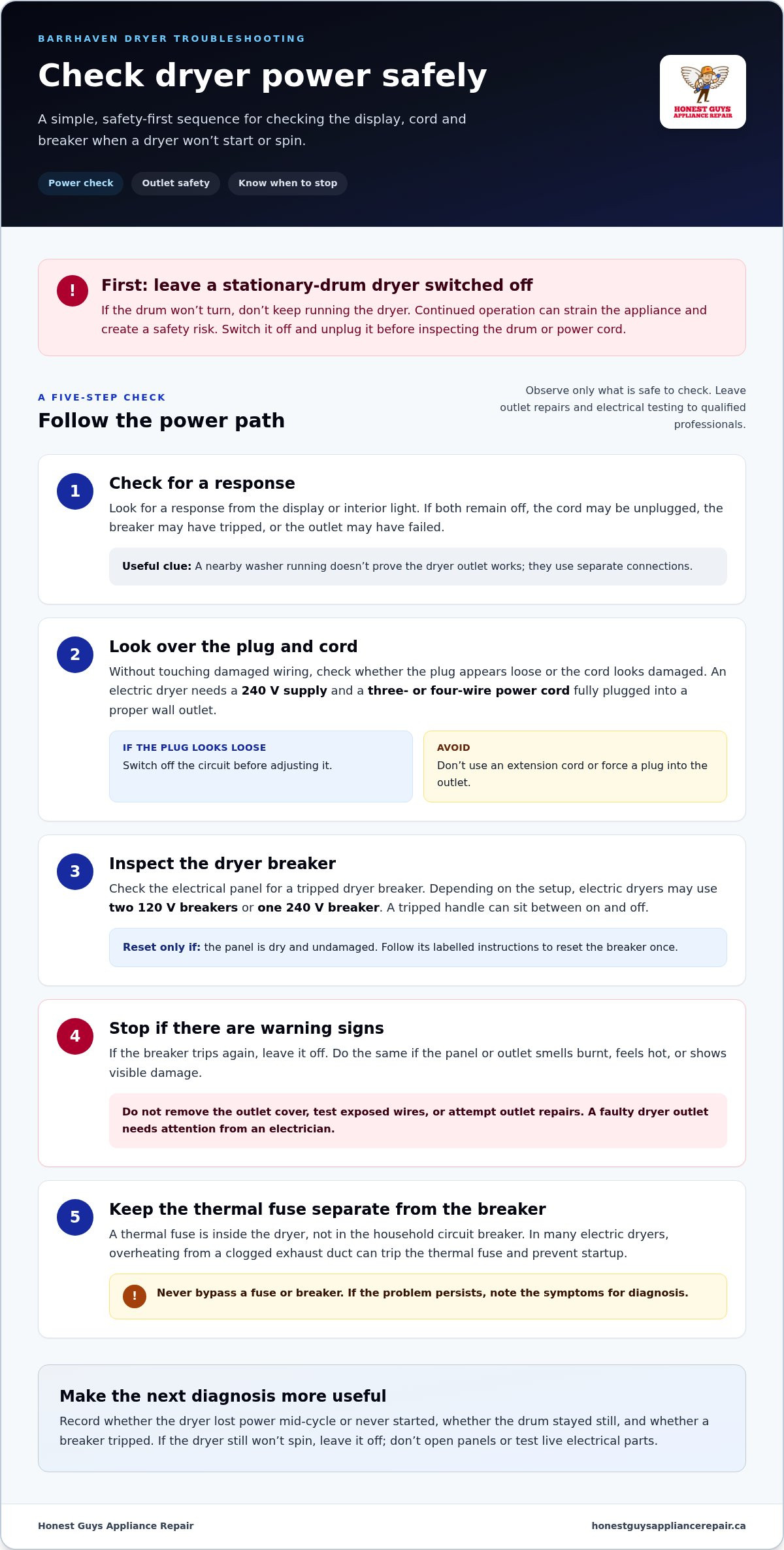
- Check whether the dryer display or interior light responds before inspecting the power source. If both remain off, the cord may be unplugged, the circuit breaker may have tripped, or the outlet may have failed. A nearby washer running doesn’t prove the dryer outlet works, since they use separate connections.
- Look at the dryer’s plug and cord without touching damaged wiring. An electric dryer needs a 240-volt supply and a three- or four-wire power cord fully plugged into a proper wall outlet. If the plug looks loose, switch off the circuit before adjusting it. Don’t use an extension cord or force a plug into the outlet.
- Inspect the electrical panel for a tripped dryer breaker. Electric dryers may use two 120-volt breakers or one 240 V breaker, depending on the setup. A tripped handle can sit between on and off. If the panel is dry and undamaged, follow its labelled instructions to reset the breaker once. Stop if it trips again.
- Don’t remove the outlet cover or test it with exposed wires. A faulty dryer outlet needs attention from an electrician, not appliance troubleshooting. If the breaker trips repeatedly, smells burnt, feels hot or shows visible damage, leave it off. Record what happened, such as whether the dryer lost power mid-cycle or never started.
- A thermal fuse is inside the dryer, not in the household circuit breaker. In many electric dryers, overheating from a clogged exhaust duct can trip the thermal fuse and prevent startup. If your dryer stopped spinning in Barrhaven, unplug it briefly, then reconnect it and see whether a fault code returns. Don’t bypass a fuse or breaker. If the problem persists, note the symptoms for diagnosis.
Broken drive belts and belt switches
A broken or misaligned belt can stop the drum even when the outlet works. Use these steps to spot clues without dismantling the dryer.
-
Inspect the Drive Belt
Unplug the dryer before inspecting it, then consult the manual for model-specific access instructions. Don’t remove panels unless you know how to do so safely. If the drum turns unusually freely by hand, the belt may be broken or out of position. Don’t force the drum or rotate it repeatedly; turning it the wrong way can dislodge the belt further. Note any change in movement.
-
Check the Belt Switch
Consult the manual for your model’s belt-switch location and function, but don’t reach inside the cabinet to test wiring. Some dryers use a switch to interrupt operation when a belt breaks or moves out of place. A motor that won’t start can have several possible causes, including the switch, belt, door latch or another component. Leave switch testing and replacement to a repair professional.
- Record what happens when you press Start: does the motor run, hum or stay silent? A running motor with a stationary drum can point to a broken drive belt. If the drum stopped while clothes were drying, note whether you heard a snap, thump or squeal. These details help narrow down the cause without repeated test cycles.
Don’t try to fit a belt through the dryer door or reach beneath the drum. Belt replacement can require removing cabinet panels and routing the belt around the drum, motor pulley and idler pulley. Incorrect placement can leave the drum unsupported or prevent it from turning. If inspection suggests a broken or misaligned belt, arrange help diagnosing the belt or switch fault rather than restarting the appliance.
Honest Guys Appliance Repair: Dryer Repair
Honest Guys Appliance Repair provides dryer repair when a stationary drum, broken belt or faulty switch keeps laundry from drying. Contact a technician if basic power checks don’t explain the problem, the drum is difficult to move or the dryer makes unusual sounds. Sharing what you observed, such as whether the motor runs or the drum stopped mid-cycle, can help narrow down the fault.
A professional diagnosis can identify whether the issue involves the belt, motor, door latch or another component. The findings can help you weigh repair against replacement based on the dryer’s age, condition and required work. Keep the appliance switched off until the cause is addressed.
Contact Honest Guys Appliance Repair to discuss your dryer repair needs.
Choose a clear next step for your laundry
Once basic checks are complete, use your observations to make a focused repair decision. Keep the dryer’s model information and a brief description of when the problem began handy. This makes the conversation more specific, whether the drum failed to start or stopped during a load. Don’t run another cycle just to gather more clues.
If a technician finds that repair is needed, consider the appliance’s age, condition and usefulness to your household. Honest Guys Appliance Repair handles dryer, fridge and oven repairs for households dealing with more than one appliance issue. Knowing which appliances need attention can help you plan your next steps without rushing a decision.
If your dryer has stopped spinning in Barrhaven, contact Honest Guys Appliance Repair and describe what you observed. Take the next step with a clearer picture of the problem, and get your laundry routine moving again.
Frequently Asked Questions
Why is my dryer not spinning?
A dryer may stop spinning because of a worn belt, failed motor, jammed drum, faulty door switch or control problem. Note whether the drum light changes when you press the door switch, and whether the dryer hums or clicks after you press Start. These clues can help distinguish a door or start-control issue from a mechanical fault, but they don’t identify the failed part by themselves.
Can I fix my dryer myself?
You can handle simple checks, such as confirming the settings and looking for a visible obstruction, but leave internal repairs to a repair professional. Unplug the dryer before inspecting the gap around the drum, and follow the model’s manual. Don’t test live wiring, bypass a switch or fuse, or remove panels if you’re unsure how to do so safely. Electrical diagnosis requires the right tools and experience.
How can I prevent my dryer from stopping mid-cycle?
Clean the lint trap after every load and keep the vent and drum interior clear of lint. Restricted airflow can contribute to overheating, which may cause a thermal fuse to prevent the dryer from starting. If drying takes several cycles, check the lint path and vent for blockage. Stop using the dryer if it repeatedly shuts down, since cleaning alone may not resolve an underlying fault.
Will a Whirlpool dryer run if the thermal fuse is blown?
A blown thermal fuse can stop many Whirlpool electric dryers from running. The fuse may trip after overheating, including overheating linked to a clogged exhaust vent. Don’t bypass or replace the fuse without addressing the cause, or the dryer may overheat again. If the fuse has failed, have the dryer and its airflow path checked before using it again.
What are the most common reasons a dryer stops spinning?
Common causes include a broken drive belt, failed motor, worn drum rollers or glides, and a faulty door latch or control. Symptoms can help narrow the possibilities: a running motor with a stationary drum points toward a belt issue, while thumping or squealing can suggest worn support parts. A dryer that goes silent may have a start-control or electrical fault instead.
How can I troubleshoot a dryer that runs but the drum does not spin?
Stop the dryer and unplug it before checking for accessible debris near the drum opening. Don’t force the drum or rotate it repeatedly, as turning it the wrong way can dislodge the belt. If the motor runs but the drum remains still, note that for diagnosis. Avoid another test cycle; a belt, motor or drum-support problem needs inspection before continued operation.