
Imagine finishing a Sunday dinner in Kanata, only to open your appliance and find a pool of murky, grey water staring back at you. If you’re struggling with a dishwasher not draining Ottawa, it’s a frustrating sight that immediately triggers worries about ruined hardwood floors or a damp basement. You’re likely wondering if this is a simple fix or the start of an expensive headache. We understand that anxiety; nobody wants to deal with a smelly, standing mess after a long day.
Dealing with drainage issues shouldn’t feel like a gamble with your home’s safety or your budget. You deserve a clear, honest path forward. In this article, you’ll learn exactly why your unit is leaving standing water behind and how to resolve these problems in your Ottawa home. We’ll explore common culprits like clogged filters and drain pump failures, while helping you decide when to troubleshoot and when to call in a trusted local expert. Our goal is to replace that murky water with total peace of mind and a perfectly dry dishwasher tub.
Key Takeaways
- Distinguish between normal residual moisture and problematic standing water to accurately assess the health of your appliance.
- Identify common mechanical failures, such as jammed drain pumps or clogged filters, that result in a dishwasher not draining Ottawa homeowners frequently encounter.
- Learn to recognize the signs that differentiate an appliance malfunction from a broader plumbing issue in your kitchen sink or garburator.
- Follow a safe, step-by-step troubleshooting guide to clear grey water while protecting your floors and your family.
- Gain clarity on when to seek a professional diagnostic from a local expert to ensure your repair is handled with integrity and precision.
Understanding the Standing Water Problem in Your Ottawa Home
Finding a pool of water at the end of a cycle is more than a nuisance; it’s a signal that the delicate balance between your home’s plumbing and the appliance has been disrupted. To understand the fix, you first need to understand How a Dishwasher Works during its final stages. When you’re faced with a dishwasher not draining Ottawa homes often experience, the first step is staying calm and assessing the depth of the problem. It’s messy. It’s smelly. But most importantly, it’s solvable.
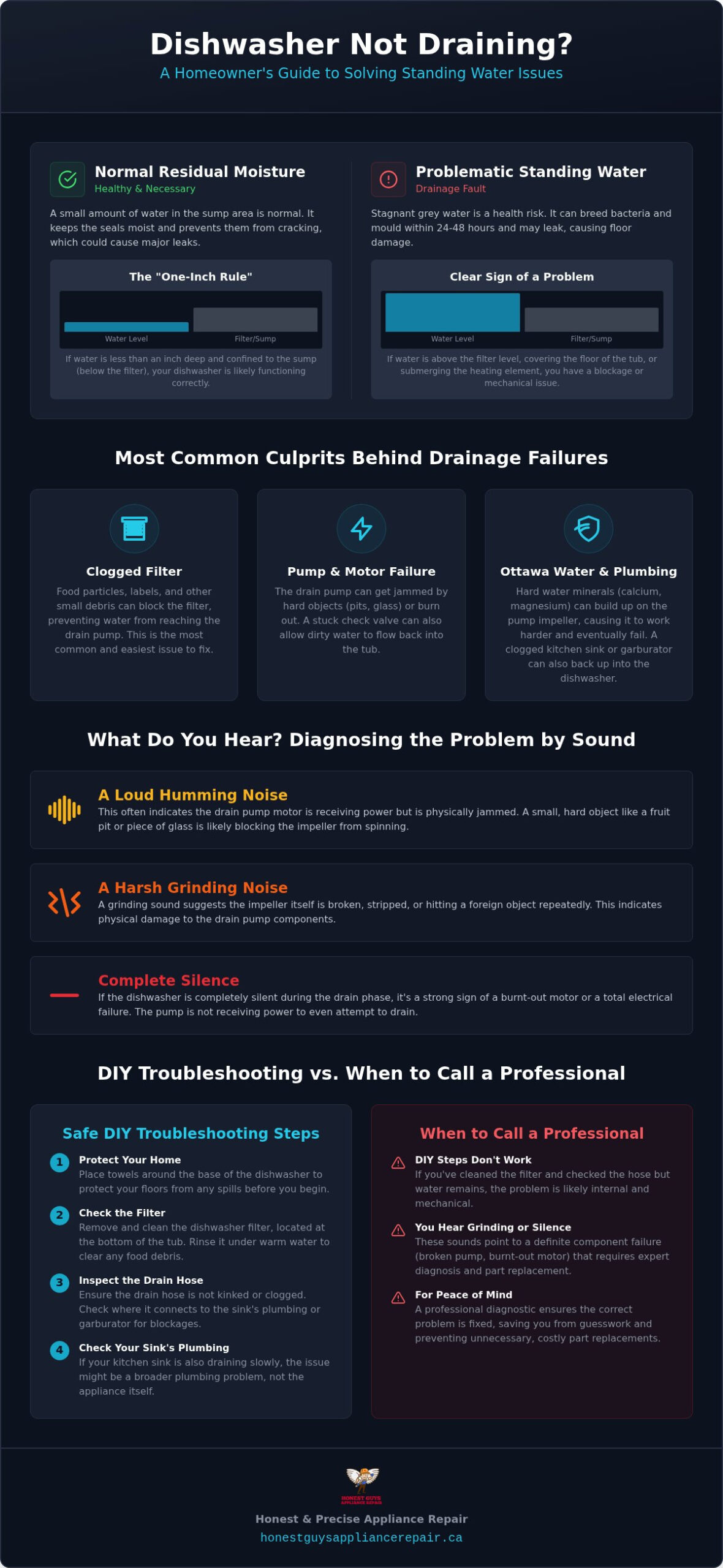
Leaving grey water to sit in your tub for extended periods isn’t just an eyesore. It’s a health risk. That stagnant water is a cocktail of food particles, bacteria, and old detergent. Within 24 to 48 hours, it can begin to develop mould or emit foul odours that permeate your kitchen. If the water level is high enough, there’s also a constant risk of it breaching the door seal and damaging your flooring or leaking into the basement below.
Is Some Water in the Bottom Normal?
Many homeowners worry when they see any liquid at all, but a small amount is actually necessary. Your dishwasher has a sump area designed to hold a bit of water to keep the internal seals from drying out and cracking. If these seals become brittle, you’ll face much larger leak issues down the road. So, how do you tell the difference between a healthy machine and a failure?
We recommend the “one-inch rule.” If the water is less than an inch deep and confined to the very bottom of the sump, your machine is likely fine. However, a drainage fault is defined as any water remaining above the filter level after a cycle has completely finished. If you can see water covering the floor of the dishwasher tub or submerging the heating element, you have a genuine blockage or mechanical fault.
The Impact of Local Water Conditions
Ottawa’s water supply plays a silent but significant role in how your appliance ages. Depending on where you live, the mineral content in our local water can vary. Calcium and magnesium deposits, often called scale, can gradually build up on the drain pump impeller. This makes the pump work harder, eventually leading to a burnout or a physical jam that prevents the water from being pushed out of the unit.
Homeowners in newer developments like Findlay Creek often see different issues than those in established areas like Nepean or Kanata. In newer builds, high-efficiency models are the norm, and these are sometimes more sensitive to mineral buildup. You can spot mineral-related sluggishness if your dishwasher takes longer than usual to drain or if you notice white, chalky spots on the interior walls. This buildup creates friction in the drainage system, slowly turning a minor inefficiency into a total backup.
The Most Common Culprits Behind Dishwasher Drainage Failures
When you realize your appliance is failing, the first instinct is often to blame the filter. While a dirty filter is a common issue, the mechanical reality of a dishwasher not draining Ottawa residents face is often more complex. The drain pump is the engine of the process. It uses a small motor and a spinning impeller to force water through the drain hose and out of the machine. If this pump fails or the check valve gets stuck, the water has nowhere to go but back into your tub.
The check valve is a small but vital rubber flap or plastic ball. Its only job is to ensure water moves in one direction: out. If food debris or a small piece of plastic gets lodged in this valve, it can’t close properly. This allows dirty water from your sink or drain line to flow right back into the dishwasher after the cycle finishes, leaving you with a pool of “recycled” grey water. If you’re unsure whether it’s a simple blockage or a mechanical part failure, a professional dishwasher diagnostic can save you hours of guesswork and prevent unnecessary part replacements.
Mechanical Failures: Pumps and Motors
Listen closely to your machine during the drain cycle. The sounds it makes provide a clear map to the problem. A loud humming sound often indicates that the drain pump is trying to engage but is physically jammed. Small, hard objects like fruit pits, glass shards, or even popcorn kernels are notorious for seizing an impeller. If you hear a harsh grinding noise, the impeller itself may be broken or stripped.
A completely silent machine during the drain phase is usually a sign of a burnt-out motor or an electrical failure. While you can sometimes clear a jam yourself, a motor that has overheated and failed will require a professional replacement. We’ve seen many cases where a simple cleaning could have saved a pump if caught early, but persistent use while jammed eventually leads to a total burnout.
The “High Loop” and Air Gap Essentials
Sometimes the fault isn’t with a broken part, but with how the machine is installed. Gravity is a powerful force in kitchen plumbing. Your dishwasher drain hose must either be connected to an air gap (that chrome cylinder on your sink) or have a “high loop” under the counter. A high loop means the hose is fastened to the very top of the cabinet before it connects to the sink drain.
Without this loop, waste water from your kitchen sink can siphoning directly into your dishwasher. If you notice the water level in your dishwasher rising after you’ve used the sink, a missing or fallen high loop is the likely culprit. Additionally, if you have an air gap and see water spitting out of it onto your counter, there is a clog in the hose between the air gap and the garbage disposal that needs immediate attention.
Is it the Dishwasher or the Plumbing? How to Tell
Before you start searching for replacement parts, you need to determine where the blockage actually lives. Is the fault inside the appliance, or is it hidden within your home’s pipes? Misdiagnosing this can lead to a frustrating cycle of calling the wrong professional. If you have a dishwasher not draining Ottawa homeowners often find that the issue isn’t a mechanical failure at all, but a simple plumbing conflict that has been overlooked.
The easiest way to tell the difference is to look at your kitchen sink. If your sink is draining perfectly while the dishwasher remains full of water, the problem is likely localized to the appliance’s pump, filter, or internal hose. However, if you notice water backing up into the sink basins or hear a distinct gurgling sound from the pipes while the dishwasher runs, you are likely dealing with a clog in the main kitchen drain line. In this scenario, the dishwasher is trying to push water out, but it has nowhere to go because the exit path is blocked by a plumbing obstruction.
The Garburator Connection
In many Ottawa kitchens, the dishwasher drain hose connects directly to the side of the garburator. This physical link means that if your disposal is full of food waste, it acts like a cork in a bottle. We always recommend running your disposal with plenty of cold water before starting a dishwasher cycle. This ensures the path is clear for the appliance to pump out dirty water later in the evening.
We frequently encounter a specific issue with new installations: the “knockout plug” mistake. Every new garbage disposal comes with a plastic plug inside the dishwasher inlet. If the person installing the disposal forgets to knock this plug out with a screwdriver and hammer, the dishwasher will be physically unable to drain from day one. If you just replaced your disposal and suddenly have a dishwasher not draining Ottawa, this small plastic disc is almost certainly the culprit. It is a simple fix that doesn’t require new parts, just a bit of “straight-talk” guidance.
Signs of a Plumbing Blockage
How do you know when to call a plumber instead of an appliance specialist? Watch for these three red flags in your kitchen:
- Multiple Fixture Backups: If water rises in your sink when the dishwasher drains, or if the dishwasher fills up when you run the kitchen faucet, the clog is in the pipes.
- Slow Draining Sinks: A sink that takes forever to clear is a precursor to a total dishwasher failure. The grease and debris in the pipe eventually narrow the opening until the dishwasher’s pump can no longer push past it.
- Foul Odours from the Drain: If the smell is coming from the sink drain rather than the dishwasher tub, the organic matter is likely rotting in the P-trap or the main line.
Identifying these signs early saves you time and money. When the sink is clear but the tub is full, that is the moment to call Honest Guys for a dishwasher repair. We can quickly determine if the pump has failed or if a simple internal obstruction is holding things up.
Step-by-Step DIY Troubleshooting for Homeowners
Before you resign yourself to a pile of hand-washed dishes, there are several safe steps you can take to resolve the issue. Many instances of a dishwasher not draining Ottawa residents encounter are actually simple maintenance oversights rather than catastrophic part failures. Taking a methodical approach can save you time and help you avoid an unnecessary service call. However, safety must always come first.
Always disconnect the power to your dishwasher before reaching into the sump or disconnecting hoses. You can usually do this by unplugging the unit under the sink or flipping the dedicated breaker in your electrical panel. If you’re working with the drain hose, have a shallow pan and some old towels ready to catch any residual grey water. Once the area is safe and dry, you can begin your inspection.
Cleaning the Filter Assembly
Most modern high-efficiency dishwashers rely on a multi-stage filter system to keep food debris away from the pump. You will typically find a cylindrical coarse filter and a flat, mesh fine filter at the bottom of the tub. Twist the cylinder to unlock it and lift both components out. If you haven’t cleaned these in a while, they are likely coated in a slimy film of grease and calcium deposits from our local water.
Rinse the filters under warm, soapy water. Use a soft nylon brush to gently clear the mesh without puncturing the delicate screen. Once the filters are removed, reach into the sump area beneath where the filter sits to feel for hidden debris like bone fragments, broken glass, or plastic ties that might be blocking the pump inlet. After everything is clear, lock the filters back into place, as running a cycle without them can lead to permanent pump damage.
Checking the Drain Hose and Air Gap
If the filter is pristine but the water remains, the obstruction might be further down the line. Inspect the corrugated drain hose under your sink for any sharp kinks or heavy items leaning against it. A pinched hose is a common cause of drainage failure in cramped Ottawa kitchens. If the hose looks clear, you can carefully disconnect it from the sink tailpiece or garburator to check for a “slug” of grease or food waste right at the connection point.
If your sink features an air gap (the small chrome cylinder on the counter), pop the cap off and check for clogs. A simple bottle brush or a quick blast of air can often clear out the debris that accumulates there. If you’ve tried these steps and the water still won’t budge, you may be dealing with a seized internal pump or a failed solenoid. At this point, it is best to stop DIY efforts to avoid damaging the internal check valves or electrical components. For a reliable, neighbourly fix, you can contact Honest Guys Appliance Repair to get your kitchen back in order.
When to Call the Honest Guys for Professional Repair
When the DIY steps don’t clear the pool of water, it’s time for a professional eye. A complex dishwasher not draining Ottawa issue often involves failed electrical sensors, faulty control boards, or seized motors that require specialized diagnostic tools. Guessing which part to replace is expensive and frustrating. We believe in getting it right the first time. By choosing a professional diagnostic, you ensure that the root cause is identified accurately, saving you from buying parts you don’t actually need.
We prioritize using high-quality, manufacturer-approved parts for every repair. Whether you own a Bosch, Samsung, or Whirlpool, using the correct components ensures your appliance runs efficiently for years to come. Many chronic drainage issues actually stem from poor initial setups. Investing in dishwasher installation in Ottawa ensures your unit has the correct high loop and secure connections from day one. This proactive step prevents the siphoning and leaks that plague many local households.
Expert Solutions for Every Ottawa Neighbourhood
Our team serves the entire region, from the tech hubs in Kanata to the growing communities in Orleans. We also provide dedicated support to families in Nepean and Barrhaven. As an owner-operated business, we take personal accountability for every job. We understand the specific construction styles of Ottawa homes, from older plumbing in the Glebe to modern high-efficiency setups in newer suburbs. This local knowledge allows us to navigate your home’s unique challenges with calm competence and respect for your property.
You won’t find aggressive sales tactics here. We treat your home like our own, offering sincere advice that prioritizes your best interests. This community-oriented approach is why so many of your neighbours trust us with their most essential appliances. We believe in building relationships through integrity and skilled craftsmanship rather than quick transactions.
Preventative Maintenance for Long-Term Reliability
You don’t have to wait for a flood to call us. Annual maintenance checks can identify worn impellers or brittle hoses before they fail. Our “straight-talk” philosophy means we’ll always give you an honest assessment of your machine’s lifespan. If a repair costs more than half the price of a new unit and your machine is approaching its ten-year limit, we’ll tell you. We value your trust more than a one-time service fee.
A dry kitchen and a reliable appliance are just a phone call away. We provide transparent communication and fair labour rates so you can make informed decisions about your home. Don’t let a minor drainage fault turn into a major basement renovation. Schedule your dishwasher diagnostic with the Honest Guys today and experience the difference that local, expert care makes.
Restore Your Kitchen’s Efficiency with Trusted Local Experts
Dealing with a dishwasher not draining Ottawa doesn’t have to be a source of constant stress. You now have the knowledge to distinguish between normal residual moisture and a genuine mechanical failure. Whether the issue is a simple clogged filter or a complex plumbing conflict with your garburator, understanding these causes is the first step toward a dry, functional kitchen. You deserve an appliance that works as hard as you do without the fear of leaks or foul odours.
When the standing water remains despite your best DIY efforts, it’s time to call in a neighbour you can trust. Honest Guys Appliance Repair has been owner-operated for over 6 years, serving families across Kanata, Stittsville, and Barrhaven with integrity. We prioritize transparent pricing and expert diagnostics to ensure you never pay for a repair you don’t need. Our goal is to provide peace of mind through skilled craftsmanship and straight-talk advice.
Book Your Honest Dishwasher Repair in Ottawa today to get your household back on track. We are ready to help you resolve your drainage issues quickly and professionally.
Frequently Asked Questions
Why is there standing water in the bottom of my dishwasher after it finishes?
Standing water typically results from a blockage in the filter assembly, a kinked drain hose, or a failing drain pump. While a small amount of water in the sump is normal to keep seals moist, anything covering the bottom of the tub indicates a fault. If you have a dishwasher not draining Ottawa residents often find that food debris has bypassed the filter and jammed the pump impeller, preventing the unit from completing its cycle.
Can a clogged sink cause my dishwasher not to drain?
Yes, a clogged kitchen sink is a frequent cause of dishwasher drainage failures because both fixtures often share the same drain pipe. If your sink drains slowly, the dishwasher’s pump cannot generate enough pressure to push water past the obstruction in the main line. You might notice water backing up into the sink basins while the dishwasher runs, which signals that you likely need to clear the plumbing rather than the appliance itself.
How do I clear a dishwasher drain hose myself?
To clear the hose, first disconnect the power and water supply to ensure your safety. Locate where the corrugated hose connects to your sink drain or garbage disposal and carefully loosen the clamp. Have a shallow pan ready to catch any spills. You can then inspect the connection point for a “slug” of grease or food waste. Use a flexible brush to clear the blockage, ensuring the hose is free of kinks before reconnecting it securely.
What does it mean if my dishwasher is making a loud humming noise during the drain cycle?
A loud humming noise usually indicates that the drain pump motor is receiving power but the impeller is physically jammed. This is often caused by hard objects like fruit pits, popcorn kernels, or shards of broken glass that have slipped past the filter. If you hear this sound, it’s vital to stop the cycle immediately to prevent the motor from burning out, which would turn a simple cleaning job into a more expensive pump replacement.
Is it worth repairing a dishwasher that is over 8 years old?
Deciding on a repair depends on the overall condition of the unit and the cost of the fix. Industry standards suggest that if a repair costs less than 50% of a new machine and the appliance is under 10 years old, a professional fix is usually the best investment. For a dishwasher not draining Ottawa homeowners should consider that modern high-efficiency units are often worth repairing if the rest of the mechanical systems remain in good health.
How often should I clean my dishwasher filter to prevent drainage issues?
We recommend cleaning your dishwasher filter at least once a month, though heavy users should check it weekly. In Ottawa, our local water can leave mineral deposits that combine with grease and food particles to create a stubborn film on the mesh. Regular maintenance prevents this buildup from restricting water flow, which protects your drain pump from overworking and helps you avoid the stress of a sudden, messy backup in your kitchen.
Why does my dishwasher smell like rotten eggs or stagnant water?
Foul odours are caused by bacteria thriving in stagnant “grey water” or decaying organic matter trapped in your drainage system. When water sits in the bottom of the tub for more than 24 hours, it becomes a breeding ground for mould and mildew. This often points to a partial blockage in the drain hose or a dirty filter assembly. A thorough cleaning of the sump area usually resolves the smell and improves the overall hygiene of your appliance.
Will a new garburator installation affect how my dishwasher drains?
A new garburator installation will definitely affect drainage if the “knockout plug” isn’t removed during the setup. Every new disposal has a plastic plug inside the dishwasher inlet port that must be punched out with a screwdriver and hammer. If this step is missed, your dishwasher will be physically blocked from pumping water into the disposal. This is a common oversight we see in new home builds and kitchen renovations across the Ottawa region.