
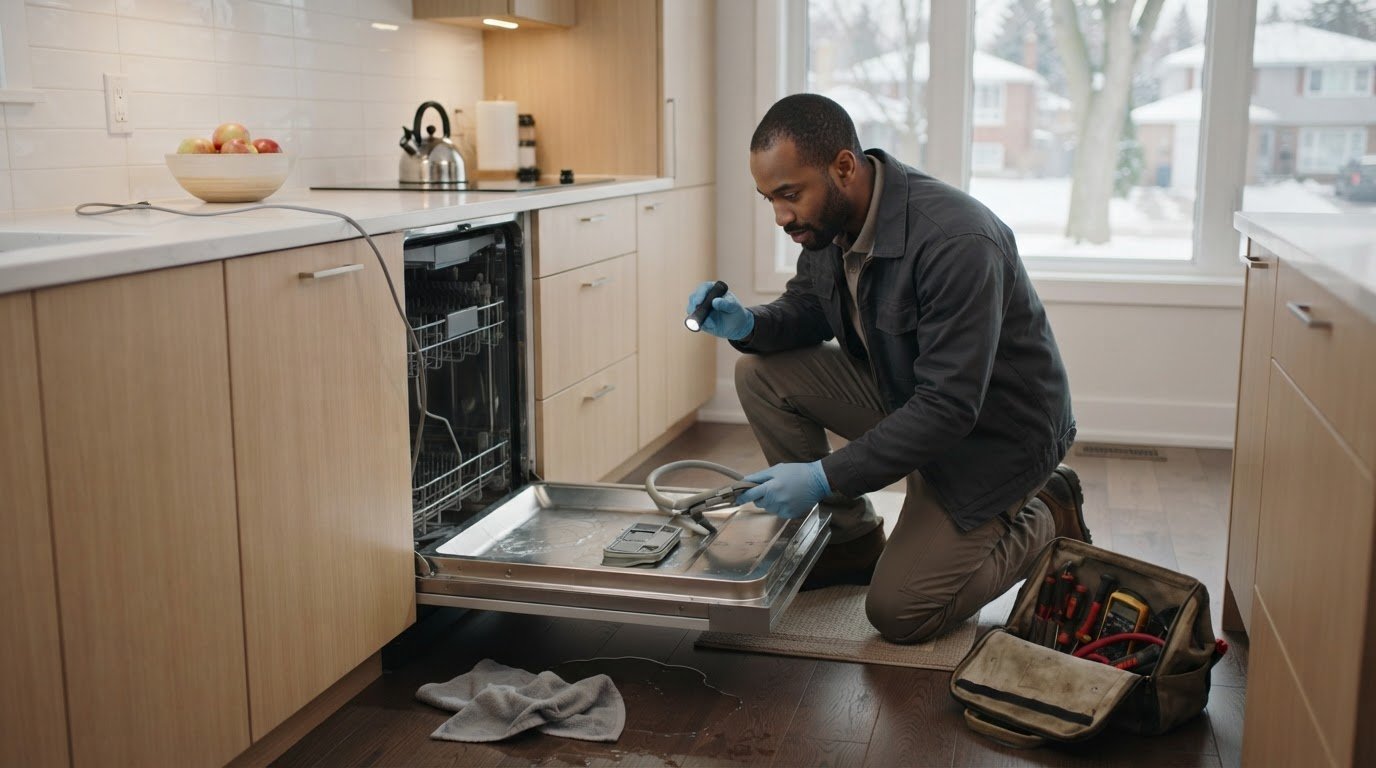
If you’re wondering what to do if your dishwasher is flooding the kitchen in Ottawa, stop the cycle and keep the dishwasher off. Unplug it before removing standing water, then dry the floor to limit further water damage. A small amount of water around the filter can be normal, but recurring standing water may point to a drainage problem.
A leak is stressful, especially when the cause could be a hose, door seal, inlet valve, or blocked filter. First, note where the water appears and whether it’s safe to use the appliance again. Don’t run another cycle to test it.
This guide explains what to do right away, what common leaks and drainage faults can look like, and what to expect from a same-day diagnosis, a clear repair quote and testing after the work. You’ll also learn which details to share when arranging dishwasher repair in Ottawa, so the visit can focus on finding the cause and choosing a sensible next step.
Key Takeaways
- Stop the dishwasher when water escapes, and note where the leak appears before attempting any cleanup or inspection.
- Standing water may point to a blockage or a drain-system fault; the filter and hose can offer useful clues.
- Keep the appliance off and protect the floor while you arrange a repair visit, especially if water is still spreading.
- A clear diagnosis should identify the fault, explain the repair, and provide a quote before work begins.
- Learn what a technician may test after a repair to check that the dishwasher drains and runs properly.
Drain motor, drain valve, and drain hose problems
Use these steps to separate a simple filter blockage from a drain-system fault. Stop the cycle if water is rising or escaping.
-
Check for Standing Water and Clogs
Once the dishwasher is off, inspect the bottom of the tub. An inch or more of standing water that keeps returning may indicate a clogged drain. Check the filter for food particles or scraps of container-label paper. If the filter is removable, rinse it under the sink faucet and use a soft brush to loosen caked debris. A little water in the filter area can be normal.
-
Inspect the Drain Valve
Look for a stuck drain bracket, but don’t force the valve or dismantle electrical parts. A stuck bracket may indicate a problem with the drain valve’s electrical components, which may need replacement. Note whether the dishwasher remains full after draining or leaves water behind after each cycle. That pattern can help a technician assess the valve’s operation.
-
Identify Drain Motor and Hose Problems
Listen during draining for whether the drain motor runs, hums, or stays silent. A dishwasher not draining can point to a motor problem, a blocked hose, or debris near the pump. Check only visible hose sections for kinks, damage, or a loose connection. Maytag advises calling a licensed professional for a clogged drain hose or malfunctioning drain motor.
- Compare the drainage pattern. Note whether standing water appears after every cycle or only occasionally. Repeated pooling of an inch or more suggests the blockage may remain. If your sink drains normally but the dishwasher doesn’t, record that detail. Filter and visible hose locations vary by model, so consult the manual before removing any parts.
- Keep the inspection limited. Don’t reach beneath the dishwasher or pull it from its cabinet to inspect hidden hoses. Avoid running another cycle to test a suspected leak or blockage. Record the model information and any visible error message, then describe what you observed. These details can help distinguish a clogged filter from a drain valve, motor, or hose fault.
A dishwasher may be clogged if an inch or more of standing water consistently collects in the tub. Treat the water level as a clue, not a diagnosis, and note whether the dishwasher drains fully. If the pattern continues, tell the technician whether water remains after draining or appears after a cycle. Describe the visible amount and when you noticed it, and leave hidden components untouched. This helps focus attention on the drain system without taking the appliance apart.
Can you repair my dishwasher the same day?
A same-day repair depends on the fault, the diagnosis, and whether the required part is available. Take these steps now to limit further damage while arranging a repair visit.
Will home insurance in Ontario cover water damage from a dishwasher leak? Coverage depends on your policy and the circumstances of the leak. Document the damage and review your policy’s water-damage terms when making a claim.
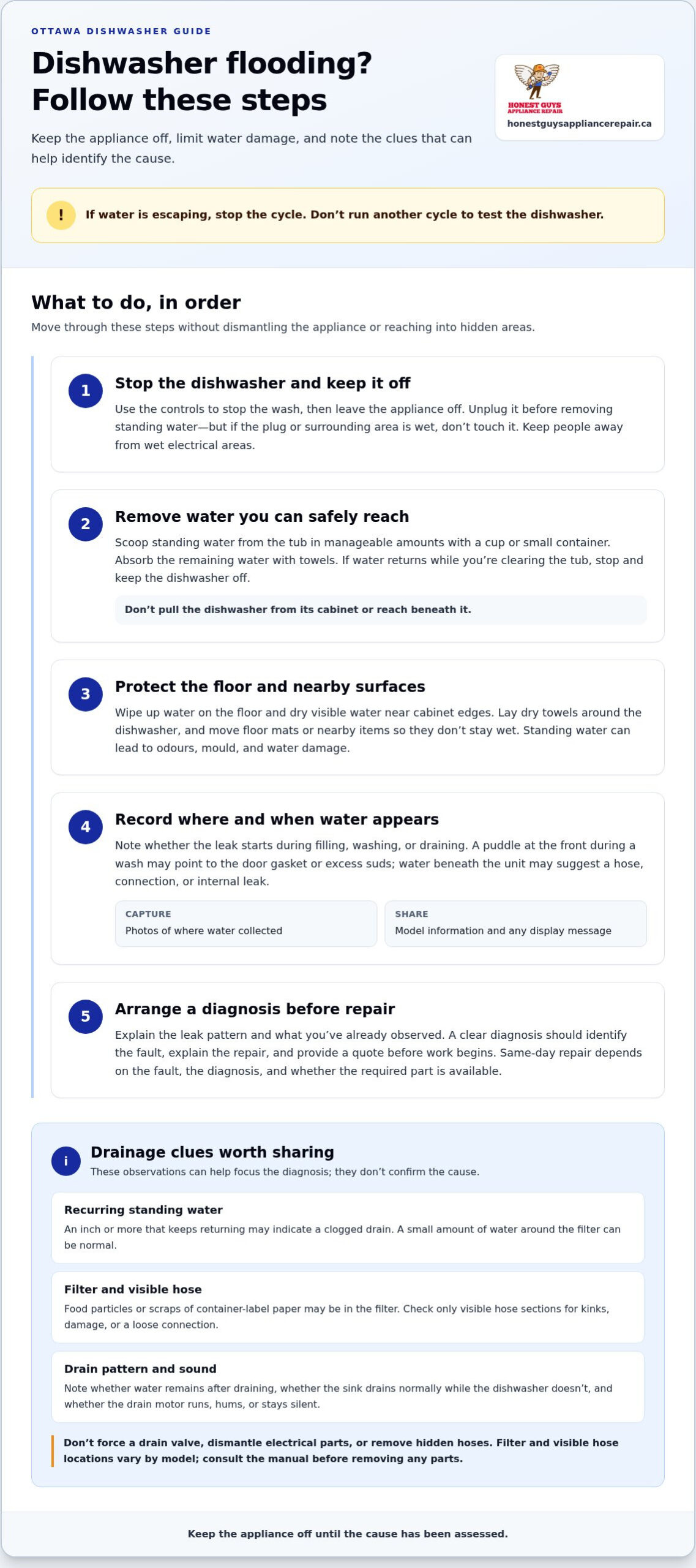
- Stop the dishwasher and prevent another cycle. Use its controls to stop the wash, then leave the appliance off. Maytag advises unplugging the dishwasher before removing standing water and cleaning it. If the plug or surrounding area is wet, don’t touch it. Keep people away from wet electrical areas and focus on water you can safely reach.
- Remove standing water in manageable amounts. Use a cup or small container to scoop water from the tub into a sink or pail, then absorb the remaining water with towels. Don’t pull the dishwasher from its cabinet or reach beneath it. If water returns while you’re clearing the tub, stop and keep the appliance off.
- Protect floors, cabinets, and nearby appliances. Lay dry towels around the dishwasher and wipe up water on the floor. Move floor mats and items beside the unit so they don’t stay wet. Dry visible water near cabinet edges promptly. Standing water can cause odours, mould, and water damage, so address it without delay.
- Record what happened before booking service. Note whether the leak started during filling, washing, or draining. Take photos of water around the door, beneath the unit, or near the sink connection. Include any display message and the dishwasher model. These details help focus the diagnosis on filling, drainage, or a leak.
- Ask for a clear diagnosis before repair begins. Same-day repair is most practical when the cause can be identified and the needed part is on hand. A clogged filter can require a different fix from a failed drain motor or leaking hose. Describe the leak and the steps already taken. Arrange dishwasher repair support for a persistent leak or a unit that won’t drain.
Dishwasher diagnosis, repair quotes, and testing
A technician can assess whether the problem is a drain fault or a leak by checking where water appears and when. A door seal, hose, inlet valve, or overfilling may each leave different clues.
- Describe the leak pattern. Note whether water appears during filling, washing, or draining. A puddle at the front during a wash may point to the door gasket or excess suds. Water beneath the unit may suggest a hose, connection, or internal leak. Tell the technician whether the dishwasher still drains and whether the leak happens every cycle.
- Prepare the area for diagnosis. Keep the dishwasher off after a leak, and clear dishes from the racks if it’s safe to do so. Move cleaning supplies and stored items away from the cabinet base. Share the model information and any displayed error message. Photos showing where water collected can help the technician assess visible seals and connections.
- Ask what the inspection will cover. A useful diagnosis includes checking the door gasket for damage, accessible hoses for cracks or loose connections, and the inlet valve and water level. The technician may also inspect the filter and drain path. Food particles or pieces of container-label paper can block the filter and interfere with draining.
- Request a clear written repair quote. Before approving work, ask for the identified fault, the proposed repair, and which parts and labour are included. Parts and labour should be shown separately, so you can see what the repair involves. If the inspection finds a damaged hose rather than a faulty valve, the explanation should match that finding. Don’t approve work you don’t understand.
- Confirm the repair with a controlled test. After the repair, the technician should run the dishwasher through appropriate fill, wash, and drain checks. Watch for water escaping around the door or beneath the cabinet, and confirm that water leaves the tub. A test with dishes can show whether the unit completes its cycle, but the first check should focus on leaks and drainage.
- Keep a record of the outcome. Note the part repaired, the symptoms addressed, and whether the test confirmed that the tub drained. If water returns, record when it appears and where it collects. That detail can help distinguish a recurring hose leak from a drainage problem. Don’t use the dishwasher while a fresh leak is active.
Dishwasher leaks at the front or beneath the unit
Track where water first appears and when you noticed it. A puddle at the front and water beneath the cabinet may point to different components.
- Locate the first wet spot. Dry the floor, then watch from a safe distance without running another cycle. Record whether water appears at the door, cabinet edge, or beside a visible hose connection. The puddle’s starting point is more useful than where the water eventually spreads. Don’t pull the dishwasher out to inspect hidden components.
- Inspect the door gasket visually. Check the rubber seal around the opening for visible tears, flattened areas, or food debris. A damaged gasket can cause leaks at the front. Wipe away loose debris with a soft cloth and note any section that looks misshapen. Don’t pry the seal from its channel or try to reshape it.
- Note when a front leak starts. If water escaped around the door during washing, record the cycle stage and whether the leak has happened before. Overfilling can also cause water to escape, so note whether the water level seemed unusually high. Don’t run another cycle to reproduce the leak. The timing can help distinguish a seal problem from a water-level fault.
- Check visible hose connections. Look beside the sink cabinet for a loose connection, cracked hose section, or signs of moisture. Loose or cracked hoses are common leak sources, but leave hidden plumbing untouched. Record which visible connection looks wet and whether water appeared during filling or draining. Don’t tighten fittings or move the dishwasher, as either could worsen a leak.
- Consider the inlet valve when filling coincides with leaking. A faulty inlet valve can allow water to enter improperly, while overfilling can send water beyond the tub. Note whether the puddle started as the dishwasher filled or later in the wash. Keep the appliance off after a leak. A visible puddle alone can’t identify which internal part has failed.
- Share the evidence with the repair technician. Provide the dishwasher model, where water first appeared, and the cycle stage. Photos of the front gasket, cabinet base, and visible connections can help explain the pattern. Mention whether dishes were loaded normally or blocked the door from closing. These details guide the inspection without requiring you to remove panels or handle internal components.
When should I call an emergency plumber or appliance repair technician in Ottawa?
Choose the next step based on where the water starts and whether it keeps flowing. These checks can help distinguish an appliance fault from a plumbing leak.
- Stop the dishwasher if water is actively escaping. Cancel the cycle and keep the appliance off. If water continues entering the tub after the cycle stops, don’t run another test. A faulty inlet valve or overfilling may cause a leak, so note whether the water continues rising. Don’t touch a wet plug, outlet, or appliance connection.
- Contact an appliance repair technician for a dishwasher fault. A leak from the door, beneath the unit, or during draining may point to the dishwasher or its connections. Damaged door gaskets, loose or cracked hoses, faulty inlet valves, and overfilling are common causes. Note the leak’s location and cycle stage so the technician can focus the diagnosis.
- Contact a plumber if the source is household plumbing. If water comes from a sink drain, supply pipe, or another plumbing connection rather than the dishwasher, it’s a plumbing problem. A leak that continues after the dishwasher is off may also need prompt plumbing attention. Keep away from wet electrical areas while identifying the source.
- Get urgent help if an active leak is spreading. If water reaches nearby cabinets, flooring, or an electrical outlet, stop using the dishwasher and keep people away from the wet area. Don’t pull the unit out or handle hidden wiring. If you can safely reach the dishwasher’s water shutoff without crossing water, turn it off. Otherwise, leave it alone and seek urgent help.
- Share clear details when requesting help. Give the appliance model, where the water first appeared, and whether it leaked during filling, washing, or draining. Mention whether the leak stopped after the dishwasher was switched off. Photos of the affected area can help show whether a visible hose or nearby plumbing connection is involved.
- Arrange repair when a dishwasher leak or drainage fault persists. A blocked drain, failed drain motor, leaking hose, or damaged seal needs diagnosis before the appliance runs again. Keep standing water away from electrical components and don’t restart the cycle to test it. For an ongoing dishwasher problem, arrange dishwasher repair and describe the leak pattern clearly.
Honest Guys Appliance Repair: Dryer Repair
Honest Guys Appliance Repair provides appliance repair in Ottawa and surrounding communities, including Nepean, Kanata, Stittsville, Orleans, Barrhaven, Greely, Findlay Creek, and Gloucester. Services include dryer, fridge, oven, and stove repair, as well as dishwasher repair and installation. If your dishwasher is leaking, keep it switched off and use the steps above to manage the immediate issue. For repair, share the model and symptoms so the technician can assess the fault and discuss a practical next step.
Need help with a dryer, fridge, oven, or stove? Contact Honest Guys Appliance Repair to discuss the appliance problem.
Make your next step a clear one
Keep a brief record of the dishwasher’s symptoms and any changes after the leak. A dated note can help you track whether the problem returns or behaves differently.
If you’re deciding what to do if your dishwasher is flooding the kitchen in Ottawa, keep it off until the cause is addressed. Share the details you’ve gathered when arranging dishwasher repair, and discuss a practical next step.
For help with the appliance issue, get in touch and share what you observed.
A clear record and a careful next step can help you move forward with confidence.
Frequently Asked Questions
Should I keep using a leaking dishwasher?
No. Stop using it until the leak’s cause has been identified and addressed. If you’re deciding what to do if your dishwasher is flooding the kitchen in Ottawa, keep it off rather than running another cycle to test it. Even a small drip can reach cabinet flooring or nearby electrical connections. Note what the dishwasher was doing and check for fresh moisture before arranging repair.
What causes a dishwasher to leak water?
Common causes include a worn door gasket, a loose or cracked hose, a faulty water inlet valve, or overfilling. Timing offers a clue: water appearing as the tub fills differs from a leak that starts during washing or draining. Suds from unsuitable detergent can also push water past the door. Record the cycle stage and where the water first appears.
Why is there standing water in the bottom of my dishwasher?
A blocked filter or drain path can leave water in the tub after a cycle. Food scraps and small pieces of paper from container labels may obstruct drainage. Check whether water is pooled across the tub or only around the filter area. A little water near the filter can be normal; persistent pooling after cycles suggests the dishwasher isn’t draining properly.
How do I stop a dishwasher from flooding right now?
Stop the wash using the control panel, then keep the appliance off. If you’re wondering what to do if your dishwasher is flooding the kitchen in Ottawa, close its water supply valve if water keeps flowing and you can reach it safely. Keep people away from wet electrical areas, and don’t touch a plug or outlet surrounded by water. Seek urgent help if water continues spreading.
How do I safely shut off the dishwasher’s water supply and power?
Use the control panel first, then locate the dishwasher’s water shutoff valve, often inside the sink cabinet, and turn it off if it’s safely accessible. Never pull out the dishwasher to reach a hidden valve. Unplug the appliance only if the plug and floor are dry. If water is near the outlet, don’t touch it. Switch off the circuit at the electrical panel only if you can do so safely.
What are common causes of a dishwasher leaking or overflowing?
Leaks often come from damaged door seals, cracked hoses, loose connections, or a faulty inlet valve. Overfilling can also send water beyond the tub. For example, a puddle appearing during filling differs from water escaping during the wash. The pattern can narrow the cause, but visible water alone can’t prove which internal part has failed. Don’t remove panels to investigate.
How can I clean up standing water and prevent mould or floor damage?
After stopping the dishwasher, remove accessible water with towels or a container, then dry the floor and cabinet edges thoroughly. Move mats and stored items so moisture doesn’t remain trapped underneath. Keep the area ventilated and check for dampness after cleanup, especially at flooring seams and cabinet bases. Don’t use electrical appliances to dry a wet area if cords or outlets are exposed to water.
What is the typical cost of emergency dishwasher repair in Ottawa?
There isn’t one typical emergency repair outcome, because the next step depends on the situation. If water is still entering or spreading, prioritize stopping the flow and protecting nearby areas. If the dishwasher is off and the leak has stopped, record where it appeared and when. Those details can help distinguish an active plumbing issue from a fault within the appliance.