

Have you ever calculated exactly how much revenue walks out your front door every hour your espresso machine sits silent? It’s the nightmare scenario for any Ottawa cafe manager or office lead: a long line of thirsty customers and a machine that’s only flashing a cryptic error code. You’ve worked hard to build a reputation for quality, so watching a leaky gasket or a clogged line derail your morning is incredibly frustrating. We understand that your equipment is the heart of your business, and when it fails, your productivity stops.
This guide to commercial coffee machine troubleshooting will help you demystify those blinking lights and realize when a quick adjustment can save your day. We’ll explore how to handle common pressure issues, identify the source of messy leaks, and explain why Ottawa’s soft water might be masking hidden mineral problems. By the end of this article, you’ll know how to restore your coffee service quickly and decide if a repair or a full replacement is the most honest path forward for your bottom line.
Key Takeaways
- Learn to identify the “Big Three” failure points, electrical, mechanical, and mineral, to quickly narrow down why your brewer has stopped working.
- Master the basics of commercial coffee machine troubleshooting to distinguish between a simple clogged line and a more complex pump failure.
- Understand how Ottawa’s specific water profile impacts your machine’s longevity and why regular descaling is essential even with softer local water.
- Discover the “Point of No Return” where DIY fixes become a safety hazard and professional technical expertise is required to protect your investment.
- Implement a proactive maintenance routine that focuses on cleanliness and pressure dynamics to prevent future downtime and inconsistent drink quality.
The Anatomy of Failure: Why Commercial Coffee Machines Stop Brewing
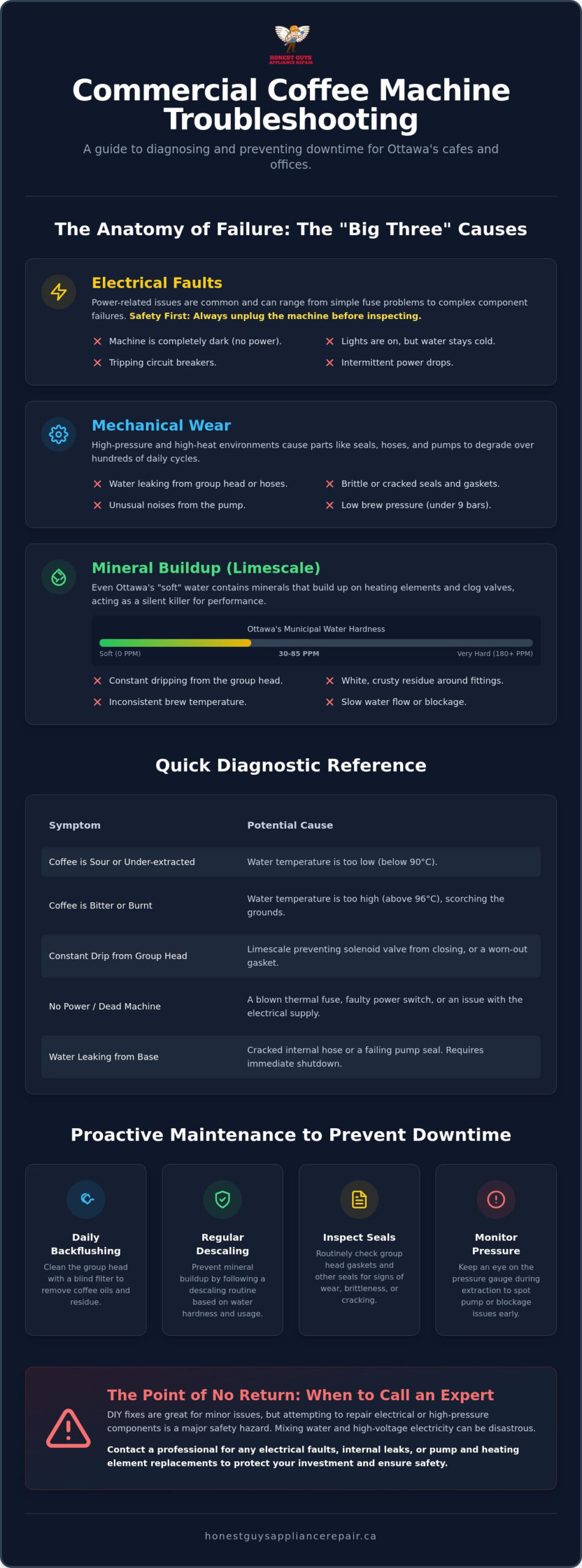
For an Ottawa cafe or restaurant manager, a dead brewer is more than just a technical glitch. It’s a direct hit to your morning revenue and a line of disappointed customers walking out the door. Effective commercial coffee machine troubleshooting starts with a clear understanding that your equipment is a high-performance system balancing high voltage, intense heat, and significant water pressure. When one of these elements shifts out of alignment, the whole operation stalls. Most failures fall into what we call the “Big Three”: electrical faults, mechanical wear, or mineral buildup. Before you ever pull a side panel off or inspect the internal wiring, you must unplug the unit. Mixing water and electricity is a recipe for disaster, and safety is always our first priority.
While there are different types of coffeemakers across the city, from high-end espresso units to standard office brewers, they all share a common enemy. In Ottawa, our municipal water is generally classified as soft to moderately soft, typically ranging between 30 and 85 parts per million. This might sound like a relief compared to other regions, but minerals still accumulate over time. These microscopic particles bond to the hottest parts of your machine, usually the heating elements and the delicate copper plumbing, creating a layer of insulation that eventually leads to total system failure.
The Silent Killer: Limescale and Ottawa Water Hardness
Even with Ottawa’s relatively kind water profile, calcium deposits eventually choke your solenoid valves. These valves control the precise flow of water, and even a tiny amount of scale can prevent them from closing properly. You might notice a constant drip from the group head or a boiler that won’t stop filling. If you see a white, crusty residue around your fittings, that’s a clear signal your gaskets are failing and need a professional to fix coffee machine issues before they cause a flood. In neighbourhoods with slightly higher mineral counts, aggressive carbon filtration is the only way to protect those expensive internal components from being strangled by scale.
Electrical Gremlins vs. Mechanical Wear
Is the machine completely dark, or is it just cold? A blown thermal fuse often acts as a silent guardian, cutting power to prevent a fire when a component overheats. However, if the lights are on but the water stays chilly, you likely have a dead heating element. Mechanical issues are often noisier. High-pressure hoses can crack under the constant stress of 9 bars of pressure, and group head seals eventually go brittle from the intense heat. The vibration of the pump itself is a factor. Over months of service, it can literally shake internal electrical connections loose, leading to intermittent power drops that are notoriously difficult to track down without specialized tools.
Understanding the Mechanics: Water, Heat, and Pressure Dynamics
To master commercial coffee machine troubleshooting, you first need to visualize the journey water takes once it leaves the Ottawa municipal line. It enters your machine under standard building pressure, but it doesn’t stay that way for long. The machine acts as a precision laboratory, transforming that cold tap water into a high-pressure, temperature-controlled extraction tool. Unlike a home brewer that might make two or three cups a morning, a commercial unit is designed for a high duty cycle. It features heavy-duty components built to withstand hundreds of cycles daily without the internal plastic parts found in residential models warping or failing under constant thermal stress.
Precision is everything when it comes to flavour. If the water is too cool, the coffee is sour; if it’s too hot, you’ll scorch the beans and serve a bitter, burnt cup. Commercial machines use sophisticated thermostats to keep the boiler within a narrow window, usually between 90 and 96 degrees Celsius. This stability is what separates a professional espresso from a home-brewed cup. While we adhere strictly to the Ontario Electrical Safety Code for all local repairs, following global OSHA electrical safety standards provides an excellent baseline for managing the high-voltage heating elements required to maintain these temperatures. Understanding these dynamics makes commercial coffee machine troubleshooting much more logical, as most problems are simply a breakdown in this water-to-pressure pipeline.
The Heating Circuit: Boilers and Thermoblocks
In a dual-boiler machine, one tank is dedicated to brewing while the other handles steam. This allows your staff to pull shots and froth milk simultaneously without a drop in temperature. A Thermoblock is a flash-heating system commonly found in modern office brewers that heats water on demand as it passes through a narrow, heated coil. If your coffee is coming out lukewarm, the thermostat might be failing to signal the heating element, or the element itself has finally reached the end of its lifespan after years of service in your Kanata or Nepean office.
The Pressure System: Pumps and Gaskets
Why is 9 bars the industry standard? This specific pressure, roughly 130 psi, is required to force water through a compacted puck of coffee to create the rich crema customers expect. Most Ottawa cafes use rotary pumps because they are quiet, powerful, and incredibly consistent. In contrast, smaller office brewers often rely on vibratory pumps. A three-way solenoid valve plays a vital role by instantly relieving this pressure once the brew cycle ends, preventing the dreaded “portafilter sneeze.” If you notice watery, under-extracted coffee, a failing group head gasket is often the culprit, as it allows pressure to leak out around the edges. If you suspect your pump is losing its edge, it might be time to consult with a local expert who understands the specific needs of Ottawa businesses.
Diagnostic Reference: Troubleshooting Common Commercial Brew Symptoms
When your brewer starts acting up, it’s tempting to push every button in a panic. Instead, take a breath. Successful commercial coffee machine troubleshooting relies on a methodical, step-by-step approach. First, verify the basics: is the water supply valve fully open, and is the power cord secure? If those are fine, we look at the specific symptoms. If you hear the pump humming but see no water appearing at the group head, you’ve likely encountered the “No Flow” problem. This is often caused by an airlock or a calcified solenoid valve that’s stuck in the closed position. If the pump sounds strained or much louder than usual, it’s struggling to pull water through a blockage. Before you attempt to fix coffee machine components yourself, check the group head screens for packed coffee oils that might be acting like a plug.
The “Cold Coffee” dilemma is another common headache for Ottawa managers. If the machine powers on but never reaches temperature, you’re likely dealing with a failed heating element or a faulty NTC temperature sensor. A sensor failure often triggers a specific error code on the display, whereas a dead element simply results in lukewarm water without any warning. If you find a puddle on your expensive counters, don’t ignore it. A leaking counter is usually a sign of a clogged drain tray or a high-pressure hose that has developed a pinhole leak. Catching these leaks early prevents water from reaching the delicate electronic control boards often located in the base of the unit.
Strange Noises and Error Codes
A loud rattling or buzzing sound isn’t always a sign of a terminal failure. Often, it’s just a loose mounting bracket on the pump or an air bubble trapped in the heat exchanger. When your machine displays a cryptic symbol, consult the manual first. Major brands like Bosch or Jura use specific codes to signal everything from a full dreg drawer to a required descaling cycle. Many times, what looks like a breakdown is actually a mandatory cleaning request designed to protect the internal components from mineral damage.
Steam Wand and Frothing Issues
If your milk isn’t texturing properly, the steam wand tip is the first place to look. Dried milk can create a vacuum seal in the wand that prevents steam from escaping or draws milk back into the boiler. Small holes in the tip are easily blocked by even a tiny amount of milk fat. If the tip is clear but pressure is still low, the issue might lie with the steam boiler’s pressure switch or a buildup of minerals within the wand’s internal piping. Regular purging after every use is the best way to avoid these avoidable service calls.
Proactive Maintenance: DIY Steps to Minimize Downtime
The golden rule of coffee machine care is simple: cleanliness directly impacts longevity. While commercial coffee machine troubleshooting can often fix a breakdown after it happens, proactive maintenance is what keeps your revenue flowing without interruption. Think of your brewer like a high-performance vehicle. You wouldn’t skip an oil change and expect the engine to last, and your coffee equipment is no different. In our local climate, we also have to consider seasonal shifts. Ottawa winters pose a unique threat to commercial equipment. If you operate a seasonal food truck or are moving an office brewer, you must winterize the unit. Any water left in the boiler or internal lines can freeze and expand, which literally rips copper plumbing apart from the inside out.
For espresso setups, backflushing the group head is a mandatory ritual. This process uses a blind filter to force cleaning detergent back through the three-way solenoid valve we discussed earlier. It’s the only way to strip away the rancid coffee oils that build up in the internal channels. Without this, your coffee will eventually taste bitter and metallic, regardless of how expensive your beans are. If you aren’t sure how to perform this safely on your specific model, commercial coffee machine troubleshooting guides for your brand will usually provide a step-by-step walkthrough.
The Descaling Protocol for Canadian Businesses
While Ottawa’s water is relatively soft, minerals still accumulate. You should avoid using vinegar for descaling. It’s often too weak to tackle heavy buildup and leaves a persistent smell that can ruin hundreds of servings. Citric-acid based commercial powders are far more effective. They dissolve mineral scale quickly without damaging the delicate rubber seals inside the machine. Depending on your daily cup volume, a monthly or quarterly descaling schedule is usually sufficient for most Kanata and Nepean businesses.
Daily and Weekly Cleaning Rituals
- Daily: Purge and wipe your steam wands after every single use to prevent milk fat from hardening. Clean your drip trays and portafilters to prevent mould growth and ensure a professional presentation.
- Weekly: Deep clean the brew group and inspect your water filtration system. If your filters are more than six months old, they are likely no longer protecting your machine from chlorine or sediment.
Consistent care is the best way to prevent the need for urgent office coffee machine repair Ottawa. Small, daily habits save you from the stress of a morning rush with a dead brewer. If your maintenance schedule has fallen behind and your machine is acting up, contact a local expert for a thorough cleaning and diagnostic service.
Professional Intervention: When to Call an Ottawa Appliance Expert
At what point does a helpful DIY project turn into a business liability? While initial commercial coffee machine troubleshooting can save you a service call for minor issues, there is a clear line between clearing a clogged steam tip and opening the main chassis. Commercial espresso machines are high-pressure, high-voltage environments. Once you’re dealing with internal electrical faults, failing pressure relief valves, or complex control board errors, the risk to your safety and your equipment’s warranty increases significantly. Professional intervention ensures that your machine is not only fixed but also calibrated to meet the rigorous demands of a busy morning rush.
Specialized technical tools are essential for these repairs. We use precision pressure gauges, thermal imaging to detect heating inconsistencies, and high-end multimeters to trace electrical gremlins that aren’t visible to the naked eye. At Honest Guys Appliance Repair, we bring owner-operated pride to every job. We understand that your brewer is the heart of your business, which is why we provide transparent diagnostics across the entire region. Whether you’re running a cafe in Kanata, a restaurant in Stittsville, or an office in Orleans or Gloucester, we focus on getting your service back online without unnecessary delays.
The Repair vs. Replace Value Formula
How do you decide if a machine is worth saving? We generally recommend the 50% rule: if the cost of the repair exceeds half the price of a brand-new unit, replacement might be the more logical financial path. However, high-end commercial units often have a much higher ceiling for ROI. Repairing a premium Italian-made espresso machine is usually far more sustainable and cost-effective than sending it to a landfill. Investing in commercial coffee machine repair Ottawa allows you to protect your initial capital investment while ensuring your equipment remains in peak condition for years of future service.
Choosing a Local Ottawa Specialist
A local technician understands the specific challenges of our city, from the way our municipal water interacts with copper boilers to the specific grid conditions in different neighbourhoods. When you’re looking for a partner, prioritize those who offer a clear warranty on both parts and labour. This gives you peace of mind that the fix is permanent. If you’re ready to move past commercial coffee machine troubleshooting and need a definitive solution, you can easily book a diagnostic with a trusted appliance repair Barrhaven expert. We’ll provide a straight-talk assessment of your machine’s health so you can get back to what matters most: serving great coffee to your customers.
Restoring Your Coffee Service with Confidence
Managing a busy Ottawa business means you don’t have time for equipment failures that stall your morning rush. By mastering the basics of commercial coffee machine troubleshooting, you’ve taken the first step toward protecting your revenue and your equipment. You now understand how mineral buildup from local water impacts your boiler and why a strict daily cleaning ritual is your best defence against unexpected downtime. Whether it’s a simple gasket replacement or a more complex pressure issue, having a systematic approach ensures you stay in control of your kitchen’s productivity.
When the problem requires more than a quick fix, you need a partner who values transparency as much as you do. We’ve spent over 6 years providing specialized expertise in commercial and office coffee systems across Ottawa, Nepean, and Barrhaven. As an owner-operated business, we take personal pride in offering honest diagnostics and fair pricing that keeps your best interests at heart. If you’re ready to stop guessing and start brewing again, Book Your Professional Coffee Machine Diagnostic in Ottawa today. We’re here to help you get back to serving the perfect cup.
Frequently Asked Questions
Is it worth it to fix a C$200 office coffee maker?
Generally, it is not financially viable to repair a C$200 office brewer if the labour and parts exceed half the replacement cost. We always provide honest diagnostics to help you decide what is best for your bottom line. If the issue is a simple external part, a quick fix might work. However, internal failures on entry-level models often cost more to resolve than the machine is worth.
How do I fix a commercial coffee machine that won’t pump water?
Start by verifying that your water intake valve is fully open and the internal tank is correctly seated. If the pump hums but no water appears, you likely have an airlock or a calcified solenoid valve. This is a common step in commercial coffee machine troubleshooting. You can try a descaling cycle to clear minor blockages, but a persistent “no flow” symptom usually requires a technician to inspect the internal pump pressure.
Why is my espresso machine leaking from the bottom of the unit?
Most bottom-leaks are caused by a clogged drain tray or a disconnected exhaust hose. Coffee grounds and oils can build up in the drainage line, causing water to back up and spill over the tray’s edges. If the water is clear and hot, you might have a pinhole leak in a high-pressure hose or a failing boiler gasket. Addressing these leaks quickly prevents water from damaging the machine’s internal electronic boards.
How often should I descale my coffee machine in the Ottawa region?
Because Ottawa’s water is classified as soft to moderately soft, ranging between 30 and 85 parts per million, you should descale your machine every three to six months. High-volume cafes may need to do this more frequently to prevent mineral buildup on heating elements. Even though our local water has a lower mineral count than other Canadian cities, microscopic particles still accumulate over time. Consistent descaling is the best way to maintain consistent temperature and pressure.
Can I use vinegar to descale my commercial espresso machine?
We strongly advise against using vinegar for commercial equipment. Vinegar is often too weak to dissolve heavy scale and can leave a persistent, sour odour that ruins the flavour of your coffee for dozens of servings. Instead, use a citric-acid based commercial descaling powder. These are formulated to be effective on copper boilers and gentle on the rubber seals and gaskets found in professional brewing systems.
What does it mean when the machine says ‘Descale’ right after I cleaned it?
This usually happens if the descaling cycle was not completed exactly as the manufacturer intended or if the internal sensors still detect mineral resistance. Some machines require a specific volume of water to pass through the system before the alert resets. If the message persists after a thorough cleaning, the sensor itself may be calcified or failing. It is a sign that a deeper, professional descaling may be necessary to clear the internal lines.
Why is my coffee not coming out hot enough even after pre-heating?
Lukewarm coffee is typically the result of a failing heating element or a faulty NTC temperature sensor. If the sensor provides inaccurate data to the control board, the element won’t stay on long enough to reach the target temperature. In some cases, a thick layer of limescale on the heating element acts as an insulator, preventing heat from transferring to the water. This is a key focus during commercial coffee machine troubleshooting for office brewers.
Do you offer on-site repairs for office coffee machines in Kanata or Nepean?
Yes, we specialize in on-site service for commercial espresso and office coffee systems across Kanata, Nepean, and Barrhaven. We understand that transporting a heavy commercial brewer is difficult and can lead to further damage. Our technicians come directly to your business to perform diagnostics and repairs, minimizing your downtime. We pride ourselves on transparent, honest service that helps local Ottawa managers get their coffee service back online quickly and reliably.