
A gas stove igniter that isn’t clicking in Kanata may need a clean, dry burner area before it needs a repair. If your gas stove igniter is not clicking in Kanata, turn the controls off, let the stove cool, then check for moisture or food and grease around the burner and ignitor. If it still won’t click once the area is dry, the ignitor, control switch or spark module may be at fault.
A silent burner is frustrating, especially when you’re trying to get a meal ready. The cause isn’t always a failed part: moisture or buildup can interfere with the spark, while a loss of electrical power can stop the ignition system from working.
This guide explains how to clean and dry the burner area, how the spark system works, and which signs may point to a faulty igniter, switch or spark module. You’ll learn what you can safely observe and when stove repair is needed.
Key Takeaways
- Let the burner area cool, then clean and dry around the ignitor; moisture left after cleaning can interrupt the spark.
- Look for grease, food particles or spills near the ignitor, as buildup can interfere with ignition.
- A silent igniter may point to an electrical issue, a worn ignitor, a faulty control switch or a spark module problem.
- If cleaning and drying don’t restore the spark, stove repair can help identify the faulty part and match any replacement to the appliance model.
Cleaning and drying the burner area
If the igniter has stopped clicking, start with the burner area. Cleaning residue and drying moisture may restore ignition if buildup or dampness is interfering.
Clean the Burner Area
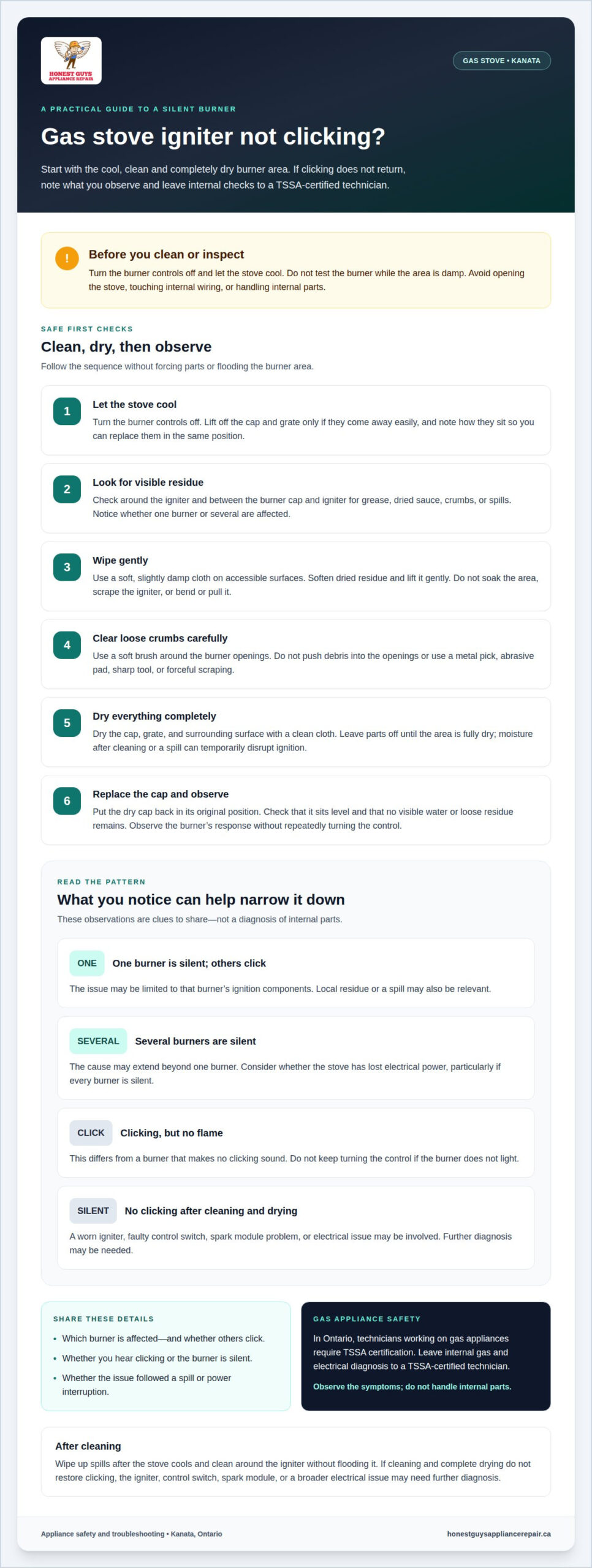
- Turn the burner controls off and let the stove cool before cleaning. Lift off the burner cap and grate only if they come away easily, and note how each piece sits so you can put it back in the right position.
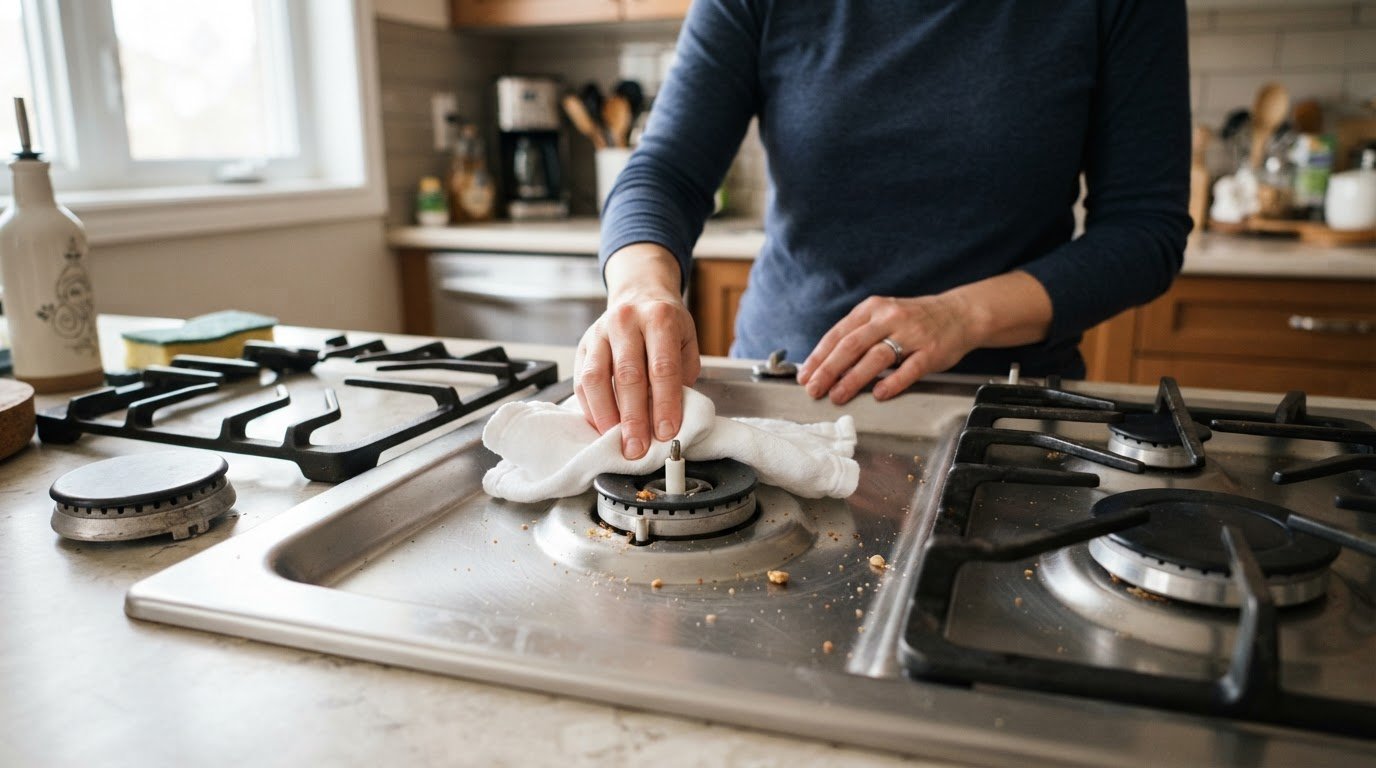
- Use a soft, damp cloth to wipe food residue from the burner surface and around the igniter. Don’t soak the area or scrape the igniter with a sharp tool. Rough handling can damage the small component that creates the spark.
- Clear loose crumbs around the burner openings with a soft brush. Don’t push debris into the openings or use excess water, which can leave moisture where the spark needs to form.
Dry and Maintain the Burner
- Dry the burner cap, grate and surrounding surface with a clean cloth, then leave the parts off until the area is fully dry. Moisture from cleaning or a cooking spill can temporarily disrupt ignition, so don’t test the burner while it’s damp.
- Put the dry cap back in its original position. Check that it sits level and that the burner area has no visible water or loose residue. A misaligned cap can affect burner operation, even after the igniter area is clean.
- For routine maintenance, wipe up spills after the stove cools and clean around the igniter without flooding it. This helps limit buildup and keeps the area dry. If your gas stove igniter is not clicking in Kanata after cleaning and drying, the cause may need further diagnosis.
Grease, food and spills around the ignitor
- Turn the burner control off and let the surface cool before inspecting it. Look for grease, dried sauce or crumbs between the burner cap and igniter. These deposits can interfere with the spark, even when the burner looks mostly clean. Note whether one burner or several are affected. That can help distinguish local buildup from a broader ignition problem.
- Wipe visible grease and food residue from the cool burner surface with a soft cloth. Dampen the cloth slightly rather than pouring liquid onto the stove. To remove a dried spill beside the igniter, soften it with the cloth, then lift it gently. Avoid metal picks, abrasive pads and forceful scraping, which can damage the igniter or push debris into burner openings.
- After removing residue, check around the igniter. A greasy coating, a crumb beside the ceramic tip or a hardened sugary spill can obstruct the spark path. Clean only accessible surfaces, and don’t bend or pull the igniter while wiping. If one burner has trouble after a spill, the issue may be local. If several stop clicking, the cause may extend beyond that burner.
- Once the area is clean and dry, observe the burner’s response without repeatedly turning the control. If clicking returns, residue may have been interfering; if it remains silent, avoid taking apart the burner or handling internal wiring. Record which burner is affected and whether the problem followed a spill. That detail can help narrow the diagnosis. If residue removal doesn’t restore the spark, ignition troubleshooting can help identify the source.
Cleaning around the ignitor and ensuring the area is completely dry can restore normal operation. Treat both parts of that step as important: removing residue addresses the area around the ignitor, while complete dryness is part of the condition associated with normal operation. If you are assessing the result, keep the focus on whether the area has been cleaned and is completely dry before judging whether normal operation has returned. These are the relevant conditions to consider after residue has been removed.
How gas stove spark ignition works
In Ontario, technicians working on gas appliances require TSSA certification. That requirement applies to gas stove repair in Kanata, so leave internal gas and electrical diagnosis to a TSSA-certified technician.
- Notice what happens when you turn a burner control on. The stove uses electricity to create the spark that lights the gas. As the igniter produces a spark, gas begins flowing, so clicking indicates that ignition has started. If there’s no click, a spark may not be forming.
- Check whether one burner or several are affected, without removing panels or touching wiring. If one burner is silent while others click, the issue may be limited to that burner’s ignition components. If every burner is silent, consider whether the stove has lost electrical power. This observation can help narrow down the likely cause.
- Distinguish between clicking and lighting. A burner that clicks but doesn’t light is behaving differently from one that makes no clicking sound. Clicking means the ignition system is attempting to create a spark; silence suggests the process may not be starting. Don’t keep turning the control if the burner doesn’t light.
- Use the pattern to guide your next step, not to diagnose internal parts yourself. A power interruption can prevent the ignition system from producing a spark. One silent burner may point to a local component, while several silent burners suggest a broader stove issue. These clues can help you explain what happened to a technician.
- Leave internal checks to a TSSA-certified technician. Gas stove ignition combines an electrical spark with gas flow, and diagnosing internal controls or connections requires appropriate training. Share whether one burner or several are silent, whether you hear clicking, and whether the issue followed a power interruption. Clear observations help focus the repair assessment without guessing at a part.
Ignitor, switch and spark module failures
If cleaning hasn’t restored clicking, a worn igniter, faulty control switch or failed spark module may be responsible. Use these observations to guide your next steps, but don’t open the stove or handle internal parts.
Troubleshoot the Igniter Step by Step
- Turn the controls off and note whether one burner or several are affected. Then try the control once and listen for clicking. If the problem continues, avoid repeated attempts or taking apart the stove. These observations can help a technician narrow down the fault.
Check a Single Burner Igniter
- Compare the silent burner with another burner, and note whether its igniter clicks at all. A fault limited to one burner may involve its igniter or a related component. Don’t bend, pull or remove parts to investigate. The cause requires proper diagnosis.
- Don’t use a burner that won’t click and light normally, and don’t try to light it manually. If you smell gas, turn the burner controls off if safe and stop troubleshooting.
- Contact a technician if the stove continues to fail after basic checks or you notice a gas smell. Leave internal gas and electrical diagnosis to a qualified professional rather than testing switches or wiring yourself.
- Repair time depends on identifying the fault and whether the correct part is available. Ignitors, switches and spark modules can be model-specific, so replacement parts must match the stove. Have the model information ready when arranging stove repair.
Regular use can gradually wear down gas stove igniters until they no longer produce a consistent spark. If a burner doesn’t respond or works inconsistently, stop using it rather than repeatedly trying the control. Note which burner is affected and whether others click, then share those observations and the stove’s model information with a qualified technician.
A technician can use these details to assess whether an igniter or another related component needs attention. Don’t inspect or replace internal parts yourself. The cause needs proper diagnosis, and replacement parts must match the stove.
Honest Guys Appliance Repair: Stove Repair
Honest Guys Appliance Repair provides stove repair when your stove’s igniter remains silent or a burner won’t light. A technician can assess the symptoms and explain the repair options in plain language.
When arranging service, describe which burners are affected and what happens when you turn the controls. These details give the technician a useful starting point for the assessment.
Contact Honest Guys Appliance Repair to discuss stove repair for your stove.
Choose a clear next step for your stove
If your gas stove igniter is not clicking in Kanata, don’t guess which component needs replacing. A careful diagnosis can distinguish a failed part from an issue elsewhere in the ignition system, helping you make an informed repair decision instead of replacing parts without knowing the cause.
Consider how the stove is affecting your routine and whether its operation has changed. Share those details when arranging service. Honest Guys Appliance Repair offers stove repair, along with oven repair, fridge repair and dryer repair for other household appliance needs in Ottawa and surrounding areas, including Kanata.
Ready to discuss your stove? Contact Honest Guys Appliance Repair to talk about the next step. A straightforward assessment can help you move from uncertainty to a practical plan for your kitchen.
Frequently Asked Questions
Why is a gas stove igniter not clicking or sparking?
Sound alone can’t identify the precise fault. The control switch, igniter and spark module each need appropriate diagnosis. Before arranging help, note the stove’s make and model from its identification label, and describe when the silence began. For example, mention whether it followed a power interruption or started during regular use. Those details can focus the assessment without guessing at a replacement part.
How to safely clean and dry a gas stove burner and igniter
Before choosing a cleaner or removing burner parts, consult the stove’s use and care manual for model-specific cleaning instructions. Don’t apply a product directly to the igniter unless the manual allows it, and don’t remove fixed components to reach hidden residue. If you can’t access the area without taking the stove apart, stop and arrange professional diagnosis. Keep the model information available for the technician.
How long does gas stove igniter repair take and is the part usually available?
Repair time depends on identifying the fault and whether a part that matches the stove model is available.