

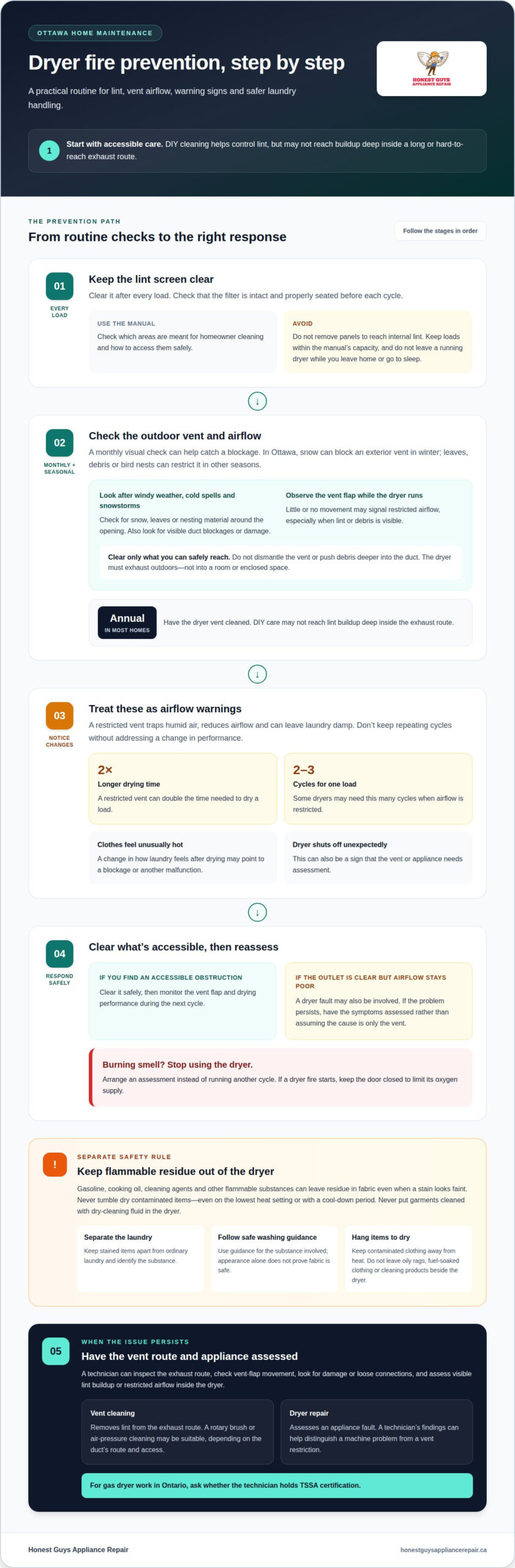
A clean lint screen is only the first step in dryer fire prevention. To understand how to prevent dryer fires in Ottawa, clear the lint screen after every load and have the dryer vent cleaned annually in most homes. DIY care helps control lint, but it may not reach buildup deep inside the vent.
Routine cleaning is essential, but Ottawa’s winter weather can also leave an outdoor vent blocked. This guide explains what you can safely do yourself and when professional vent cleaning or appliance maintenance may help. You’ll learn how to spot airflow problems, handle laundry stained with flammable substances, and decide when to call a technician. Use these steps to build a practical maintenance plan for your home.
Key Takeaways
- Use the lint filter as a first line of defence, and make sure it stays intact and properly seated during every cycle.
- Watch for changes in drying performance and outdoor vent-flap movement; these can help reveal airflow trouble before it worsens.
- Wash laundry contaminated with flammable substances more than once and hang it to dry rather than putting it straight in the dryer.
- When a dryer runs unusually hot, shuts off unexpectedly or continues to underperform, technician maintenance can help identify whether the cause is a vent restriction or an appliance fault.
DIY cleaning compared with professional service
DIY care is best for accessible maintenance. Professional service is more appropriate for cleaning inside a long or hard-to-reach exhaust route. In Ottawa, preventing dryer fires starts with knowing what you can safely do yourself and when the duct’s layout calls for specialized cleaning.
Cleaning the Lint Filter
Check the owner’s manual before using tools or removing parts. It explains which areas are intended for homeowner cleaning and how to access them without damaging the appliance. Don’t remove panels to reach internal lint. Keep each load within the manual’s capacity, since tightly packed clothes can restrict tumbling and take longer to dry. Never leave a running dryer while you leave home or go to sleep.
Routine Vent Cleaning and Inspection
For vent cleaning, a rotary brush can loosen debris, while air-pressure cleaning can move lint through the exhaust duct. The right method depends on the duct’s route and access. A professional can clean sections that aren’t reachable from the appliance or outdoor opening and explain what was cleared. The dryer vent should exhaust outdoors, not into a room or enclosed space.
Lint buildup is a contributing factor in residential dryer fires. If you notice a burning smell, stop using the dryer and arrange an assessment instead of running another cycle. If a dryer fire starts, keep the door closed to limit its oxygen supply.
Vent cleaning and dryer repair address different problems. Cleaning removes lint from the exhaust route, while repair assesses an appliance fault. A technician’s findings can help distinguish between them. Replacing the dryer is a separate decision: consider its condition and any identified fault rather than treating vent cleaning as a reason to replace it. Knowing the difference helps Ottawa households choose a sensible next step without taking the dryer apart.
Ottawa winter conditions and vent blockages
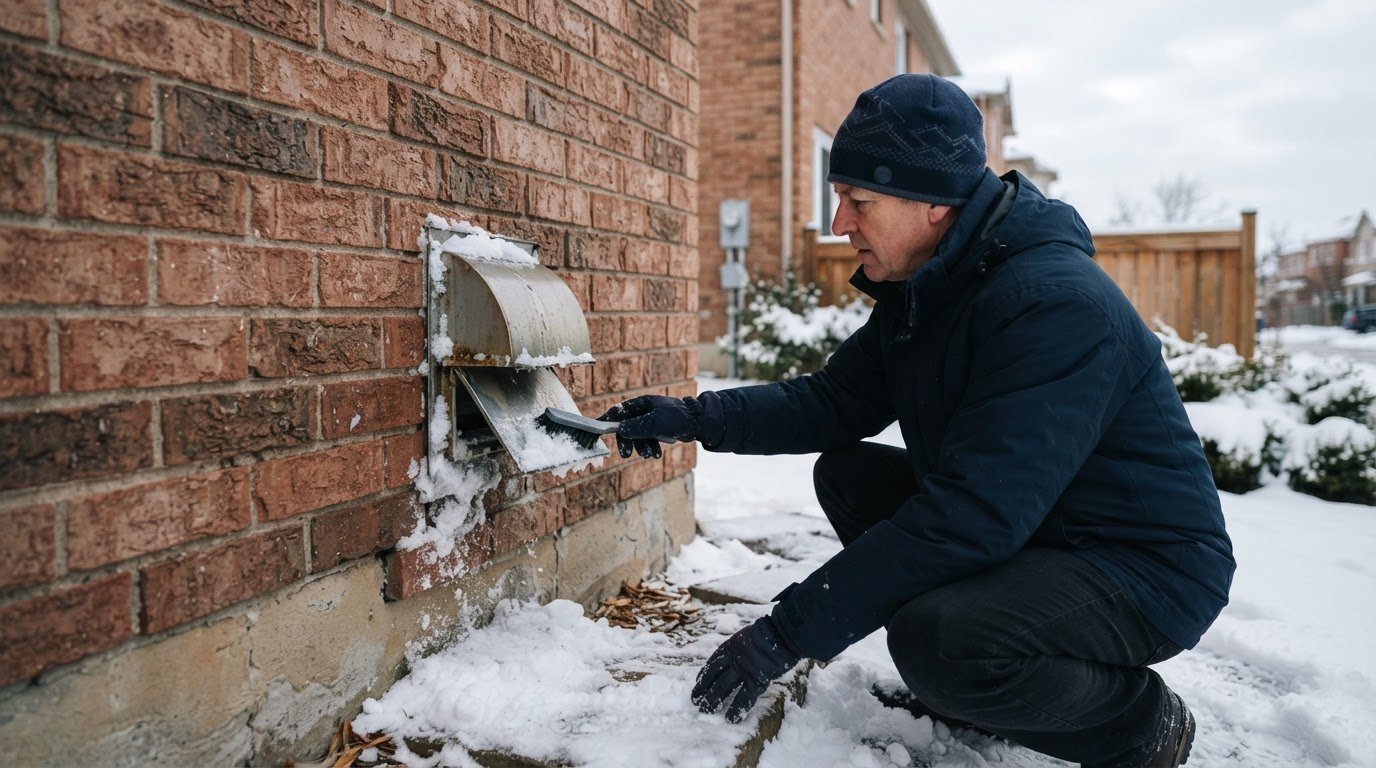
In Ottawa, snow can block an exterior dryer vent in winter. Leaves, debris, or bird nests can also restrict airflow in other seasons. A monthly visual check can help catch an obstruction before poor exhaust flow affects drying.
Checking Outdoor Vents for Blockages
Check the outdoor vent after windy weather, cold spells, and snowstorms. Look for snow, leaves, or nesting material around the opening, and clear only what you can safely reach without dismantling the vent. While the dryer runs, see whether the exterior flap opens. Little or no movement may signal restricted airflow, especially if lint or debris is visible.
Recognising Signs of a Blocked Vent
Longer drying time is a practical warning. A restricted vent can double the time needed to dry a load, and some dryers may need 2-3 cycles for one load. Notice whether clothes feel unusually hot afterward or the dryer unexpectedly shuts down. These signs can point to a vent blockage or another malfunction, so don’t keep repeating cycles without addressing the change.
Check the duct as well as the exterior opening. About once a month, look for visible blockages or damage and make sure the exhaust path remains clear. If snow covers the outlet, remove the obstruction safely without pushing debris deeper into the duct. A blocked vent traps humid air and reduces airflow, leaving laundry damp and making the dryer run longer.
After clearing an accessible exterior obstruction, monitor the flap and drying performance during the next cycle. If the vent opening is clear but airflow remains poor, a dryer fault may also be involved. Dryer repair support can help assess appliance symptoms when the problem persists.
Handling laundry stained with flammable substances
Gasoline, cooking oil, cleaning agents, and other flammable substances need careful handling before laundry goes near a dryer. Residue can remain in fabric after a stain looks faint, so don’t treat appearance alone as proof that a garment is safe to tumble dry. Keep flammable materials away from the dryer, including containers used for fuel or cleaning products. Store them elsewhere, and deal with stained clothing separately from ordinary laundry.
Never put garments cleaned with dry-cleaning fluid in the dryer. Don’t tumble dry fabric saturated with chemicals, oils, or gasoline, such as a work shirt splashed with fuel or a tea towel soaked in cooking oil. Heat can ignite flammable residue, so keep contaminated items out of the dryer. For laundry stained with gasoline, cooking oil, cleaning agents, or another flammable substance, follow safe washing guidance for the substance and hang the items to dry.
Keep the dryer area clear when handling contaminated laundry. Don’t leave oily rags, fuel-soaked clothing, or cleaning products on or beside the appliance. Before loading the drum, separate stained items and identify the substance involved. If a garment has a strong chemical or gasoline smell, don’t put it in the dryer. Keep it away from heat and follow safe washing and air-drying guidance.
Never use the dryer for laundry stained with flammable substances, even on the lowest heat setting or with a cool-down period. Keep contaminated items out of the dryer and follow safe washing and air-drying guidance for the substance involved.
These steps address a fire risk that lint cleaning cannot remove: flammable residue in fabric or near the machine. Separate contaminated laundry, follow safe washing guidance, and hang it to dry whenever possible.
Dryer maintenance by a certified technician
A technician can assess problems that cleaning the lint filter won’t reveal, including restricted airflow inside the dryer and visible lint buildup. They can inspect the exhaust route, check whether the vent flap moves during operation, and look for damage or loose connections. This is particularly useful when clothes stay damp, the dryer feels unusually hot, or cycles end unexpectedly. These symptoms may point to restricted airflow or an appliance fault, so both should be assessed rather than assuming a single cause.
For gas dryer work, ask whether the technician holds TSSA certification. In Ontario, technicians working on gas appliances are required to hold TSSA certification. This applies to gas-appliance work, not every dryer maintenance task. A technician can explain in plain language which checks involve the vent and which involve the appliance.
Maintenance can also reveal worn or damaged parts that affect dryer operation. A technician may assess the thermal fuse or safety fuse, which can interrupt operation when a fault occurs, and the door latch, which keeps the door closed during a cycle. These checks don’t replace clear venting or safe laundry habits. They can help distinguish a component problem from lint or airflow trouble, so repairs address the observed cause rather than guesswork.
Ask for a clear explanation of the findings before approving work. A useful assessment connects each recommendation to an observation, such as a blocked exhaust path, damaged part, or poor airflow. A slow-running dryer doesn’t automatically need replacing; its condition and the cause of the problem matter. If a technician identifies a fault affecting safe operation, stop using the dryer until it’s assessed and repaired.
For persistent overheating, unexpected shutdowns, or suspected component damage, arrange professional dryer repair to identify the appliance fault and discuss the next step.
Honest Guys Appliance Repair: Dryer Repair
Honest Guys Appliance Repair provides Dryer Repair when a dryer overheats, shuts down unexpectedly, or continues to dry clothes poorly after vent cleaning. A technician can assess whether an appliance fault, such as a failed thermal fuse or faulty door latch, may be involved instead of assuming lint is the only cause.
Describe what you’ve noticed, including unusual heat, burning smells, or changes in cycle performance. Mention whether the vent was recently cleared and whether the dryer stopped mid-cycle. These details help focus the assessment on the symptoms and a practical next step. If the dryer smokes or catches fire, leave the home and call emergency services. Repair service is not a substitute for an emergency response.
For persistent dryer problems that need a repair assessment, contact Honest Guys Appliance Repair.
Make dryer safety part of your home routine
A home plan for preventing dryer fires in Ottawa can start with a shared maintenance record. Note when cleaning or repairs take place, what symptoms you notice, and whether they return. Keeping these details together helps you track changes over time and explain changes in dryer performance when it needs attention.
When a dryer problem persists, Honest Guys Appliance Repair provides Dryer Repair to help identify the appliance fault and discuss practical next steps. The company also offers Fridge Repair and Oven Repair, serving households across Ottawa and surrounding communities, including Nepean, Kanata, Stittsville, Orleans, Barrhaven, Greely, Findlay Creek, and Gloucester.
Don’t ignore a change that leaves you uncertain about using your dryer. Contact Honest Guys Appliance Repair to discuss a repair assessment. A clear next step can make home maintenance feel more manageable.
Frequently Asked Questions
How often should you clean a dryer lint filter and the area around it?
Clean the lint filter after every load, then check the filter slot for loose lint before replacing the screen. With the dryer off, use a soft brush or vacuum attachment to remove accessible lint around the opening. Don’t push debris deeper into the appliance. Replace a filter with holes or worn edges, since lint can pass through damaged mesh.
How do you safely clean a dryer vent and exhaust duct?
For a short, accessible duct, follow the dryer manual and use a brush made for vent cleaning. Don’t force a rotary brush through a long or sharply bent duct, where it could break or pack lint more tightly. Professional rotary-brush or air-pressure cleaning can reach harder-to-access sections. Stop if the duct is damaged or inaccessible.
What signs show a dryer vent is clogged or the dryer is overheating?
Longer cycles, unusually hot clothes, or an unexpected shutdown can signal a problem. Check whether the exterior vent flap opens while the dryer runs. If drying worsens and the flap barely moves, airflow may be restricted. If you smell burning or see smoke, stop using the dryer. If there’s a fire, leave and call emergency services.
How often should dryer exhaust ducts be inspected and cleaned?
Plan on annual cleaning in most Ottawa homes, with inspection or cleaning every 6 to 12 months depending on the venting setup. Heavy use, pets, or a high-efficiency dryer can call for cleaning every 6 months. The duct route, lint accumulation, and changes in drying performance help determine whether the shorter interval is needed.
What dryer vent materials and installation practices reduce fire risk under Ontario Building Code?
Rigid metal ducting is the first choice for reducing fire risk, with flexible metal as the second. Avoid plastic or foil accordion-style ducting, which can trap lint, kink, and restrict airflow. Keep the exhaust route clear and avoid screws that protrude inside the duct. These material recommendations alone don’t establish Ontario Building Code compliance.
What factors affect professional dryer vent cleaning or inspection in Ottawa?
The work depends on factors such as vent length, bends, access, and lint buildup. Cleaning and inspection may involve different work. If the dryer also overheats or shuts down unexpectedly, appliance repair is a separate assessment from vent cleaning.