
An uneven oven isn’t automatically ready for replacement. If your oven temperature isn’t accurate in Ottawa, test it with an oven thermometer: set it to 175°C (350°F) and take a reading 20 minutes after the preheat signal. A consistent difference of more than about 15°C (25°F) is worth diagnosing; for an oven under 10 years old, repair is usually the more cost-effective option.
It’s frustrating when a meal cooks unevenly or takes longer than the recipe suggests. But an oven temperature that isn’t accurate may have a fixable cause, rather than being a reason to give up on the appliance. Residue around the temperature sensor is one thing to check, along with normal temperature cycling and signs of a failing component.
Here, you’ll learn how to judge whether it’s safe to keep using an uneven oven, what a thermometer test can reveal, and when cleaning or calibration may help. We’ll also cover signs that point to repair rather than replacement, so you can choose a practical next step with more confidence.
Key Takeaways
- Compare the oven’s actual temperature with its setting using an oven thermometer before deciding it needs repair.
- Stop using the oven if you notice burning smells, sparks or a tripped breaker.
- Residue around the temperature sensor may affect readings, but persistent inaccuracy can point to a sensor or calibration issue.
- Consider the oven’s age, symptoms and likely fault when weighing repair against replacement; a technician can diagnose the cause.
Should I keep using an oven that heats unevenly?
You may use an uneven oven cautiously if it remains safe and isn’t overheating. Check its temperature and look for warning signs before deciding whether to keep baking.
Thermometer accuracy checks
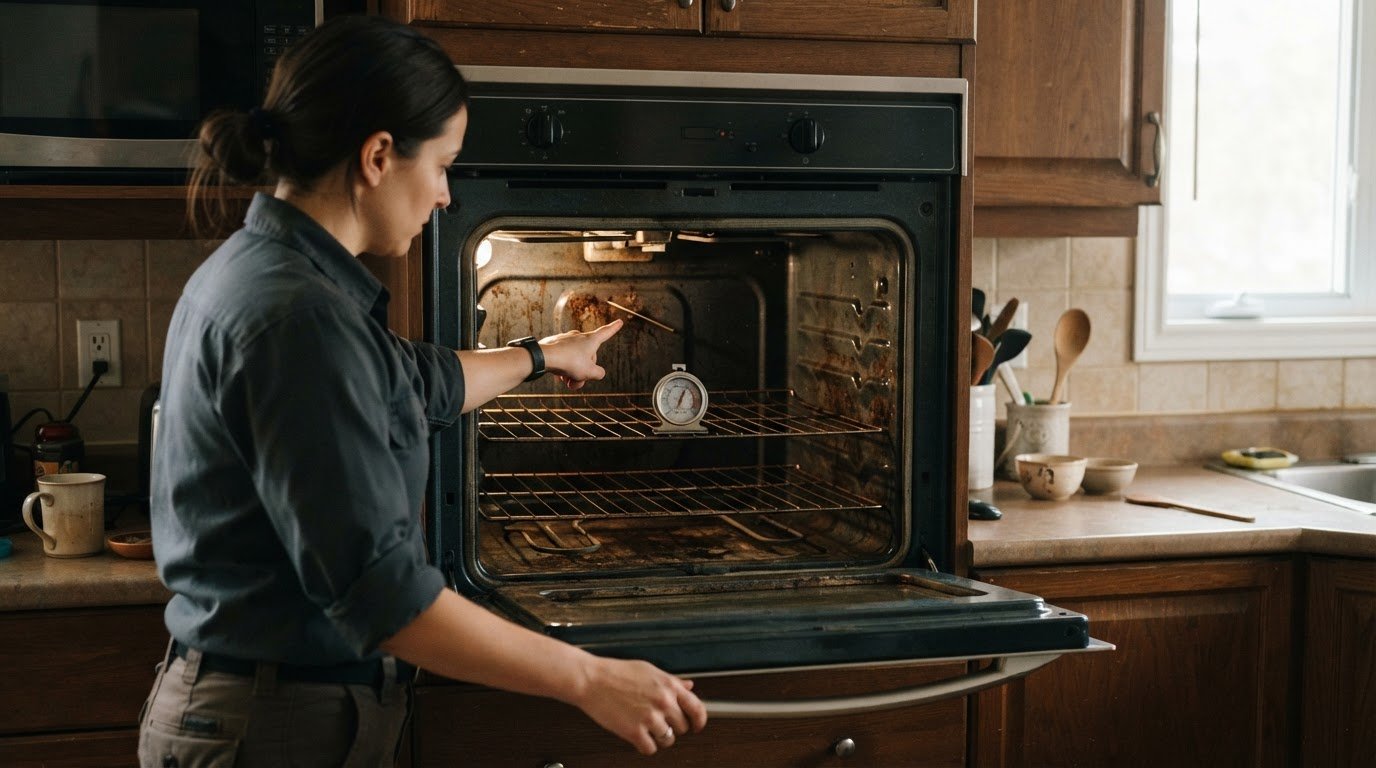
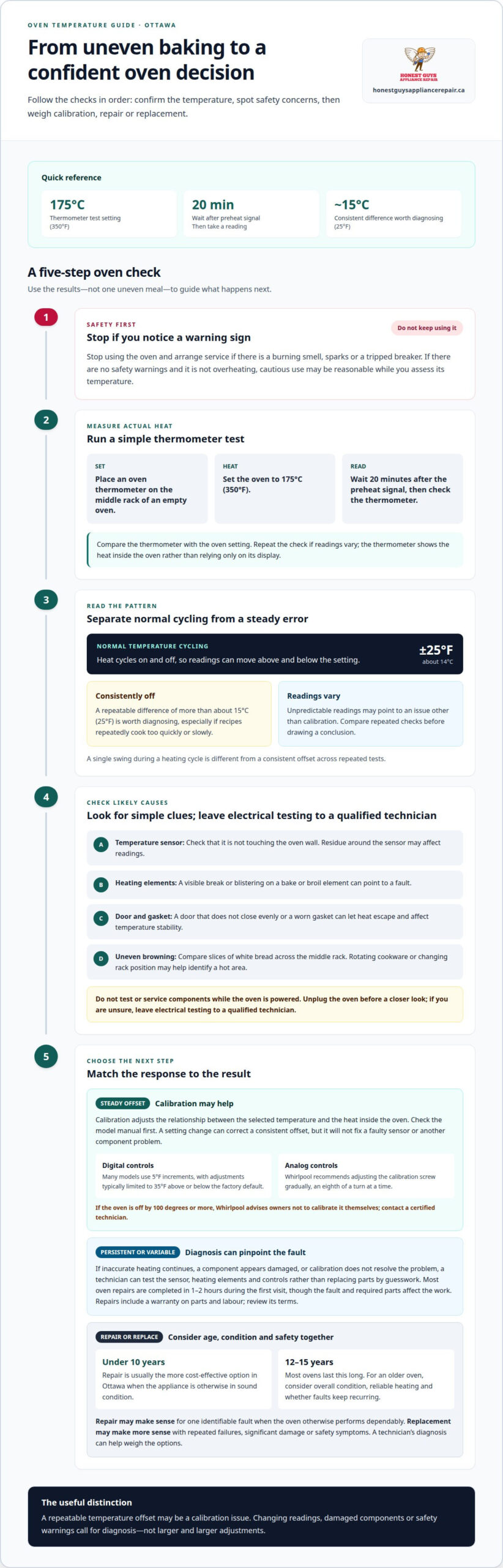
An oven thermometer shows the heat inside the oven, rather than relying only on its display. Place it on the middle rack in an empty oven set to 175°C (350°F), then take a reading 20 minutes after the preheat signal. Compare the result with the setting, and repeat the check if readings vary. A consistent difference of more than about 15°C (25°F) is worth diagnosing, especially when recipes repeatedly cook too quickly or slowly.
Sensor checks and baking-cycle variation
The temperature sensor measures oven heat and helps the appliance regulate its heating cycle. A variation of plus or minus 25°F (about 14°C) can be normal when checking an oven’s temperature, because the thermostat cycles heat on and off as temperatures rise above and fall below the setting. Make sure the sensor isn’t touching the oven wall; contact can affect its reading. Don’t test or service components while the oven is powered.
Watch for signs that continued use may be unsafe. Stop using the oven and arrange service if you notice a burning smell, sparks, or a tripped breaker. A door that doesn’t close evenly or a worn gasket can let heat escape, affecting cooking and temperature stability.
- Check whether the bake or broil element glows red while operating. Visible breaks or blistering can point to a fault.
- For a closer look at components, unplug the oven’s power first. Leave electrical testing to a qualified technician if you’re unsure.
- To spot uneven cooking, place white bread across the middle rack and compare browning. Rotate cookware or change rack position if one area cooks faster.
If there are no safety warnings and the oven isn’t overheating, cautious use may be reasonable while you assess its readings. Follow the appliance manual for model-specific guidance, and avoid relying on an inaccurate setting for recipes that need steady heat.
What if my oven is very inaccurate?
If thermometer readings stay 25-50°F or more from the setting, a sensor or calibration problem may be involved. Calibration can correct a steady offset, but it won’t fix every fault.
Temperature sensor problems
The temperature sensor measures oven heat and sends information to the control system. If its reading is inaccurate, the oven may heat too much or too little, even when the display shows the expected setting. Calibration may help correct a consistent offset, but changing the setting won’t fix a faulty sensor. Compare repeated thermometer readings to determine whether the difference is stable or variable.
Reasons for oven calibration
Oven calibration adjusts the relationship between the selected temperature and the heat inside the appliance. Calibration can drift over time, so baking results may change even when you use the same recipe and settings. A steady difference across repeated checks may point to an offset; unpredictable readings suggest another issue. This distinction matters: calibration corrects the setting, while a failing sensor or component may need repair.
Adjusting electric oven calibration
Many models offer a digital calibration offset, often in 5°F increments, with adjustments typically limited to 35°F above or below the factory default. Check the manual for your electric oven’s controls before changing anything. For analog controls, Whirlpool recommends adjusting the calibration screw gradually, an eighth of a turn at a time. The temperature knob may have one or two screws on its back, depending on the model.
Make small adjustments, then repeat the thermometer test before changing the setting again. If the reading remains far off, don’t keep compensating with larger offsets. Whirlpool advises owners not to calibrate an oven themselves when its temperature is off by 100 degrees or more; contact a certified technician instead. A sensor fault or another component problem may need diagnosis rather than a calibration change.
Repair or Replace Your Oven?
Repair is worth considering when a specific fault affects cooking and the oven is otherwise in sound condition. Its safety symptoms, the parts involved, and how well it performs overall can help you decide whether keeping it makes sense.
Choosing a repair technician
Contact an oven repair technician when inaccurate heating continues, a component appears damaged, or calibration doesn’t resolve the problem. A technician can test the sensor, heating elements, and controls to identify the fault instead of replacing parts by guesswork. For gas or electric ovens, professional diagnosis helps ensure the assessment and repair suit the appliance.
Most oven repairs are completed in 1-2 hours during the first visit, though the fault and required parts affect the work. Ask for a clear explanation of the diagnosis and proposed repair before authorizing service. Oven repairs include a warranty on parts and labour; review its terms so you understand what the coverage applies to.
Repair or replacement decisions
Age is a useful starting point. Most ovens last 12-15 years, and repairing an oven under 10 years old is usually the most cost-effective option in Ottawa. For an older appliance, consider its overall condition, how reliably it heats, and whether the current fault is isolated or part of recurring problems. A technician’s diagnosis can help you weigh those factors.
Replacement may make more sense if the oven has repeated failures, significant damage, or safety symptoms that affect continued use. Repair may be a sensible option when there’s one identifiable fault and the appliance otherwise performs dependably. Consider how often you use the oven and whether it meets your household’s cooking needs. These practical details can guide your decision without relying on age alone.
Before the visit, note the oven’s model, the settings you used, and the cooking results you observed. This gives the technician a clearer picture of the problem and helps determine the next step.
Cleaning residue from a temperature sensor
Grease or baked-on food near the oven’s temperature sensor is worth checking before assuming the sensor has failed. The sensor reads oven heat, so residue around it may affect how accurately it responds. Cleaning may remove surface buildup, but it won’t fix a damaged sensor, heating element, or control.
Start with safety. Take care when cleaning near oven components. Use the appliance manual to locate the sensor, as its position and accessibility vary by model. Don’t remove the sensor or reach behind panels just to clean it.
- Look for visible grease or food residue on the accessible sensor surface.
- Wipe gently with a soft, slightly damp cloth, without bending or pulling the sensor.
- Keep water and cleaning products away from openings and electrical connections.
- Let the area dry fully before restoring power and using the oven.
A clean sensor should sit clear of the oven wall so it can sense heat properly. If it touches the side, readings may remain inaccurate even after you remove residue. Check whether the oven then heats more evenly, but compare results across repeated baking rather than judging from one recipe. A cleaner surface may help, but it doesn’t confirm that the sensor is working correctly.
If temperature readings remain inconsistent, or the sensor looks bent, damaged, or loose, stop cleaning and arrange a diagnosis. A failed sensor, control issue, or weak heating element can cause similar cooking problems. Don’t test electrical parts yourself; unplugging the appliance is essential before any inspection or service.
If cleaning doesn’t resolve the uneven heating, book an oven assessment to identify whether the sensor or another part needs attention.
Honest Guys Appliance Repair: Dryer Repair
If your oven temperature is not accurate in Ottawa, Honest Guys Appliance Repair can help when the problem continues after basic checks or cleaning. Its Oven Repair service can assess whether a temperature sensor, heating element, or another fault is affecting cooking, then explain the repair needed. If the oven shows signs such as sparks or a burning smell, stop using it and arrange service.
A technician can use the oven’s symptoms and temperature readings to narrow down the cause instead of relying on guesswork. If the appliance is beyond repair, replacement may be more practical; the right decision depends on its condition and the work required. Honest Guys Appliance Repair also offers Dryer Repair, Fridge Repair, and Stove Repair.
For help with an oven that won’t hold its temperature, contact Honest Guys Appliance Repair to discuss an assessment.
Choose a clear next step for your oven
If your oven temperature isn’t accurate in Ottawa, base your next decision on a consistent record, not one disappointing meal. Note the settings you use, how the food turns out, and whether the problem returns after cleaning. These details give a technician a practical starting point and help distinguish an occasional cooking variation from a fault that continues to affect daily use.
You don’t need to decide whether to replace the oven before understanding the cause. An assessment can clarify whether repair is a sensible option for your appliance and what the next step involves. If the oven shows a safety warning, leave it off while arranging help.
For a straightforward discussion about the oven’s symptoms, contact Honest Guys Appliance Repair. With a clearer diagnosis, you can make a considered choice and get back to planning meals with confidence.
Frequently Asked Questions
Can a bad door seal cause uneven cooking?
Yes. A poor seal can affect how well the oven holds heat, so food may take longer to cook or cook inconsistently. With the oven cool, check the accessible gasket for damage or trapped food. Clean only as the appliance manual directs, and don’t pull the seal from its channel. If the door feels misaligned or the seal is loose, have the fit assessed.
Why Would You Calibrate Your Oven?
Calibration can help correct a consistent difference between the selected setting and the oven’s actual temperature. It’s most useful when repeated checks show a steady offset, rather than readings that change from one bake to another. Keep a brief record of the settings and results for familiar recipes. That pattern helps distinguish a calibration adjustment from an issue that needs component testing.
Why does my oven take so long to preheat?
Opening the door during preheating lets heat escape and can extend the wait. Keep it closed until the preheat signal, and avoid putting cold cookware inside beforehand. If the oven still takes unusually long, note whether the delay occurs with every setting or only one. This detail can help narrow down whether the issue relates to heating or the oven’s controls.
How can I test whether my oven temperature is accurate?
If your oven temperature isn’t accurate in Ottawa, compare readings at more than one setting. An oven can differ from its selected temperature by 25°F at one setting and 50°F at a higher setting. Record each selected temperature and thermometer reading, then compare the pattern. This can show whether the offset stays similar or changes as the oven heats more strongly.
How do I calibrate an oven that runs too hot or too cold?
Follow the calibration instructions in your model’s manual, as control layouts and adjustment steps vary. Change only the calibration setting, not the recipe temperature, while assessing the result. Note the original setting so you can restore it if needed. If the control has no calibration option, or the adjustment doesn’t resolve the issue, have the oven assessed.
What causes an oven to heat unevenly or fail to reach the set temperature?
A sensor, heating element, door seal, or convection fan can contribute to temperature problems. If your oven temperature isn’t accurate in Ottawa, a technician can test the sensor instead of relying on appearance alone. At room temperature of 68°F (20°C), most sensors should read around 1080-1090 ohms. This electrical test requires an ohmmeter and is best left to a technician.