
If a hood fan hums without turning, switch it off. If you notice a burning smell, smoke or sparks, turn it off at the breaker and stop using it. For hood fan repair in Kanata, the next step depends on the symptom: weak airflow, a fan that won’t start and a motor that won’t change speed can have different causes. A malfunctioning hood may also allow cooking fumes, grease and combustion products from gas cooking to build up indoors.
A faulty fan is frustrating, especially when cooking smells linger or ventilation drops. Sometimes the problem isn’t the fan itself: filters, controls or the duct path may be involved. Knowing what a technician will assess can help you decide whether to repair the hood or consider replacement.
This guide covers safe first checks, common repair options and installation considerations. It explains how diagnosis, written quotes and warranty terms fit into the process, and what to consider when installing a kitchen exhaust hood in Kanata. You’ll know what to expect before work begins and which symptoms need prompt attention.
Key Takeaways
- Clean metal grease filters every one to three months, and more often if you fry frequently, to help maintain airflow.
- For weak suction, check whether the outdoor vent flap is stuck shut; never climb onto the roof to inspect it.
- Before approving a repair, review the diagnosis, proposed work and warranty terms in a written quote.
- A fan that runs at only one speed may have a faulty speed switch or control board, so the symptom can help guide diagnosis.
- For a fan that won’t start, check the breaker and any accessible plug, but leave powered wiring and motor work to a technician.
Range hood fan not working in Ottawa?
If your range hood fan has stopped, note what still works: the lights, fan speeds and controls. A light that works while the fan stays silent suggests a different fault from a fan that runs but moves little air. For hood fan repair in Kanata, these details help narrow down whether the problem involves the motor, switch, controls or ventilation path.
Ontario electrical and building requirements depend on the work. Repairing an appliance component differs from changing fixed wiring, the duct route or the hood’s location. Work that affects wiring or installation must meet the applicable Ontario requirements.
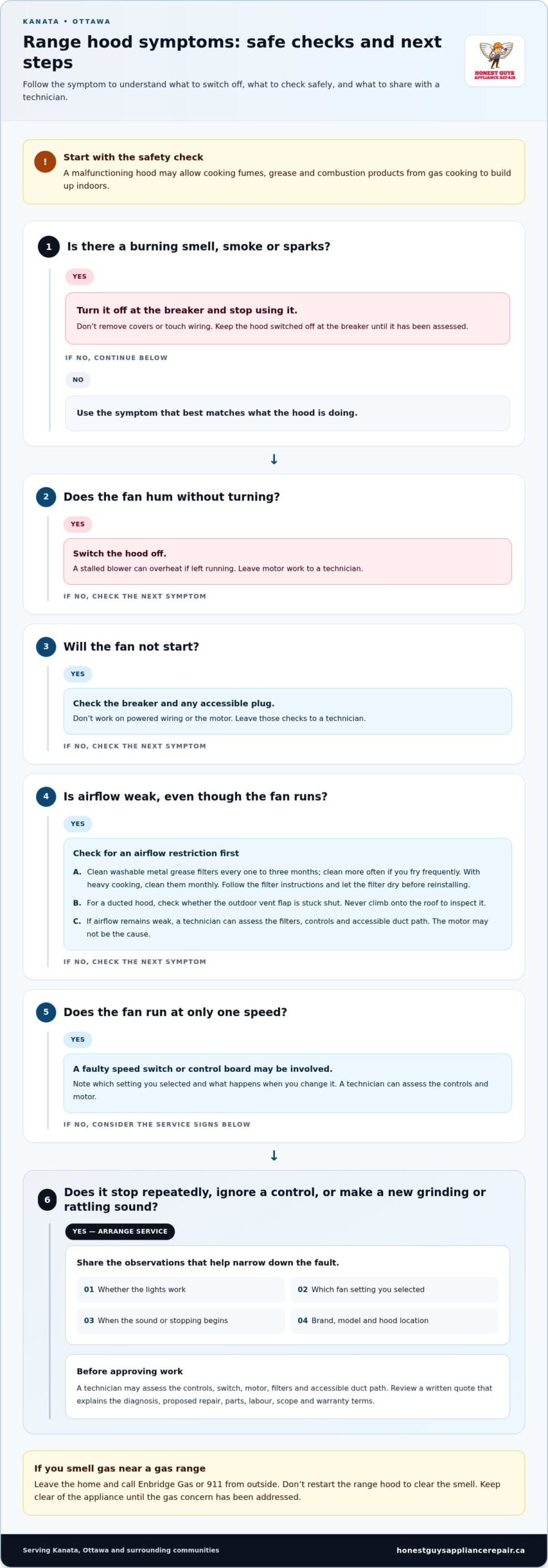
Grease buildup is a common reason airflow weakens over time. Health Canada recommends running a range hood that vents outdoors whenever you cook. Metal grease filters should be washed every one to three months, and more often if your household fries frequently. With heavy cooking, clean range hood filters monthly. Remove a washable filter according to its instructions, soak and clean it, then let it dry before reinstalling. A clogged filter can restrict ventilation even when the fan still runs.
Other faults can show up as a hum, a fan that won’t start, or only one available speed. A ducted hood with weak suction may have a stuck outdoor vent flap. A fan that runs at only one speed may have a faulty speed switch or control board. Grease, smoke and carbon monoxide from gas cooking can accumulate when a malfunctioning vent hood fails to remove air effectively. That makes prompt attention to a ventilation problem worthwhile.
Island range hood installation requires careful planning because the hood hangs above the cooking surface without a cabinet for support. The installer must account for the ceiling mount, duct route and connection to exterior ventilation. An island hood may need a different duct route from a hood fitted beneath a cabinet. Confirming the position and ventilation route before installation helps prevent a poor fit or obstructed airflow.
Blower motor repair begins by checking whether the motor receives power and turns freely. If it hums without turning, switch the hood off to prevent overheating. When the fan runs but airflow remains weak, the filter or duct may be the cause rather than the motor. Checking the controls, filter and accessible vent flap can help distinguish an airflow restriction from a component fault.
Brands and models vary in their controls, filters and motor assemblies, so the same symptom can have different causes. Record the model information and describe what happens at each fan setting. These details give a technician serving Ottawa and surrounding communities, including Kanata, a clearer starting point for diagnosis.
Signs to switch off the hood and book service
Switch off the range hood if the fan hums without turning. A stalled blower can overheat if left running. If you notice a burning smell, smoke or sparks, turn the hood off at the breaker and stop using it. Don’t remove covers or touch wiring. Note what happened before the warning sign appeared, such as whether the fan was running or you had just pressed a control.
Electrical and ventilation hazards can overlap. Exposed wiring may remain dangerous while powered, and a failed hood may not remove cooking emissions. If you smell gas near a gas range, leave the home and call Enbridge Gas or 911 from outside. Don’t restart the range hood to clear the smell. Keep clear of the appliance until the gas concern has been addressed.
Arrange service if the fan repeatedly stops, a control doesn’t respond, or the hood develops a new grinding or rattling sound. Note whether the lights work, which fan setting you selected and when the sound begins. These observations help describe the fault clearly. A greasy filter or blocked duct can restrict ventilation even while the motor runs, so mention any change in airflow.
Before arranging a visit, record the hood’s brand and model, its location and the symptoms. Note whether it’s mounted beneath a cabinet or above an island. Clear access to the hood and surrounding work area, but don’t take down the unit or open its wiring. If the hood has sparked, smoked or smelled burnt, keep it switched off at the breaker.
Service is available in Kanata and across Ottawa and surrounding communities, including Nepean, Stittsville, Orleans, Barrhaven, Greely, Findlay Creek and Gloucester. The work required can depend on the hood’s position, access and ventilation route. Share your neighbourhood and appliance details when arranging service so the location and issue are clear.
For a persistent fan or control fault, hood fan repair and installation can address the appliance through diagnosis and repair. A clear description helps focus the assessment on the reported symptom and safe next steps. Until the hood has been assessed, don’t use it if it has shown signs of electrical trouble. Keep the model information available for the service visit.
Repair diagnostics, written quotes and warranty
A useful diagnosis connects the hood’s symptoms to a specific fault, rather than simply replacing a part. Before work begins, a written quote should outline the proposed repair, its scope and warranty terms.
Diagnostics and Written Repair Quotes
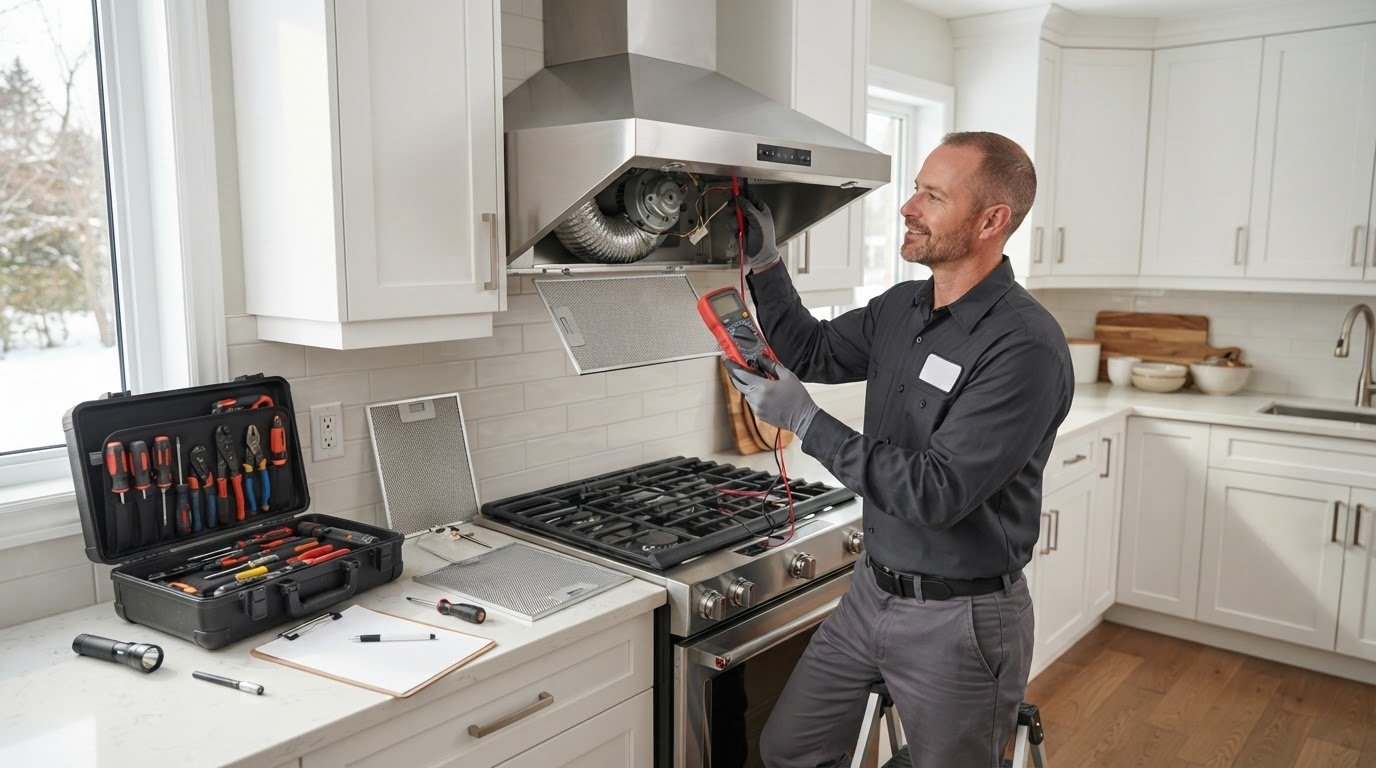
A diagnostic visit should identify what failed and why. The technician may assess the controls, switch, motor, filters and accessible duct path. Ask for the findings in plain language, including whether the issue is electrical, mechanical or related to airflow. Weak suction, for example, may result from a restriction rather than a failed motor.
Review the written quote for the repair steps, parts, labour and any conditions that could change the scope. It should distinguish diagnosis from repair and specify what’s included. Warranty wording should explain which parts and labour are covered, how long coverage lasts and what exclusions apply. Keep the approved quote and warranty terms together.
Booking, Diagnosis and Repair Steps
When booking, describe the hood’s brand and model, the symptom and when it occurs. Note whether the lights work, whether the fan starts and which setting changes its behaviour. These details help focus the visit. Keep the area below the hood clear so the technician can inspect the unit and controls.
During diagnosis, the technician compares the reported symptom with the hood’s operation and inspects relevant components. The written findings should explain the cause and recommended fix. Review the scope before authorizing repair. After the work, ask what was repaired and what the warranty covers. If the proposed work changes, get the revised scope in writing before proceeding.
Weak Suction and Airflow Diagnosis
Weak suction doesn’t automatically mean the blower motor has failed. A technician can inspect the filters, duct connection and outdoor vent path for restrictions. On a ducted range hood, a stuck outdoor vent flap can limit airflow. A dirty filter can also reduce suction, so its condition matters during diagnosis.
Diagnosis should distinguish an airflow obstruction from a motor or control fault. If the blower runs but ventilation remains poor, the duct route and vent opening need attention. If the fan won’t run, the technician can assess its switch and electrical connections. Don’t open the wiring box or test powered components yourself.
Labour depends on the work involved, including access to the hood, the component’s location and whether the repair requires disassembly. Replacing a motor may involve different steps from cleaning a filter or correcting a loose connection. The quote should tie the proposed work to the diagnosis instead of treating every weak-airflow complaint as the same repair.
Warranty terms matter after the repair, too. Keep the service record, approved scope and any care instructions. If the same symptom returns, these details help show what was repaired and which coverage applies. Clear documentation gives you a practical basis for discussing the completed work.
Blower motor, capacitor, switch and control-board repairs
A hood fan’s symptoms can point to different parts, but one sign rarely proves which component failed. A technician assesses the motor, capacitor, switch and control board before recommending repair or replacement. That distinction matters: replacing a working part won’t resolve the underlying fault.
The blower motor drives the fan that moves cooking fumes into the ventilation duct. A motor may fail to start, make unusual noise or stop during use. Grease buildup can also affect the fan assembly and airflow. A technician inspects the motor and surrounding parts, then compares the findings with the symptoms you reported.
Depending on the hood’s design, a capacitor helps the motor start or run. If the fan struggles to start or behaves inconsistently, the capacitor may need testing alongside the motor. A switch, wiring connection or control board can cause similar symptoms. Testing helps distinguish these possibilities instead of treating every stalled fan as a motor failure.
The speed switch controls the fan’s selected setting. A hood that runs at only one speed may have a faulty switch or control board. If buttons don’t respond as expected, the technician can assess the control and its connections. The control board manages electrical signals between the switch and fan components, so a fault can affect more than one setting.
Hood problems can also involve parts beyond the electrical controls. If the fan runs but doesn’t move enough air, the filter or duct path may be restricted. A working motor can’t compensate for blocked ventilation. The technician should identify whether the fault lies in the blower, its controls or the path that carries air outdoors.
Before the visit, note exactly what happens: whether the fan starts, which speeds work and whether the sound changes during cooking. Share the hood’s brand and model if available. These details give the technician a practical starting point without requiring you to open the unit or handle wiring.
After diagnosis, compare the recommended repair with the hood’s condition and expected use. The written scope should identify the failed component, proposed work and relevant warranty terms. Ask how the repair addresses the original symptom. If replacement is recommended, the explanation should clarify why repairing the existing motor, switch or board isn’t suitable.
Cleaning grease filters can help reduce airflow restrictions, but it won’t fix a failed motor or electrical control. Keep the filters clean and watch for changes in fan speed or sound. For hood fan repair in Kanata, a symptom-based diagnosis helps focus on the component that needs attention.
Can a homeowner troubleshoot a range hood fan safely before calling a repair technician?
Yes. You can check a few accessible items without opening the hood. Limit troubleshooting to the breaker, an accessible plug, the filter and visible controls. Leave wiring, the motor and ceiling or roof access to a technician.
If the fan won’t start, check whether the breaker has tripped. If the hood plugs into an outlet inside the cabinet, check that the plug is seated. Don’t remove electrical covers to reach it. If the breaker trips again, stop resetting it and arrange service.
Follow this safe sequence to record what the hood does:
- Switch the hood off before touching its filter or controls.
- Check that the grease filter is seated and not visibly clogged.
- Restore power only if there are no signs of burning, smoke or sparks.
- Test the fan settings from the normal controls, then note which respond.
A fan that works on one setting but not another provides useful diagnostic information. Write down whether the lights work, whether the blower starts and whether the sound changes between settings. Don’t repeat a test if the hood hums without turning, smells burnt, smokes or sparks. Switch it off at the breaker and stop using it.
For a ducted range hood with weak suction, check the outdoor vent flap only from a safe, accessible position. A stuck flap can restrict airflow. Never climb onto the roof to inspect the exterior vent cap. Don’t lean out of a window or use a ladder to reach it. A technician can assess an inaccessible vent during diagnosis.
Have the hood’s model details and your observations ready when booking service. For example, report that the light works but the fan hums and doesn’t rotate. That description is more useful than guessing that the motor has failed. It can help focus the technician’s inspection on relevant controls and components.
Never open the wiring box or work on the motor while the hood has power. Switch it off at the breaker before any external inspection, and leave internal electrical work to a qualified technician. A stopped fan may have a wiring or control fault that you can’t identify with an accessible visual check. Don’t handle exposed wires, test live connections or remove the motor cover.
For professional hood fan repair in Kanata, book service and share the symptoms you observed. Leave the hood switched off if it has shown signs of electrical trouble.
Honest Guys Appliance Repair: Dryer Repair
Honest Guys Appliance Repair helps households across Ottawa and surrounding communities with appliance repairs, including dryers, fridges, ovens and stoves. If another appliance needs attention while you arrange hood fan service, describe the symptoms clearly and note the model details. That helps focus the discussion on the problem and the repair needed.
If an oven or stove shows signs of electrical trouble or unusual operation, stop using it. When arranging dryer, fridge or stove repair, clearly describe the problem to establish practical next steps. Honest, straightforward advice should make the repair scope understandable before work begins.
Contact Honest Guys Appliance Repair or visit honestguysappliancerepair.ca to discuss an appliance repair.
Make a clear plan for your kitchen ventilation
A reliable kitchen ventilation plan starts with a hood suited to your cooking and a duct route that carries air outdoors. If your current unit keeps failing, consider its overall condition, how well it clears cooking fumes and whether the installation still suits your kitchen. These details can help you decide what to address next without rushing into replacement.
For hood fan repair in Kanata, Honest Guys Appliance Repair can help with the appliance issue. The company also repairs dryers, fridges and ovens, so you can address other household appliance concerns through the same local business.
Bring your hood’s model details and a clear description of its symptoms to your next conversation. A focused discussion can help clarify the repair process and the work proposed. Contact Honest Guys Appliance Repair to discuss your appliance repair needs and take the next step with confidence.
Frequently Asked Questions
Which appliance repair companies service range hood fans in Kanata, Ontario?
Honest Guys Appliance Repair provides hood fan repair and installation. When describing your request, specify whether the hood is already installed or you need a new installation. Include its make and model, if available, and whether it’s mounted beneath a cabinet or above an island. These details help clarify whether you need appliance repair or installation.
What are the contact details and service areas of Kanata range hood repair technicians?
Use the contact option on the Honest Guys Appliance Repair website to reach the business. Include your street address, postal code and preferred contact method. Note whether the hood is in a detached home, townhouse or condominium, since building entry arrangements can affect visit planning. Describe the hood’s location in the kitchen so your request is clear.
How much does range hood fan repair cost in Kanata, including diagnostic and call-out fees?
Share the hood’s make, model, installation type and specific symptom when requesting service. Replacing a motor involves different work from addressing a switch issue, while access to a duct or ceiling-mounted unit can affect the repair scope. Before approving work, review the written description of the proposed repair so you understand what the technician plans to do.
How soon can a technician repair a range hood fan in Kanata?
When arranging a visit, provide your preferred access times and any building entry instructions. If you live in a condominium, include details such as concierge procedures or elevator access requirements. Mention whether the hood is above an island or fitted beneath a cabinet. These practical details help plan access to the appliance and work area.
What are common causes of a range hood fan not working or making noise?
Loose mounting hardware can cause vibration, while grease or debris on the fan assembly may affect its balance. A worn motor or damaged fan blade can also make unusual sounds. Note whether the noise comes from the hood body, fan area or surrounding cabinet. This adds a useful clue beyond whether the fan starts or changes speed.
When is it more cost-effective to repair or replace a range hood fan?
Consider whether compatible parts are available for the hood’s make and model, and whether the proposed repair will restore the functions you need. A unit that no longer suits the kitchen layout may remain a poor fit even after a successful repair. If you compare replacement options, check that the new hood suits the existing cabinet space and ventilation route.
Do Kanata range hood repair services offer warranties on parts and labour?
Honest Guys Appliance Repair stands by its repairs with a comprehensive warranty on parts and labour. Keep the service record with the model information and note the repair date. If a concern arises later, describe the affected function and refer to the completed work. Having those details together makes it easier to discuss the repair and its warranty coverage.