
An older appliance isn’t automatically ready for replacement, and a newer one isn’t automatically worth repairing. The same symptom can come from a minor fault or point to wider wear. If you’re asking should I repair or replace my appliance, age alone won’t give you a reliable answer.
It’s frustrating not knowing whether a repair will solve the problem or only provide a short-term fix. Consider the appliance’s safety, overall condition, cause of the fault and likely reliability after the repair. A practical decision starts with those details, not an age cut-off or a guess at the failed part.
This guide offers a practical framework for fridges, washers, dryers, dishwashers, ovens and stoves. You’ll learn what to note before arranging an assessment, how to compare repair and replacement, and which signs call for extra care. Honest Guys Appliance Repair provides residential appliance repair in Ottawa and surrounding areas, including Nepean, Kanata, Stittsville, Orleans, Barrhaven, Greely, Findlay Creek and Gloucester. We explain faults and recommendations plainly, so you can make an informed choice without feeling rushed.
Key Takeaways
- To decide “should I repair or replace my appliance,” weigh its condition, safety and likely reliability alongside a clear diagnosis.
- Review warranty coverage and note when the fault happens before choosing a next step.
- Look for appliance-specific signs, such as recurring problems or changes in performance, rather than relying on age alone.
- Energy use can inform your decision, but it is only one part of the picture.
- A clear diagnosis and straightforward repair advice can help Ottawa-area homeowners choose with confidence.
Should I Repair or Replace My Appliance? Start With the Real Problem
A breakdown can disrupt the whole household. A fridge that isn’t cooling, a washer that stops mid-cycle or an oven that won’t heat can make replacement feel like the quickest answer. But age alone doesn’t settle the question of should I repair or replace my appliance. First, find out what has failed and whether the rest of the appliance remains safe and dependable.
Repair means correcting a fault while keeping the appliance in service. Replacement means moving on when its condition, safety or likely future performance no longer supports that choice. The right call depends on the diagnosis, the appliance’s overall condition and whether it can reasonably meet your needs after the issue is addressed. A general overview of home appliances shows how varied these machines are. Their symptoms and the systems behind them can be just as different.
Why appliance age is only one part of the decision
Two appliances of the same age can be in very different condition. Regular care, frequency of use and whether a machine has been working under strain all affect how it performs. An older dishwasher that has cleaned reliably and shows no other signs of trouble is a different case from one with recurring leaks, poor cleaning and repeated interruptions.
Look at the whole picture. Has performance been steady, or have new problems appeared one after another? Does the appliance complete its normal job? A repair may make sense when the rest of the unit is in good condition and the fault is clearly defined. If several functions have declined or the appliance has a history of repeat failures, consider whether another repair is likely to restore dependable use. There’s no universal age cut-off that answers this for every household.
What a breakdown can tell you, and what it cannot
A symptom is useful evidence, but it isn’t a diagnosis. A washer that won’t spin may have trouble draining, or a door latch may be preventing the cycle from continuing. A dryer that runs without heating could have an issue in a heating component or an airflow problem. The same outward sign can have different causes, and guessing at a part can leave the real fault unresolved.
Separate a one-time interruption from a pattern. Note when the issue started, which cycle or setting was running, any unusual sounds or smells, and whether the appliance behaves differently at other times. Did the fridge gradually struggle to keep food cold, or did it stop cooling suddenly? Has the oven failed once, or is it repeatedly unable to maintain heat? These details help narrow down what needs to be assessed.
If the cause isn’t obvious, a professional diagnosis can replace guesswork with a clearer explanation of the fault and the appliance’s condition. Safety comes first: if you notice smoke, sparking or a burning smell, stop using the appliance and arrange an assessment. Don’t open panels or attempt electrical repairs unless you’re qualified to do so.
Which Factors Matter Most When Deciding Whether to Repair an Appliance?
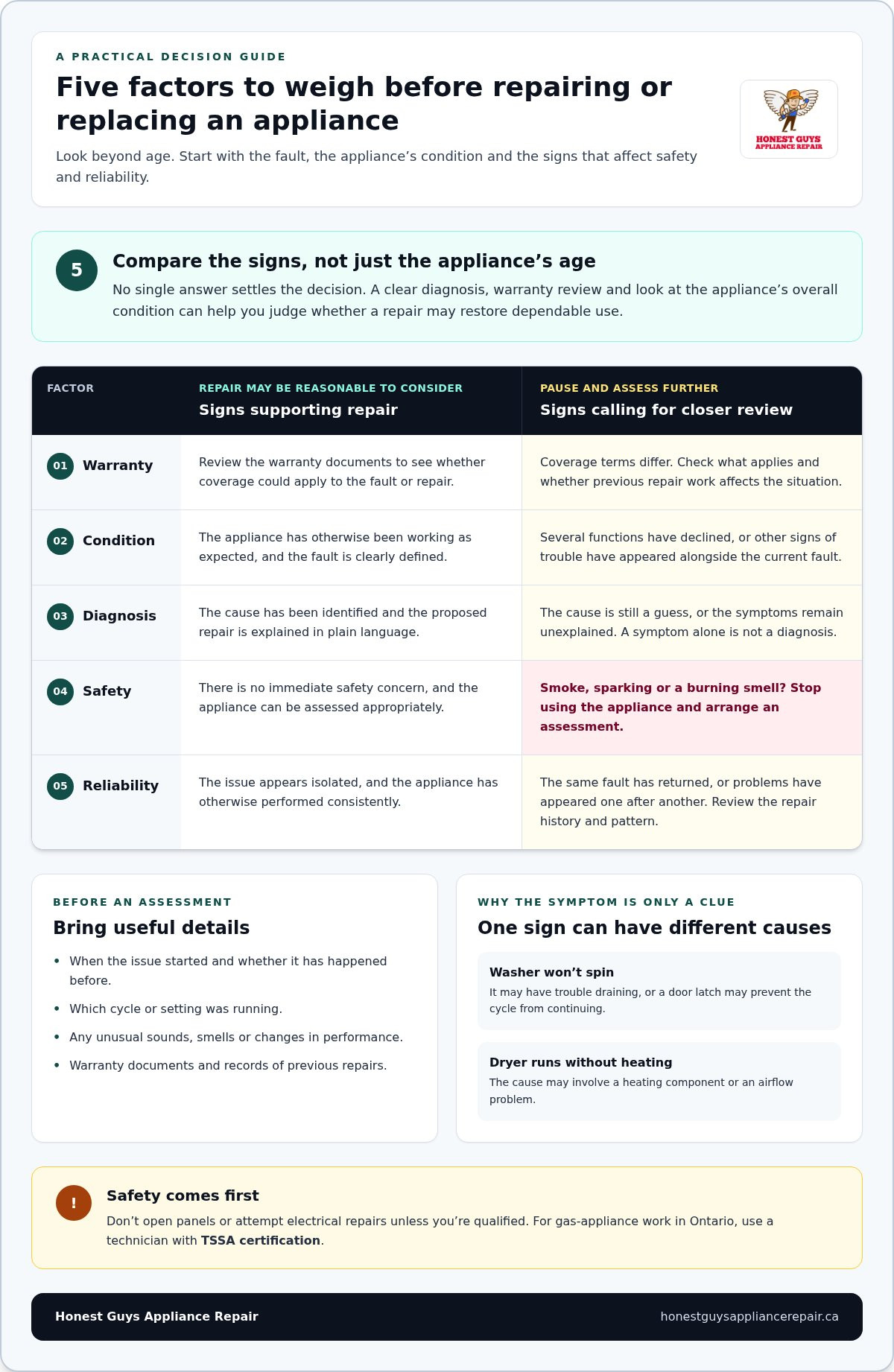
Once you know what the appliance is doing, weigh more than its age or the latest fault. Ask whether warranty coverage applies, whether the rest of the appliance is in good condition, whether the cause has been identified, whether continued use is safe, and whether the appliance is likely to remain reliable. Together, these five factors give you a clearer basis for deciding should I repair or replace my appliance.
Use this checklist:
- Warranty: Could coverage apply to the fault or repair?
- Condition: Has the appliance otherwise been working as expected?
- Diagnosis: Is the cause known, or are you still guessing?
- Safety: Is there any reason to stop using the appliance?
- Reliability: Is this an isolated issue or part of a pattern?
No single answer settles the decision. A fault in an appliance that has otherwise performed consistently may call for a different response than the same fault in a unit that has been unreliable across several functions.
Check warranty coverage and the appliance’s repair history
Before arranging repair work, review the appliance’s warranty documents and any records from its purchase or previous repairs. Coverage terms can differ, so check what applies to the fault and whether prior work affects the situation. Make a simple record of past symptoms, repair dates and whether the same issue returned. A one-time problem is different from a repeat fault that continues despite earlier attention.
Look at the pattern, not just the latest event. A recurring problem may suggest that the underlying cause hasn’t been resolved or that the appliance’s condition has changed. That history is useful context for a technician and can help you judge whether another repair is likely to restore dependable use.
Use diagnosis and safety to assess the repair option
A clear diagnosis identifies the source of the problem before you commit to a repair plan. It can distinguish a component failure from an issue affecting the appliance’s operation more broadly. Ask for the fault to be explained in plain language, including what the repair is intended to address. If symptoms remain unexplained, don’t assume a proposed fix will resolve them.
Take unusual operation seriously. Stop using an appliance if it sparks, smokes, gives off a burning smell or shows another immediate safety concern. For gas-appliance work in Ontario, use a technician with TSSA certification, the certification required for technicians working on gas appliances. Safety should guide the decision before convenience or a desire to keep an appliance in service.
Also consider recent performance. Has a fridge struggled to maintain cooling, or has a dryer taken longer to finish its usual load? Increased energy use may inform your decision, but it doesn’t establish the cause or predict savings from replacement. Think about whether the appliance still meets your household’s needs and whether its performance has been steady after past repairs.
If you’re in Ottawa or surrounding areas and the fault or its safety implications aren’t clear, an appliance repair assessment can help replace guesswork with a more informed decision.
Repair or Replace? Compare the Signs Across Common Home Appliances
The signs that matter vary by appliance. A fridge that repeatedly loses cooling raises different questions from a stove with one faulty function or a washer that has become less dependable over time. Use the comparison below to decide what to look into next. It can guide your assessment, but it can’t guarantee that repair or replacement is the right answer.
| Appliance | Signs that may support repair | Signs to assess carefully |
|---|---|---|
| Fridge | A clear, isolated fault and otherwise consistent cooling. | Recurring cooling problems, changing temperatures or other signs of declining performance. A diagnosis can clarify whether the fault is limited or part of a wider issue. |
| Dryer | A specific operating problem, with the rest of the appliance working as expected. | Repeated interruptions, persistent noise or a noticeable change in drying performance. Consider whether the problem has returned after previous work. |
| Washer | A single, clearly identified fault and reliable operation apart from that issue. | Repeated cycle problems, persistent leaks or a growing pattern of inconsistent operation. |
| Oven or stove | One function has failed while other functions remain dependable, subject to a safe assessment. | Unreliable operation across more than one function, or any concern about safe operation. Don’t keep using it if you suspect a hazard. |
| Dishwasher | A diagnosed issue that has not been part of a recurring pattern. | The same problem returns after earlier repair work, or overall cleaning and operation have become inconsistent. |
Fridges, dryers, and washers: assess performance and repeat problems
For a fridge, note whether cooling has been steady or has repeatedly become unreliable. Symptoms alone won’t show whether the cause is limited or affects the appliance more broadly. With a dryer or washer, consider how it performs during normal use: does it finish cycles as expected, or are problems disrupting the routine again and again? For more dryer-specific repair context, see the Ottawa dryer repair guide.
Ovens, stoves, and dishwashers: consider function and safe operation
A single oven or stove function that stops working is different from an appliance that behaves unpredictably across several functions. In either case, safety comes first. For a dishwasher, note whether the problem is new or has returned after previous work. If you’re also weighing replacement and installation, the Ottawa dishwasher installation guide adds relevant context.
When repeated breakdowns change the balance
One repair doesn’t mean replacement is automatically the next step. But repeated faults deserve a fresh diagnosis before you decide. Compare a recent stretch of reliable operation with a pattern of ongoing disruption, and consider whether the latest symptom is linked to previous problems. If you’re weighing whether should I repair or replace my appliance, focus on what the assessment reveals about its condition and likely reliability, not just the number of times it has needed attention.
How to Make a Repair-or-Replace Decision Without Guessing
A practical decision starts with evidence, not a hunch. Follow these steps to prepare for an assessment and use what it reveals to choose a sensible next move.
- Describe the symptoms. Write down what the appliance does, what it should be doing and when the problem occurs. Note whether it happens every time or only during a particular cycle or setting.
- Record recent changes. Include new sounds, smells, leaks, interruptions or changes in performance. Mention whether the issue began suddenly or developed over time.
- Check warranty documents. Review the appliance’s warranty before arranging work that may not be covered. Keep purchase information and any relevant coverage details handy.
- Gather its repair history. List previous faults and repairs, and note whether a similar symptom returned. This helps distinguish a new, isolated issue from an ongoing pattern.
- Arrange a diagnosis and weigh the findings. Ask for a plain-language explanation of the identified fault and the available repair path. Then consider the appliance’s overall condition and whether it has been dependable apart from this issue.
Prepare useful details before arranging a diagnosis
Keep your notes specific. “The washer stopped” is less useful than “the washer stopped during the spin cycle twice this week.” Add the appliance type, when the symptom appears, how often it happens and any recent change in operation. Bring warranty information and a brief repair history. If safety is uncertain, don’t open panels or work on components yourself.
These details give the technician a clearer starting point, but they don’t replace an inspection. Describe what you’ve observed without trying to identify the failed part yourself.
Use the diagnosis to choose your next step
A clear diagnosis should come before any repair-or-replace decision. Once the fault is identified, consider how it fits with the appliance’s broader condition. A specific issue in a unit that has otherwise worked reliably may support a different choice from a fault alongside declining performance or repeated disruptions.
Ask for the recommendation to connect clearly to the findings. What has failed? What would the proposed repair address? Does the appliance have other concerns that affect its expected reliability? Straight answers help you compare the options without feeling pushed toward either one.
Still unsure about the fault or the best next step? Arrange an appliance repair assessment with Honest Guys Appliance Repair for clear, local guidance in Ottawa and surrounding areas.
Get Honest Appliance Repair Advice in Ottawa and Surrounding Areas
A breakdown can leave you weighing two options without knowing what has actually failed. Honest Guys Appliance Repair is an owner-operated local business serving Ottawa and surrounding areas, including Nepean, Kanata, Stittsville, Orleans, Barrhaven, Greely, Findlay Creek and Gloucester. We explain appliance faults and repair recommendations in plain language, helping you understand the assessment and consider the next step without pressure.
If you’re still asking, “should I repair or replace my appliance,” a local assessment can give you better information. A technician can explain how the identified issue relates to the appliance’s condition, so you can decide what makes sense for your household.
What honest, local repair guidance should feel like
You should be able to understand what’s wrong and what a recommended repair is intended to address. Honest Guys Appliance Repair brings over 6 years of expert service to appliance repair in the Ottawa area, with a focus on straightforward explanations and honest recommendations.
Repairs are guaranteed and backed by a parts-and-labour warranty. The terms should be explained for the work being recommended. Clear communication helps you understand the recommendation and make a decision that feels right for your home.
When to arrange appliance repair in Ottawa
Consider an assessment if the cause of a breakdown is unclear, the same problem keeps returning or you’re uncertain whether an appliance is safe to use. For gas-appliance work in Ontario, technicians need TSSA certification. If there’s a safety concern, stop using the appliance until it has been assessed.
Whether a fridge, washer or oven is no longer operating as expected, describe what you’ve noticed and when it happens. Honest Guys Appliance Repair serves Ottawa and surrounding areas, helping homeowners understand the appliance issue and available repair options.
Arrange appliance repair service in Ottawa with Honest Guys Appliance Repair for practical local guidance and a clear next step.
Make Your Next Appliance Decision With Confidence
A clear decision doesn’t have to happen in the middle of a stressful breakdown. Keep a simple record of appliance symptoms and past repairs, then refer to it if performance changes again. Over time, those notes can help you spot patterns and make future home-maintenance decisions with less uncertainty.
If you’re still wondering “should I repair or replace my appliance,” you don’t need to settle on an answer before the cause is understood. An assessment can give you a practical next step, whether that means discussing a repair or considering the appliance’s future role in your home.
For support with an appliance issue in Ottawa and surrounding areas, arrange appliance repair service with Honest Guys Appliance Repair. Get clear information to guide your decision and choose the next step with confidence.
Frequently Asked Questions
Should I repair an appliance that is still under warranty?
Not necessarily. A warranty’s claim process may affect how covered work is handled, so follow the instructions provided with the warranty rather than assuming a repair will be reimbursed. Keep the proof of purchase, model and serial numbers, and any service paperwork together. Warranty coverage and the repair-or-replace decision are separate questions: coverage alone doesn’t establish whether the appliance is a good fit for your household.
Can an older appliance still be worth repairing?
Yes. An older appliance may still suit your household, especially if it fits your space and meets your needs. Before choosing replacement, consider practical details such as cabinet clearances, door swing, electrical connections and plumbing hookups. A replacement may require changes to the surrounding setup, while a repair may let you keep a familiar appliance in place. The right choice depends on more than the number of years it has been in your home.
What if my appliance has broken down more than once?
Bring previous service paperwork to the next assessment. An invoice or repair note may identify which part was replaced and what the technician found at the time. That detail can help distinguish a return of the same issue from a new fault, even if the symptoms seem similar. Keep the paperwork with the appliance manual so you can share a clear service history without relying on memory.
Is it safe to keep using an appliance that is not working properly?
If its operation raises a safety concern, stop using it until it has been assessed. Don’t bypass a door latch, remove a safety fuse or open the appliance to keep it running. If a plug is accessible and it’s safe to do so, disconnect the appliance; don’t handle wiring or gas connections. For gas-appliance work in Ontario, use a technician with TSSA certification.
Should I replace all my appliances when one breaks?
No. Replacing one appliance doesn’t mean the others need replacing too. If you choose a new unit, check its dimensions, door clearance and connection requirements against the space available. This is especially useful for appliances fitted between cabinets or connected to existing plumbing. Planning for the specific unit can help avoid turning one breakdown into a larger household project without a clear reason.
Can I diagnose an appliance fault myself before calling for service?
You can check basic settings, but that won’t necessarily identify an internal fault. Confirm that the appliance is set to the intended cycle or mode, and take a photo of any displayed error before resetting it. Don’t treat a code as proof that a particular part has failed, and avoid opening panels or testing electrical components. A technician can use that information as context for a proper assessment.