
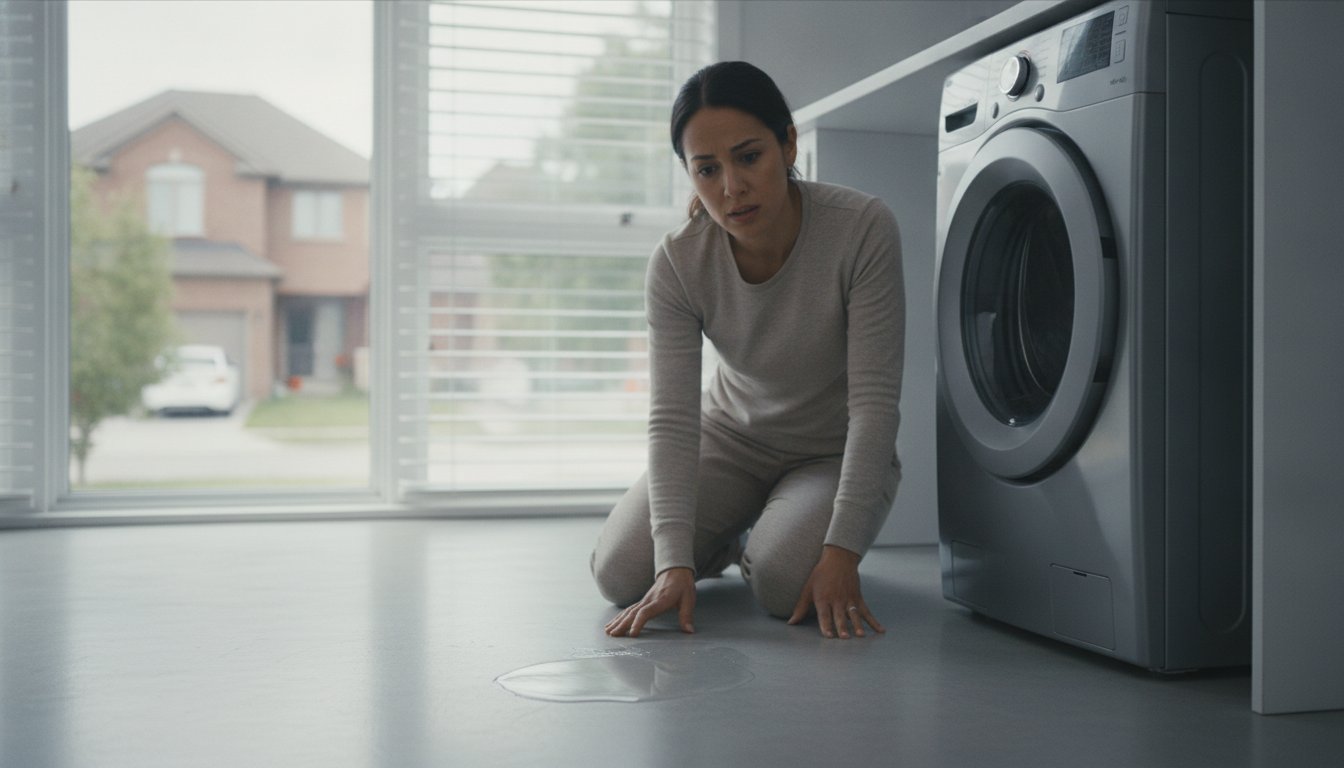
Imagine walking into your laundry room on a busy morning only to find a growing puddle creeping toward your hallway floors. It’s a sinking feeling that instantly derails your schedule and sparks immediate worry about the cost of property damage. When you’re standing in a pool of soapy water, finding a reliable washing machine leaking repair Ottawa specialist becomes your top priority. You want honest answers, not a sales pitch, and you certainly don’t want to guess whether your machine is even worth saving.
We understand that a broken appliance is more than just a mechanical failure; it’s a major disruption to your household’s rhythm. You’re likely feeling the pressure of a mounting laundry pile and the anxiety of potential hidden fees from a technician you’ve never met. This guide is designed to replace that stress with clarity. You’ll discover the most common causes of washer leaks and learn how to distinguish between a minor DIY fix and a major component failure. We’ll walk you through the diagnostic process so you can protect your home in Kanata, Nepean, or Orleans and decide on the best path forward with total confidence.
Key Takeaways
- Learn how to safely pinpoint the origin of a drip using the “Paper Towel Test” while keeping your home and appliance secure.
- Identify the most common culprits behind front-load and top-load failures, from worn door gaskets to faulty water inlet valves.
- Discover how to apply the “50% Rule” to decide if a professional washing machine leaking repair Ottawa service is the right choice for your budget.
- Adopt simple preventive maintenance routines, like upgrading to braided hoses, to help you realize long-term savings and prevent future floods.
Identifying the Source of Your Washing Machine Leak
Finding a puddle on your laundry room floor is frustrating. Before you call for a professional washing machine leaking repair Ottawa service, you need to play detective. Is the water coming from the machine itself, or is your home’s plumbing to blame? Narrowing this down can save you time and help us provide a more accurate quote when you call. We want to ensure you get the right fix without paying for unnecessary diagnostic time.
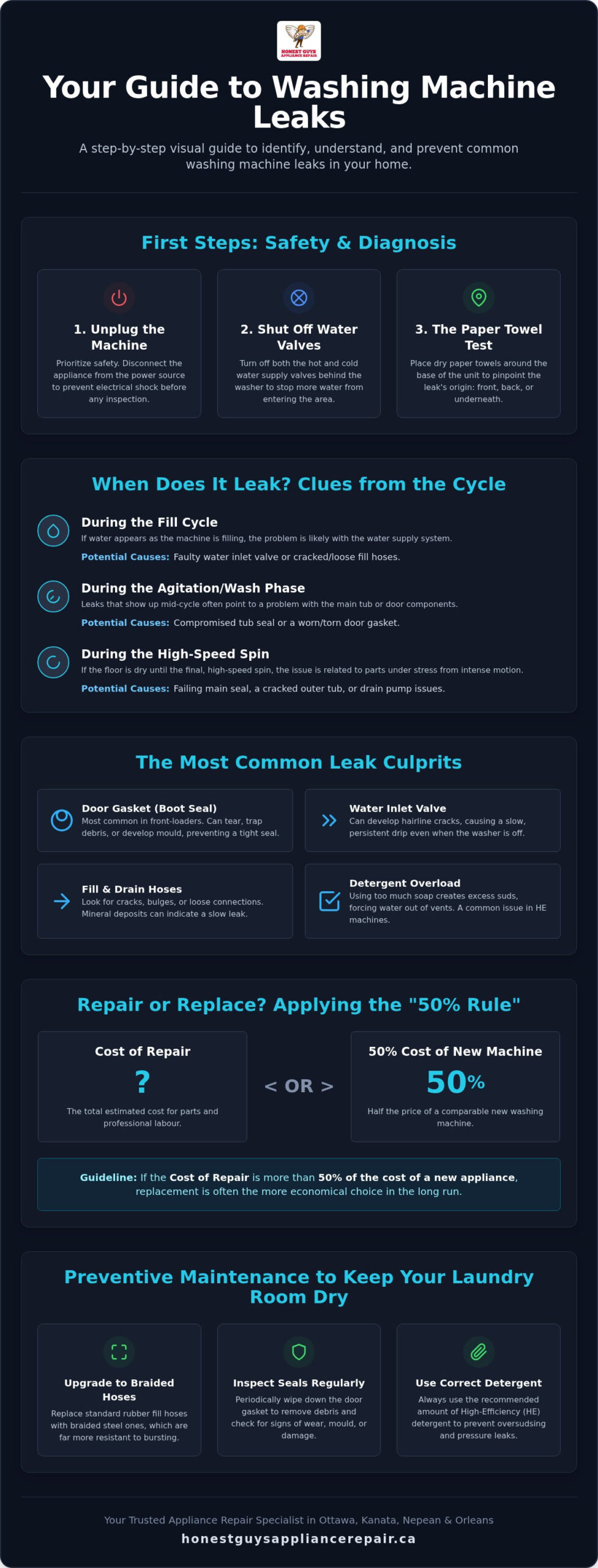
Safety is your first priority. Never start an inspection while the unit is powered. Unplug the machine from the wall and turn off both the hot and cold water valves. This simple step prevents electrical shocks and stops more water from pouring onto your floors. Once the area is safe, use the “Paper Towel Test.” Lay dry paper towels around the base of the unit. Watch closely to see which towel dampens first. This tells you if the leak is coming from the front, back, or directly from underneath the machine.
Understanding Washing machine basics is helpful here. These appliances rely on a delicate balance of pressure, pumps, and seals. If you see water on the wall behind the unit, the issue might be your house plumbing rather than the appliance. However, if the water is pooling directly under the drum or near the door, the problem is likely internal to the unit itself.
External Hose Inspection
Start with the most accessible parts. Check the hot and cold fill hoses for visible cracks, brittle textures, or unusual bulges. A bulge is a sign that the inner lining has failed and a burst is imminent. Ensure the drain hose is securely seated in the standpipe and hasn’t vibrated loose or kinked. Look for white, crusty mineral deposits around the connection points. These deposits are a “smoking gun” for slow, long-term leaks that often go unnoticed in busy Ottawa households until they cause floor damage.
Cycle-Specific Leak Detection
When the leak occurs is just as important as where it appears. Watch the machine during a test cycle to pinpoint the timing of the failure:
- Fill Cycle: If water appears as the machine starts, the culprit is usually the water inlet valve or the fill hoses.
- Agitation Phase: Leaks during the wash portion of the cycle often suggest a compromised tub seal or a worn door gasket.
- High-Speed Spin: If the floor stays dry until the final spin, you’re likely dealing with a failing main seal or a cracked outer tub.
Identifying these patterns helps us arrive prepared with the right tools and parts for the washing machine leaking repair Ottawa residents trust for long-lasting results.
Common Culprits: Why Your Washer is Leaking Water
Once you’ve confirmed the leak isn’t coming from your wall plumbing, it’s time to look at the machine’s internal components. While every model is different, most service calls for washing machine leaking repair Ottawa homeowners book involve a handful of recurring issues. Understanding these culprits helps you decide whether to attempt a quick fix or reach out for professional help. We believe in providing clear answers so you can make the best choice for your home and your budget.
The door gasket, or boot seal, is the most frequent offender in front-load machines. Over time, these rubber rings can tear, trap debris like coins, or develop mold that prevents a tight seal. Similarly, the water inlet valve, which controls the flow of water into the unit, can develop hairline cracks. These cracks often lead to a slow, persistent drip that continues even when the machine isn’t running. If the water is pooling directly under the centre of your machine, you might be facing a failing tub seal. This is a more complex mechanical failure where the seal between the outer tub and the drive shaft wears out, often requiring significant disassembly.
If you’re unsure about the complexity of the job, it’s often helpful to consult a local technician who can provide an honest assessment of the repair’s cost-effectiveness. We prioritize your long-term savings over a quick fix.
The Role of Detergent Overload
Many homeowners are surprised to learn that their leak isn’t caused by a broken part at all. Modern High-Efficiency (HE) machines are particularly sensitive to the type and amount of soap you use. When you use too much detergent, it creates a mountain of bubbles that the machine cannot drain properly. This pressure forces water out of the air vents and onto your floor. Oversudsing is a common cause for phantom leaks that can mimic a mechanical failure.
Mechanical Failures and Component Wear
Mechanical wear is often accelerated by local conditions. Ottawa’s water hardness can be tough on internal rubber components, causing them to become brittle and crack sooner than expected. A failing pressure switch is another common issue; if the switch doesn’t accurately detect the water level, the machine may overfill and spill over. Additionally, drain pumps can leak if the internal impeller is damaged or the plastic housing develops a crack from a stray object vibrating inside the pump during a cycle. Sharp objects left in pockets, like nails or screws, are the primary enemies of your boot seals and pump housings.
Troubleshooting Front-Load vs. Top-Load Leaks
The way your appliance is built determines exactly where you’ll find the water when things go wrong. Front-load and top-load machines use entirely different mechanical systems to keep water inside the drum. Because of this, the diagnostic path for a washing machine leaking repair Ottawa homeowners need depends heavily on which style sits in their laundry room. Gravity is a relentless force; water will always find the easiest path to your floor, but that path differs based on the machine’s orientation and internal layout.
In a front-load machine, the drum sits horizontally, meaning the door itself must be part of the water-containment system. If a leak occurs here, it often presents as a puddle directly in front of the unit or a slow trickle down the front panel. Top-load machines, however, use a vertical tub. When these leak, the water typically travels down the drive shaft and pools directly under the centre of the machine. Understanding these gravity-fed patterns helps you realize where the failure started before you even pull the unit away from the wall.
Front-Load Specific Issues
Front-load units rely on a heavy-duty rubber door seal, often called the bellows. If you see water trickling from the door, start by wiping down this seal. Hair, lint, or even a stray sock can prevent a watertight fit. Another common culprit is the detergent dispenser drawer. Over time, old soap residue or hard water deposits can block the water jets, causing water to back up and leak down the internal frame. Finally, check the “coin trap” or debris filter located at the bottom front of most models. If this filter isn’t tightened perfectly after a routine cleaning, it will slowly weep water onto your floor during the drain cycle.
Top-Load Specific Issues
Top-load machines face a unique set of challenges, particularly the “splash-over” effect. This happens when an unbalanced load, such as heavy towels or a bulky duvet, causes the inner tub to tilt wildly. Water simply sloshes over the top rim of the outer tub and onto the floor. You should also inspect the bleach and softener dispensers for clogs or corrosion, as these plastic components can become brittle over time. If you notice water mixed with grease or rust under the centre of the unit, it usually points to a failing agitator or tub seal. It’s worth noting that a washing machine not spinning repair Ottawa service often uncovers that these same failing seals have allowed water to reach the main bearings, causing both a puddle and a loud, mechanical failure.
By identifying these style-specific symptoms, you can provide your technician with better information, ensuring a faster and more accurate repair process for your home.
When to Call an Ottawa Appliance Repair Expert
How do you decide when a puddle on the floor warrants a professional service call or a trip to the appliance store? Deciding whether to invest in a washing machine leaking repair Ottawa homeowners can rely on often comes down to the “50% Rule.” If the estimated cost of the repair exceeds half the price of a comparable new machine, we generally recommend replacement. Our goal is transparency. We won’t push a repair that doesn’t make financial sense for your household.
Safety should always dictate your next move. If you notice water pooling near electrical outlets, see it dripping from the control panel, or detect a faint burning smell, unplug the unit immediately. These are not DIY situations. Similarly, complex mechanical failures like tub seal or bearing replacements involve complete teardowns that can take hours and require specialized tools. If you find yourself over your head, our laundry machine repair Ottawa services provide a full-scale solution for even the most stubborn mechanical failures.
The Value of Professional Diagnostics
A professional diagnostic ensures you aren’t just fixing a symptom while the root cause remains. While a homeowner might replace a visible hose, a technician looks deeper to see if that leak has already caused secondary damage to the motor or drive system. We exclusively use OEM (Original Equipment Manufacturer) parts because they are engineered specifically for your model. This precision ensures a longer lifespan for your appliance and gives you peace of mind that the fix will actually hold. Accurate washing machine leaking repair Ottawa technicians provide saves you from the frustration of recurring issues.
Serving Our Ottawa Neighbourhoods
Our team understands the specific needs of different Ottawa communities. We realize that the plumbing quirks in older Westboro homes differ significantly from the high-pressure systems found in newer Findlay Creek developments. Whether you are in Kanata, Nepean, or Barrhaven, choosing a local, owner-operated business ensures personal accountability. You aren’t just a ticket number; you’re a neighbour. If you’re ready for a clear, honest assessment of your appliance, book your diagnostic visit today and let’s get your laundry routine back on track.
Preventive Maintenance to Keep Your Laundry Room Dry
Preventing a flood is always more cost-effective than managing one. While we are always ready to help with a washing machine leaking repair Ottawa residents can trust, we’d much rather help you avoid the stress entirely. Most catastrophic leaks don’t happen overnight; they are the result of slow wear and tear that goes unnoticed. By dedicating just a few minutes each month to your appliance, you can realize significant savings and extend the life of your unit.
One of the most effective upgrades you can make is replacing standard rubber fill hoses with braided stainless steel versions. Rubber hoses are prone to drying out and bursting under pressure. Replacing these every five years is a cheap insurance policy against a major flood in your neighbourhood. You should also check your home’s water pressure. If it’s too high, it puts constant stress on the internal water inlet valves, leading to the hairline cracks that cause persistent dripping.
Seasonal and Monthly Care
Consistency is key to a dry laundry room. Every 30 days, take a moment to inspect the filter or “coin trap” at the base of your front-loader. A clogged filter restricts drainage and can cause water to back up into the machine’s frame. Wiping down the door bellows to remove hair and lint that break the seal is also essential. You should leave the door slightly ajar between loads to allow moisture to evaporate; this prevents the rubber from becoming brittle or developing mold. Finally, ensure your machine is perfectly level. An unbalanced machine vibrates excessively, which can loosen hose connections and cause internal components to rub together, leading to premature leaks.
Smart Upgrades for Peace of Mind
If your laundry room is on the second floor, the stakes are much higher. We strongly recommend installing a drip pan under the machine to catch minor weeps before they soak through your ceiling. For ultimate protection, consider an automatic leak detector and shut-off valve. These devices sense moisture on the floor and instantly cut the water supply to the machine. These small investments provide a layer of security that complements professional maintenance.
Are you already dealing with a puddle? Don’t wait for the damage to spread to your floors and baseboards. Book your honest diagnostic with us today! and let our experienced team provide the reliable washing machine leaking repair Ottawa homeowners deserve.
Protect Your Home and Restore Your Routine
A leaking washer doesn’t have to mean a ruined floor or an automatic trip to the appliance store. By using simple diagnostic steps like the paper towel test and understanding the 50% rule for repair costs, you can take control of the situation. Addressing these issues early is the best way to prevent expensive water damage and keep your household running smoothly. You’ve learned how to identify common culprits and when it’s time to put down the wrench and call in a specialist.
As an owner-operated local business, we take personal accountability for every service call. We provide the washing machine leaking repair Ottawa families rely on for transparency and precision. We serve neighbourhoods across Kanata, Nepean, and Orleans with a commitment to no hidden fees and honest advice. If a repair isn’t in your best financial interest, we’ll tell you. We believe in building trust through integrity rather than just making a quick sale.
Don’t let a small drip turn into a major headache. Get an Honest Quote for Your Washer Repair in Ottawa today. We’re here to provide the expert help you need to keep your laundry room dry and your mind at ease.
Frequently Asked Questions
Is it worth repairing a leaking washing machine or should I replace it?
Repairing a leaking washer is usually worth it if the unit is less than eight years old and the fix costs less than half the price of a new machine. We follow a transparency-first approach, helping you realize when a repair is a smart investment or when it’s time to shop for a replacement. Many leaks are caused by simple component failures like a worn hose or a clogged filter, which are far more affordable than buying a new appliance.
How much does it usually cost to fix a leaking washer in Ottawa?
While we provide specific quotes after a professional diagnostic, industry data shows that a typical washing machine leaking repair Ottawa homeowners face ranges from $180 to $520. Standard residential service calls in the local market often include a diagnostic fee of $89 plus tax. Factors like the cost of OEM parts and the complexity of the teardown will influence the final total. We always provide a written quote before any work begins to ensure there are no hidden fees.
Can I still use my washing machine if it has a small leak?
You should stop using your machine immediately if you notice even a minor leak. Continuing to run cycles risks permanent water damage to your subfloors and baseboards, which is far more expensive to fix than an appliance part. There is also a significant safety risk; water escaping the drum can come into contact with electrical motors or control boards. It’s best to unplug the unit and turn off the water valves until a technician arrives.
What is the most common cause of a front-load washer leak?
The door gasket, also known as the bellows, is the primary source of leaks in front-loading units. This rubber seal can easily be compromised by sharp objects like coins or hairpins left in pockets. Over time, hair, lint, and detergent residue can also build up, preventing the door from creating a watertight seal. Keeping this area clean and dry between loads is the best way to maintain its integrity and prevent puddles from forming on your floor.
Why does my washing machine leak only during the spin cycle?
Leaks that only appear during the high-speed spin cycle usually point to a failing tub seal or a cracked outer tub. The intense centrifugal force of the spin cycle pushes water through hairline fractures or worn seals that might hold steady during the slower wash phase. This issue often coincides with loud banging or grinding noises, which suggests that the main bearings are also starting to fail. These repairs require significant disassembly and professional expertise to fix properly.
How do I stop my washing machine from leaking water from the bottom?
Water pooling from the bottom often indicates a problem with the drain pump or the internal hoses that connect the tub to the pump. You should first check the debris filter or “coin trap” to ensure it’s not clogged or improperly tightened. If the filter is clear, the leak may be coming from a cracked pump housing or a loose hose clamp inside the machine. These internal leaks require removing the access panels to safely identify the source of the drip.
Does hard water in Ottawa affect my washing machine’s lifespan?
Yes, the mineral content in Ottawa’s water can lead to calcium buildup on internal rubber seals and water inlet valves. This buildup makes rubber components brittle over time, increasing the likelihood of cracks and slow leaks. To protect your appliance, we recommend running a monthly “clean cycle” with a descaling agent. This simple maintenance task helps dissolve minerals and keeps your seals flexible, potentially adding years to the lifespan of your washing machine and preventing unexpected floods.