
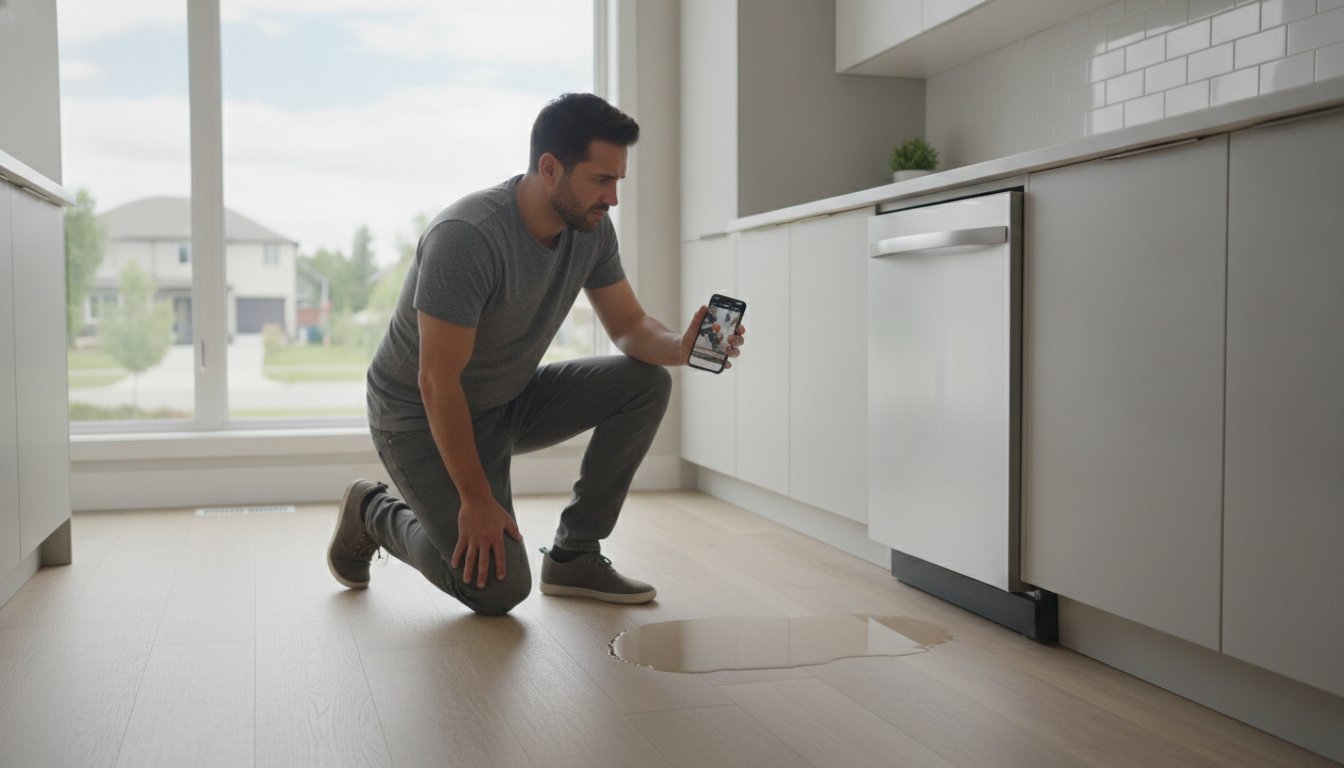
A small puddle on your kitchen floor is rarely just a puddle; it’s often a countdown to expensive water damage. It’s natural to feel a sense of dread when you spot a leak and start searching for how to fix a leaking dishwasher. Is it just a loose hose, or are you looking at a full replacement? You worry about the cost of repairs and whether you’re about to face a massive renovation bill for your hardwood or tile. We understand that anxiety. You want a dry kitchen and the peace of mind that comes with a job done right.
In this guide, we’ll demystify the repair process by identifying common culprits like brittle door gaskets and faulty float switches. You’ll discover how to safely troubleshoot the issue yourself and, more importantly, how to recognize the exact moment a DIY attempt becomes a risk to your home’s integrity. We’ll provide the clarity you need to decide if a quick fix is enough or if you need an experienced Ottawa technician to step in. Let’s get your kitchen floor dry and your appliance back in working order.
Key Takeaways
- Learn how to safely pinpoint the source of a leak using the “Puddle Test” before you touch any tools or disconnect the power.
- Understand how Ottawa’s hard water can make door gaskets brittle and why your choice of detergent might be causing “invisible” leaks.
- Master the basics of how to fix a leaking dishwasher by cleaning seals and filters properly to avoid unnecessary service calls.
- Expose the truth behind common DIY myths, such as using silicone on a cracked tub, which often results in hidden water damage.
- Identify when it’s time to call an Ottawa expert to handle complex components and safeguard your Kanata or Nepean kitchen.
Identifying the Source: Where is Your Dishwasher Leaking From?
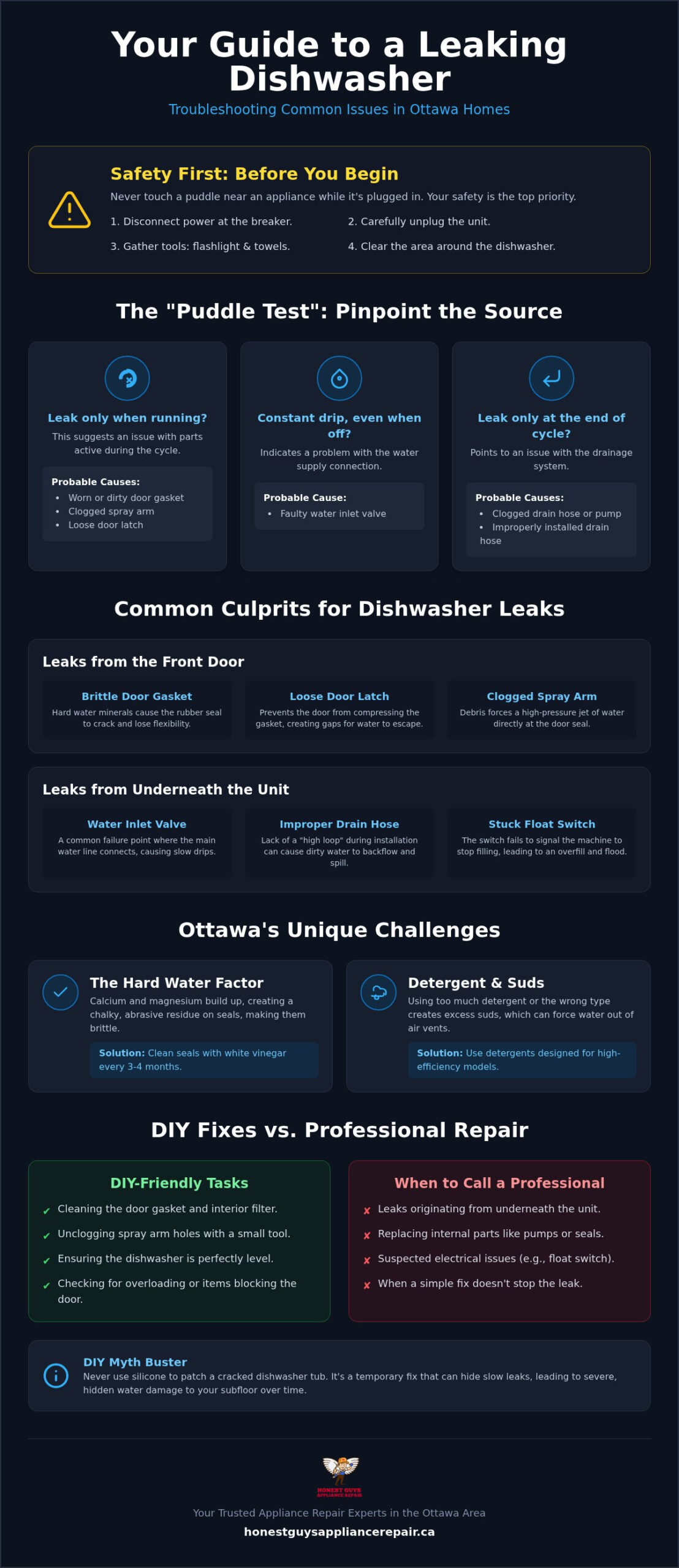
Spotting water on your kitchen floor is frustrating. Before you dive into how to fix a leaking dishwasher, safety is your first priority. Never touch a puddle while the machine is plugged in. Go to your electrical panel and flip the breaker or carefully unplug the unit from the wall. Once the power is dead, you can safely begin your inspection. You’ll need a few basic tools: a flashlight, a screwdriver, some dry towels, and a pair of pliers.
Perform the “Puddle Test” to narrow down the search. Does the water appear only when the machine is running? This suggests a door seal or a spray arm issue. Is there a constant drip even when the unit is off? That usually points to a faulty water inlet valve. If the leak only happens at the end of the cycle, your drain hose or pump is likely the culprit. Differentiating between a simple door drip and an “under-unit” flood is the key to protecting your subfloor from rot.
Leaks from the Front Door
Most door leaks occur because of the gasket. This rubber seal runs along the edge of the tub to keep water inside. Over time, Ottawa’s hard water can cause mineral buildup that makes the rubber brittle. Check for cracks, food debris, or flattened sections. If the gasket looks fine, inspect the door latch. A loose latch prevents the door from compressing the seal properly. Occasionally, a clogged spray arm is the secret cause. If the tiny holes are blocked by debris, the arm can “aim” a high-pressure stream of water directly at the door seam, forcing it past the gasket.
Leaks from Underneath the Unit
If the floor is wet but the door is dry, the problem is likely underneath the machine. The water inlet valve, located behind the bottom kickplate, is a frequent offender. Look for slow drips where the water line connects. You should also check the drain hose. In many Ottawa homes, an improper installation without a “high loop” can lead to backflow and spills. Finally, don’t overlook the float switch. This small plastic piece inside the tub tells the machine when to stop filling. If it gets stuck or fails, the dishwasher will overfill and leak from the bottom. Understanding these components is the first step in learning how to fix a leaking dishwasher without causing further damage.
Common Culprits: Why Ottawa Dishwashers Fail
Ottawa’s water profile is notorious for its mineral content. These minerals accumulate on the heating element and, more critically, on the flexible rubber seals. When a gasket becomes coated in calcium, it loses its elasticity and turns brittle. A brittle seal cannot form a watertight bond. This is a primary reason why many local homeowners search for how to fix a leaking dishwasher after only a few years of ownership. Beyond hard water, simple mechanical wear and user habits often play a significant role in kitchen floods.
The Hard Water Factor in Ontario
Calcium and magnesium buildup looks like a white, chalky residue on your appliance’s interior. This residue is abrasive. To protect your machine, you must clean mineral deposits before they pit the metal or crack the rubber. Use a soft cloth and a mild descaling agent or white vinegar. Avoid harsh industrial chemicals that can eat through the gasket material. For residents in the National Capital Region, we recommend a deep clean of the seals every three to four months to ensure longevity and prevent leaks.
Detergent choice is another sneaky factor. Modern high-efficiency machines require specific pods or gels. If you use too much detergent, or a brand that creates excessive suds, the foam can push water out of the air vents or door gaps. This often manifests as an “invisible” leak that only appears during the most intense part of the wash cycle. It’s a chemistry problem rather than a mechanical one, but the water damage to your floors remains just as real.
Mechanical wear is eventually inevitable. After years of exposure to high heat and cleaning chemicals, the pump seal or motor gasket will eventually perish. These components sit at the very bottom of the unit. If you see water pooling directly in the centre under the machine, an internal seal has likely failed. If you’re concerned about the integrity of your appliance, seeking professional dishwasher repair can help identify these internal failures before they cause catastrophic damage to your subfloor.
Levelling issues are frequently overlooked during DIY installations. If your dishwasher isn’t perfectly level, water can slosh over the front lip of the tub during the wash cycle. This is a simple fix that requires a spirit level and some patience to adjust the front legs. It’s a reminder that even a small tilt can lead to a big mess.
Component Failure vs. User Error
Sometimes the leak isn’t the machine’s fault. Overloading is a common mistake. If a large baking sheet or a rogue spatula blocks the door from closing fully, water will find its way out. You should also check your spray arms for damage. A tiny crack in the plastic arm can create a “geyser” effect. This sends a high-pressure stream of water directly at the door seam, bypassing the gasket entirely. Finally, never use regular liquid dish soap. Even a single drop can create enough foam to fill your kitchen with bubbles and water, leading to a frustrating search for how to fix a leaking dishwasher that was never actually broken.
Myth-Busting: DIY Fixes vs. Professional Repair
The internet is flooded with “quick hacks” for how to fix a leaking dishwasher. While some advice is solid, much of it can lead to more expensive headaches. Many homeowners attempt to save money by following unverified forum tips, only to realize later that they’ve caused permanent damage. Understanding the line between a simple maintenance task and a complex mechanical failure is essential for protecting your kitchen and your wallet.
One of the most dangerous myths is that silicone sealant can permanently fix a cracked dishwasher tub. You might see this suggested on sites like Reddit, but it’s a temporary patch at best. Dishwashers undergo extreme temperature shifts and constant vibration. Silicone rarely bonds perfectly to the specialized plastics or stainless steel used in modern tubs. Once it fails, the leak returns, often worse than before. More importantly, applying sealant can prevent a technician from performing a proper, lasting repair later on. If the tub is truly breached, the unit usually needs professional assessment or replacement to ensure your house remains dry.
Another common misconception is that a small drip isn’t a big deal as long as you put a towel down. This is a recipe for disaster. Water follows the path of least resistance. While you see a few drops on the tile, more water could be seeping into the subfloor or behind your cabinets. Over time, this leads to structural rot and black mould. By the time the floor feels soft, you’re looking at thousands of dollars in renovation costs rather than a simple repair bill. Taking a “wait and see” approach is the most expensive mistake you can make.
When DIY is Safe and Effective
There are several scenarios where learning how to fix a leaking dishwasher yourself is perfectly safe. If your door gasket is simply dirty or has popped out of its track, you can often resolve the issue with the “press-fit” method. Simply clean the channel and firmly press the new or existing seal back into place. Similarly, clearing out a clogged drain filter or using a toothpick to poke debris out of spray arm nozzles are excellent maintenance habits. These tasks don’t require opening the machine’s mechanical “guts” or touching electrical wiring.
When DIY Becomes Dangerous
DIY becomes a liability when you move beyond the interior of the tub. Working with live electrical components near standing water is a significant safety hazard. If the leak requires accessing the motor, the internal pump, or the main control board, it’s time to call a professional. Furthermore, many modern appliances come with warranties that are strictly voided if an unlicensed individual attempts an internal repair. Professional diagnostics save you money by preventing “part-cannon” repairs, where you waste money buying random valves and hoses hoping one of them fixes the problem. A trained technician identifies the root cause immediately, ensuring the job is done right the first time.
Step-by-Step: How to Fix Simple Dishwasher Leaks
Taking action quickly can save your hardwood or tile floors from permanent warping. To begin, clear your workspace by removing the bottom rack. This gives you a clear view of the tub floor and the filter assembly. By organizing your inspection area first, you ensure that no small screws or clips get lost during the process. Have a few dry towels ready to soak up any residual water as you work through the components.
Deep cleaning the door seal is often the most effective way to address a minor leak. Use a soft microfibre cloth and a non-abrasive cleaner to wipe away grease, food particles, and mineral deposits. Avoid using scouring pads or harsh steel wool. These tools can create microscopic tears in the rubber that eventually lead to a total seal failure. While you’re there, check the water supply line and drain hose clamps located behind the bottom kickplate. Use a screwdriver or pliers to ensure they are snug. A clamp that has vibrated loose over several years is a common culprit for those mysterious puddles.
Replacing the Door Gasket
If cleaning doesn’t work, you may need a new seal. Always order the exact part for your specific model number, which is usually found on a sticker inside the door frame. Before installing a new gasket, try the “warm water” trick. Soak the new rubber seal in a sink of warm water for a few minutes. This makes the material more pliable and easier to press into the channel. Start at the top centre and work your way down both sides evenly. Ensuring the seal is perfectly centred prevents gaps at the bottom corners where water is most likely to escape.
Clearing the Drain Path
A backup in the drain system often forces water out of the bottom of the unit. Remove the filter assembly and check for broken glass, plastic ties, or heavy food debris. These items frequently bypass the coarse filter and lodge themselves in the pump intake. You should also verify that the drain hose isn’t kinked behind the machine. If the hose is pinched, the pump can’t clear the water fast enough, leading to an overflow. Ensure your sink connection is clear of waste, as a clogged garburator or sink drain will push water back into the dishwasher.
Once you’ve completed these steps, it is time to test your repair. Run a “dry run” by starting a short rinse cycle with no dishes and no detergent. Watch the perimeter of the door and the base of the unit with a flashlight. If these steps don’t resolve the puddle, it’s time to book a professional dishwasher repair to protect your home from hidden water damage. Identifying the limit of a DIY fix is the best way to maintain a safe and functional kitchen.
Expert Solutions: Professional Dishwasher Repair in Ottawa
When you’ve exhausted the basic steps for how to fix a leaking dishwasher, the next move is critical. A misstep at this stage could mean the difference between a simple seal replacement and a complete kitchen floor renovation. For homeowners in Kanata and Nepean, local expertise isn’t just a convenience; it’s a safeguard. We realize that a leak is an urgent situation that requires more than just a generic corporate response. Every neighbourhood has its quirks, from the specific plumbing layouts in older Barrhaven homes to the water pressure challenges in newer Stittsville developments.
At Honest Guys Appliance Repair, we bring over six years of dedicated service to the Ottawa region. As an owner-operated team, we prioritize personal accountability and craftsmanship over quick transactions. We don’t just swap parts and hope for the best. Our diagnostics are thorough, aiming to find the root cause of the moisture before it compromises your subfloor. Sometimes, after evaluating the wear on a motor or the state of a cracked tub, we’ll be honest with you: a repair might not be the most cost-effective long-term solution. In those cases, opting for professional dishwasher installation Ottawa is the smarter way to protect your investment and ensure your kitchen remains dry for years to come.
Serving the Greater Ottawa Area
We provide prompt service to residents in Orleans, Stittsville, and across the city. Our technicians arrive with a deep understanding of the appliance brands and models most common in Canadian households. We realize that a leaking dishwasher disrupts your entire routine and creates unnecessary stress. That’s why we focus on clear communication and transparent pricing from the moment we step into your home. You’ll receive a definitive answer on whether your machine can be saved or if it’s time for an upgrade.
Schedule Your Diagnostic Today
During a service call, we evaluate every component from the water inlet valve to the internal pump seals. We balance the immediate repair costs against the expected longevity of your appliance. Our goal is to provide a solution that offers peace of mind, backed by the craftsmanship that comes from years of local experience. Don’t let a small drip turn into a major flood. Contact Honest Guys for Reliable Dishwasher Repair and get your kitchen back to normal today.
Protect Your Kitchen and Restore Peace of Mind
A leaking dishwasher doesn’t have to be a source of constant anxiety. By understanding the common causes of moisture, from brittle gaskets to mineral buildup, you’ve already taken the first step toward a dry kitchen. Remember that your home’s integrity is the priority. While a quick clean or a level adjustment can solve minor issues, ignoring a persistent drip or attempting a complex internal repair can lead to costly structural damage. Learning how to fix a leaking dishwasher is about knowing your limits as much as it’s about using the right tools.
If the source of the water remains a mystery, or if you’re facing a mechanical failure, our team is ready to help. With over 6 years of expert service in the Ottawa region, we provide specialized care for all major residential brands with transparent pricing and no hidden fees. We treat your home with the same respect we’d show our own neighbours. Get Your Dishwasher Fixed by Ottawa’s Trusted Experts today. You don’t have to tackle this problem alone; let’s get your kitchen back to its best.
Frequently Asked Questions
Why is my dishwasher leaking from the bottom only when it runs?
A leak that only occurs during a cycle points to a pressurized component failure. This often involves the main circulation pump seal, the drain pump, or a loose hose clamp underneath the unit. Since the water is only moving while the machine is active, these internal parts are the most likely sources. It’s a complex area to access, so it’s a common reason homeowners look for how to fix a leaking dishwasher with professional help.
Can a clogged filter cause a dishwasher to leak?
Yes, a neglected filter is a frequent cause of spills. When food debris or broken glass blocks the drain path, the water cannot exit the tub quickly enough. This can lead to an overflow or force water against the door seal with more pressure than it was designed to handle. Cleaning your filter every few months is a simple way to prevent these drainage related floods and protect your kitchen floors.
How much does it typically cost to fix a leaking dishwasher in Ottawa?
Repair costs in the Ottawa region depend entirely on the complexity of the failure and the cost of the replacement parts. A simple door gasket replacement is significantly more affordable than replacing a main circulation motor or a control board. We recommend a professional diagnostic call to identify the exact issue, which prevents you from wasting money on parts that might not actually solve the problem or stop the leak.
Is it worth repairing a 10-year-old dishwasher or should I replace it?
The decision depends on the overall condition of the machine and the specific part that failed. If the repair is minor, like a hose or a seal, it’s often worth extending the life of a high quality appliance. However, if major components like the motor or the tub itself are failing, a 10-year-old unit is nearing the end of its typical lifespan. We can help you realize the best path forward based on your machine’s health.
Why does my dishwasher leak from the front corner of the door?
Leaks at the front corners are usually caused by a compromised door gasket or a misaligned door latch. In Ottawa, calcium buildup can prevent the seal from sitting flush in the corners. Another possibility is a cracked spray arm. If the arm is damaged, it can shoot a high pressure stream of water directly at the door’s edge, bypassing the gasket entirely and causing a puddle on your kitchen floor.
Can I still use my dishwasher if it has a very small leak?
You should not continue to use a leaking appliance, no matter how small the drip seems. Water seeping into your subfloor or behind cabinets can lead to structural rot and black mould very quickly. What looks like a few drops on your tile could be a larger pool underneath your cabinetry. It’s always safer to address the leak immediately to avoid a much larger and more expensive renovation bill later.
What is the most common part to fail on a leaking dishwasher?
The door gasket is the most common failure point. This rubber seal is constantly exposed to high temperatures, harsh detergents, and mineral deposits from hard water. Over time, it becomes brittle or develops small cracks that allow water to escape. Because it’s a relatively simple part to replace, it’s often the first thing technicians check when investigating how to fix a leaking dishwasher for local residents in the Ottawa area.
Does a dishwasher need to be perfectly level to stop it from leaking?
Yes, proper levelling is essential for keeping water inside the tub. Most dishwashers don’t have a watertight seal across the very bottom of the door; instead, they rely on a raised lip in the tub. If the machine is tilted forward even slightly, water can slosh over that lip during the wash cycle. You can usually fix this yourself by adjusting the threaded legs at the front of the unit using a wrench.