
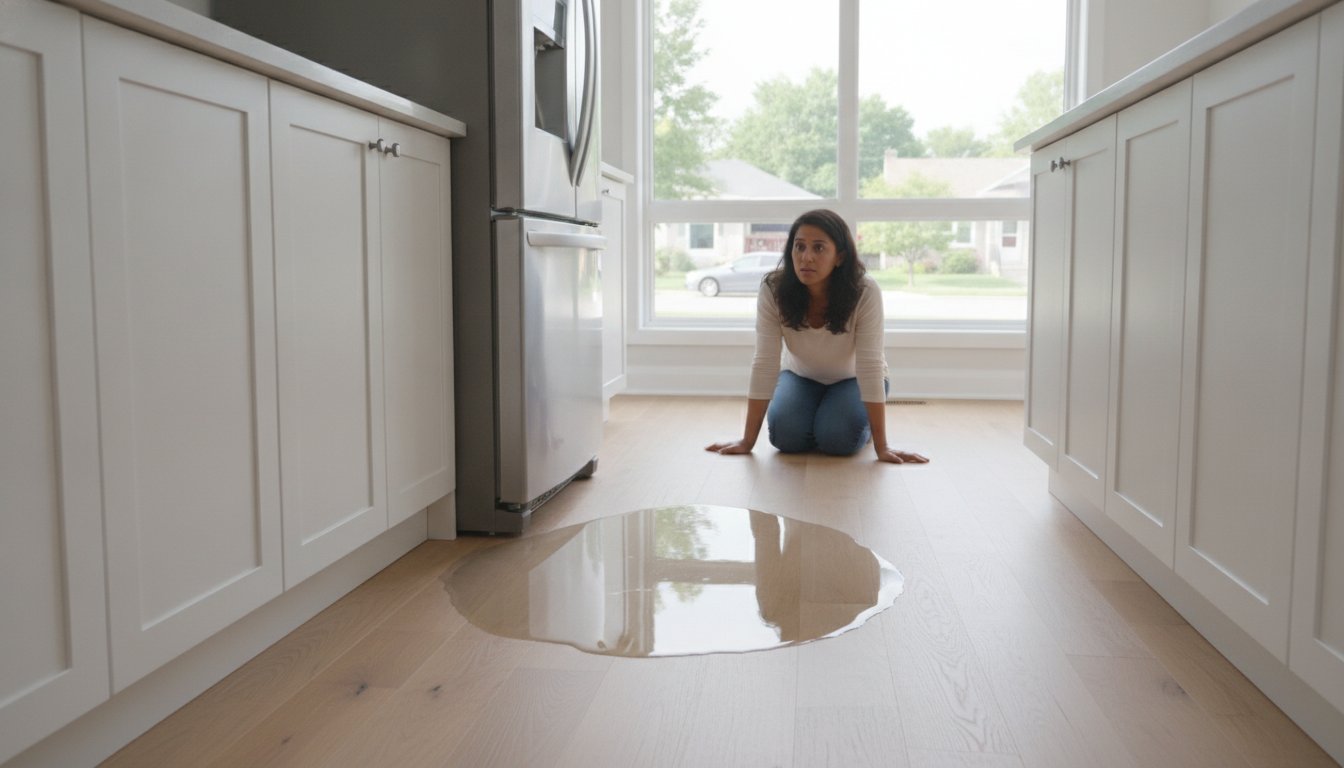
Is that small puddle on your kitchen floor a simple spill or the first sign of a major structural headache? Most homeowners in the National Capital Region know the sinking feeling of stepping into a cold pool of water while reaching for the milk. It’s an instant source of anxiety. You start worrying about your hardwood warping, your groceries spoiling, and whether you’re about to face a massive, unexpected expense. Dealing with a fridge leaking water in Ottawa is more than a minor chore; it’s a race against time to prevent mould and rot from settling under your cabinets.
We understand that you want clear answers without the aggressive sales pitch. You’re likely wondering if this is a simple fix you can handle yourself or if it’s time to call in a trusted local expert. This guide provides the straight talk you need to stop the leak and protect your home floors. We’ll walk through the common culprits behind pooling water, explain how local water conditions play a role, and look at how the 2026 Right to Repair laws empower you to keep your appliances running longer. You’ll gain the confidence to secure your kitchen and the clarity to decide your next move.
Key Takeaways
- Learn how to perform immediate triage to stop a leak before it warps your hardwood or laminate kitchen floors.
- Identify the root cause of a fridge leaking water in Ottawa, from simple defrost drain clogs to failing water inlet valves.
- Understand how local factors, such as Ottawa’s summer humidity and Nepean’s water conditions, contribute to appliance wear.
- Use the professional “50% Rule” to decide if your refrigerator is worth a repair or if a replacement is the more sensible financial choice.
- Gain peace of mind with a maintenance checklist designed to prevent future leaks and protect your groceries from spoiling.
Immediate Triage: What to Do if Your Fridge Is Leaking
Stepping into a puddle in your kitchen is an instant stressor. Whether it’s a slow drip or a sudden pool, your first priority is containment. A fridge leaking water in Ottawa isn’t just an appliance problem; it’s a threat to your home’s structure. Ignoring a “small” puddle near your baseboards is a gamble you don’t want to take. Water can quickly seep behind cabinets and under floorboards, leading to invisible mould growth that’s far more expensive to fix than a simple refrigerator repair.
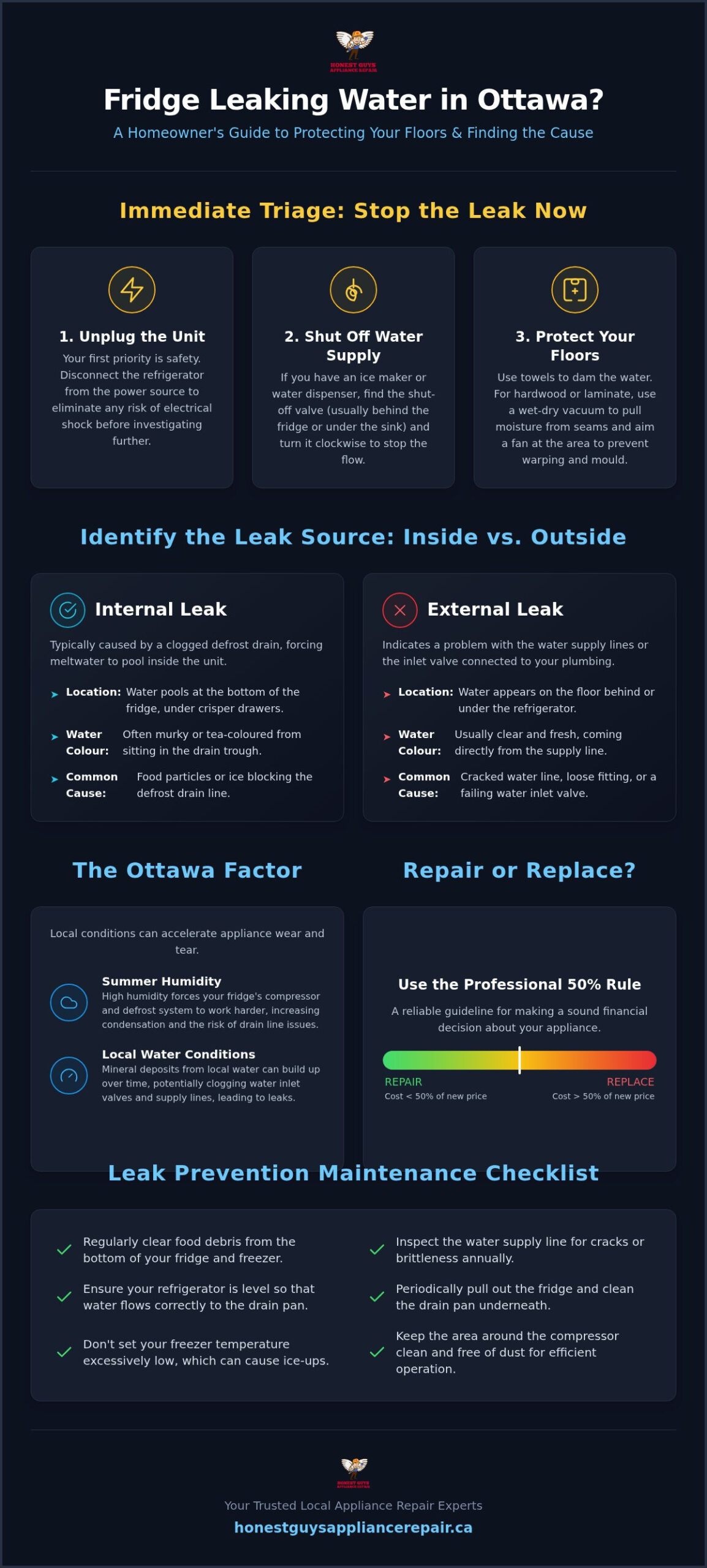
Start with safety. Before you grab the mop, unplug the unit to eliminate any risk of electrical shock. If your fridge has a water dispenser or ice maker, you must also shut off the water supply. Look behind the refrigerator or under the kitchen sink for a small copper or plastic line with a shut-off valve. Turn it clockwise until it stops. This simple step halts the flow and gives you the breathing room to assess the damage without making the mess worse.
Once the power and water are off, employ the “Towels and Triage” method. Line the perimeter of the fridge with heavy bath towels to create a dam. This is especially vital if you have sensitive Ottawa hardwood or laminate floors that warp easily when exposed to moisture. Don’t just wipe the surface; press down on the seams of your flooring to see if water bubbles up. If it does, you’ll need to move quickly to extract that moisture.
Identifying the Leak Source: Inside vs. Outside
Where the water is pooling tells a story. Open your fridge and pull out the crisper drawers. Is there a lake sitting under the deli pan? This usually points to a clogged defrost drain, a common issue where water backs up inside the cabinet instead of flowing to the drain pan. If the interior is bone dry but the floor is wet, inspect the back of the unit. Dampness near the compressor or a dripping plastic line suggests an external plumbing failure. Look at the water itself. Clear, fresh water usually indicates a supply line leak, while murky or tea-coloured water has likely been sitting in a drain pan, suggesting a mechanical or drainage blockage.
Protecting Your Kitchen Floors from Water Damage
Ottawa homes in areas like Barrhaven or Kanata often feature high end laminate or hardwood that can be ruined in hours. If water has reached the seams of your flooring, a standard mop isn’t enough. Use a wet-dry vacuum to pull moisture directly out of the cracks. After the standing water is gone, position a high powered floor fan or a dehumidifier to move air across the affected area. This helps dry the subfloor and prevents the “cupping” effect where wood planks begin to curl at the edges. Taking these steps immediately is significantly cheaper than a full floor renovation and ensures your kitchen remains a healthy, mould-free environment.
The Science of the Clog: Understanding Defrost Drain Failures
While you’re mopping up that fridge leaking water in Ottawa, you might wonder how a sealed appliance starts acting like a leaky tap. Most internal leaks stem from a failure in the defrost drain. This small opening, usually located at the back of the freezer, is the only exit for moisture collected during the cooling cycle. Think of it as the primary artery for your appliance’s self-maintenance system. When it works, you never notice it; when it fails, your kitchen floor pays the price.
Why does a clogged drain lead to water under the crisper drawers? It’s a simple case of plumbing backflow. During normal operation, your fridge pulls moisture from the air, which then freezes onto the evaporator coils. To keep the unit running efficiently, a heater melts this frost several times a day. If the drain line is obstructed by food particles, dust, or ice, that meltwater has nowhere to go. Gravity pulls it down through the internal air vents, where it eventually settles at the lowest point of your refrigerator cabinet. This is why you often find a lake sitting under your deli pan or vegetable drawers before you see a drop on the floor.
The Defrost Cycle Explained for Homeowners
The journey of meltwater begins at the evaporator coils. During the heating phase, the defrost heater warms these coils to shed ice. This liquid should flow into a trough and down the drain line to a pan underneath the fridge, where it evaporates. If your freezer temperature is set too low, or if the drain line is positioned too close to the cooling elements, the water can refreeze before it even leaves the freezer. Signs of a failing defrost heater or thermostat include heavy frost buildup on the back wall of the freezer or a fridge that stays too warm despite the freezer being icy.
Safe Methods to Clear a Clogged Drain Line
If you suspect a clog, the “Warm Water Flush” is your best DIY approach. Using a turkey baster, gently squirt warm (not boiling) water into the drain hole. The goal is to melt the ice plug or dislodge small debris. You should never use a screwdriver, wire hanger, or any sharp object to poke the drain hole. These tools can easily puncture the evaporator coils or the plastic liner, turning a simple maintenance task into a total system failure. If the water doesn’t begin to flow freely after a few tries, the blockage may be located deeper in the line or involve a mechanical failure. In these cases, reaching out for professional fridge repair is the safest way to ensure the internal components aren’t damaged during the clearing process. If you are struggling with a fridge leaking water in Ottawa, understanding this cycle is the first step toward a permanent fix.
External Plumbing Issues: Water Lines and Inlet Valves
If your interior shelves are dry but you still find a pool of water on the floor, the culprit is likely on the high-pressure side of your appliance. A fridge leaking water in Ottawa often points to a failure in the external plumbing. The most common offender is the plastic water supply line. Over five to ten years, these lines become brittle. If you move the fridge to clean behind it, a small kink or a hairline crack can develop. Because this line is under constant pressure, even a pinhole leak can spray a significant amount of water onto your drywall and subflooring before you notice a single drop.
Don’t overlook the water filter. Many modern refrigerators house the filter inside the main cabinet or at the base. If the filter isn’t seated perfectly, or if the O-rings have perished, water will bypass the seal and pool at the bottom of the unit. We often see cases where a non-OEM or “knock-off” filter doesn’t quite match the housing specifications, leading to a slow drip every time the dispenser is used. Always ensure the filter is locked firmly into place and check the housing for any visible cracks.
The Role of the Water Inlet Valve
The water inlet valve is an electromechanical solenoid that controls the flow of water to your ice maker and dispenser. It’s a hardworking component that must seal perfectly hundreds of times a week. Over time, mineral deposits from the local water supply can accumulate inside the valve. This prevents the internal diaphragm from closing completely. The result? A slow, persistent drip that eventually overflows the ice maker or creates a puddle behind the unit. A stuck-open valve is a priority repair; it can lead to high-pressure flooding that causes thousands of dollars in damage to your kitchen’s lower cabinets.
Ice Maker and Dispenser Leaks
Your freezer is frequently the hidden source of a floor puddle. Check the fill tube, which is the small spout that delivers water into the ice tray. If this tube becomes blocked by ice, the incoming water will splash out, run down the back wall of the freezer, and eventually leak onto the floor. Similarly, if your dispenser chute isn’t sealing properly, warm air can enter the freezer. This creates condensation that “sweats” down the front of the appliance. If you are managing multiple appliance issues in your utility area, we also provide professional dryer repair Ottawa to ensure your laundry room is just as safe and dry as your kitchen. Dealing with a fridge leaking water in Ottawa requires a methodical look at every connection point, from the wall valve to the dispenser nozzle.
The Ottawa Factor: How Local Climate and Water Affect Your Fridge
Ottawa’s weather is famously erratic, and your refrigerator feels every shift in temperature and moisture. If you’re dealing with a fridge leaking water in Ottawa, the solution often lies in understanding our unique local environment. From the humid heat waves of July to the dry, centrally heated winters, your appliance is constantly recalibrating. These external factors don’t just affect how cold your milk stays; they directly contribute to the mechanical failures that lead to puddles on your floor.
In older Ottawa neighbourhoods like the Glebe or Westboro, many homes lack central air conditioning. During a humid summer, every time you open the fridge door, a wave of moisture enters the cabinet. This moisture quickly turns to frost on the evaporator coils. If the system is already struggling with poor airflow due to overstuffing, that frost can become a thick block of ice. When the defrost cycle finally kicks in, the sheer volume of meltwater can overwhelm the drain pan, leading to an overflow. Keeping your fridge organized and ensuring there’s a few centimetres of space between items and the back wall helps air circulate, reducing the chance of a “humidity leak.”
Hard Water and Mineral Buildup
While Ottawa’s central water supply is generally soft, residents in Nepean, Kanata, and surrounding rural areas often rely on municipal wells. These sources can have a water hardness of approximately 16.8 grains per gallon (GPG). This “hard” water is loaded with calcium and magnesium. Over time, these minerals precipitate out of the water and form a crusty white buildup inside your fridge’s internal plumbing. These deposits are particularly damaging to the small orifices in ice makers and the delicate seals of the water inlet valve. If you notice your ice cubes getting smaller or the dispenser dripping, hard water is likely the culprit. Regularly changing your water filter is essential in the Ottawa region to trap these minerals before they can reach your appliance’s “organs.”
Humidity and the “Sweating” Refrigerator
High indoor humidity doesn’t just lead to internal frost; it causes external “sweating.” When warm, moist air hits the cold surface of your fridge, condensation forms around the door frame. If your door gaskets are worn, this moisture can migrate into the insulation or drip directly onto the floor. You can check your gaskets with the “dollar bill test.” Close the door on a Canadian five dollar bill; if it slides out easily without resistance, your seal is failing and allowing moisture to wreak havoc. Poor ventilation in tight galley kitchens also traps heat around the compressor, forcing it to run longer and creating even more condensation. If your appliance is struggling with the local climate, it’s time to book a professional fridge repair with a team that understands Ottawa’s specific environmental challenges.
Professional Fridge Leaking Water Repair in Ottawa: Choosing the Right Path
Deciding whether to call a technician or browse for a new appliance is the final hurdle for any homeowner dealing with a fridge leaking water in Ottawa. You don’t want to throw good money after a bad machine, but you also don’t want to replace a high-end refrigerator that simply needs a minor adjustment. We always recommend the “50% Rule” as a starting point. If the cost of the repair exceeds 50% of the price of a brand-new unit, and your current fridge is more than eight to ten years old, a replacement is often the more logical financial choice. However, many leaks are caused by components that are surprisingly affordable to service, making a professional diagnostic the most cost-effective first step.
In communities like Stittsville and Orleans, we’ve seen how “cheap” repairs can backfire. A temporary patch on a high-pressure water line might save a few dollars today, but if it fails while you’re at work, the resulting water damage to your kitchen floors can be catastrophic. Our approach at Honest Guys Appliance Repair is built on transparency. We prioritize the longevity of your appliance and the safety of your home, ensuring every fix meets rigorous Canadian safety standards. We believe in providing the clear, honest information you need to make an informed decision for your household.
The Value of a Professional Diagnostic
A thorough diagnostic visit is more than just finding the drip. A skilled technician examines the entire ecosystem of the appliance, including the drain pan, compressor health, and the electronic control board. This holistic view ensures that fixing the leak doesn’t ignore a larger, underlying issue that could cause a total breakdown next month. For those looking to keep their entire home running smoothly, our appliance repair Barrhaven checklist offers a comprehensive guide to proactive maintenance for every major unit in your household. By addressing small issues before they become emergencies, you protect your home’s value and your daily peace of mind.
Booking Your Ottawa Fridge Repair Service
As an owner-operated service, we take personal accountability for every job. You aren’t just another number in a corporate database; you’re a neighbour whose kitchen we want to protect. When you prepare for a technician’s arrival, clearing the area around the fridge and removing any items from the bottom shelves helps speed up the process. This allows us to access the internal components quickly and get your life back to normal. If you’re tired of mopping up puddles and worrying about your laminate or hardwood, it’s time to act. Book your fridge leak diagnostic with the Honest Guys today! and get the straight talk you deserve regarding your fridge leaking water in Ottawa.
Secure Your Kitchen and Protect Your Home
A puddle on the floor doesn’t have to mean a ruined kitchen or an expensive replacement. You now have the tools to identify whether your issue is a simple defrost clog or a high-pressure valve failure. By understanding how Ottawa’s specific humidity and water hardness stress your appliance, you can take proactive steps to prevent recurrence. Protecting your hardwood or laminate floors starts with the triage methods we’ve discussed, followed by a clear-eyed look at the 50% rule for repair versus replacement.
When you need a hand, our team provides the straight talk and technical expertise your household deserves. As an owner-operated service, we take personal pride in every job, ensuring a level of accountability and transparency that larger corporations often lack. We proudly serve all Ottawa neighbourhoods, from Kanata and Nepean to Orleans and the Glebe. Whether you require assistance with a residential refrigerator or a commercial unit, we are committed to keeping your kitchen safe and dry. Get Transparent Fridge Repair in Ottawa Now and stop the stress of a fridge leaking water in Ottawa for good. Your home is in expert hands.
Frequently Asked Questions
Why is my fridge leaking water from the bottom every few days?
This pattern usually indicates a problem with the defrost cycle. Your refrigerator automatically melts ice off the evaporator coils several times a day. If the defrost drain is blocked by debris or ice, that meltwater has nowhere to go but out the bottom of the unit. Because the cycle happens at set intervals, you’ll see puddles appear every few days rather than a constant stream. It’s a sign the system is struggling to breathe.
Can I still use my fridge if it is leaking water?
You can technically keep the fridge running to save your groceries, but you must address the leak immediately. If the leak is coming from the water line, shut off the supply valve to prevent high-pressure flooding. Even a small drip can cause permanent damage to Ottawa hardwood or laminate floors. It’s best to prioritize a repair to avoid secondary costs like floor restoration or mould remediation. Safety should always come first.
How much does it typically cost to fix a fridge leak in Ottawa?
The cost depends entirely on the root cause of the issue. A simple drain cleaning is generally the most affordable fix, while replacing a complex water inlet valve or a sealed system component involves more labour and parts. We focus on providing a transparent diagnostic so you understand the exact scope of work before any repairs begin. This ensures you aren’t surprised by hidden fees during the process. We prioritize fairness and clarity.
Will a clogged water filter cause my refrigerator to leak?
Yes, an old or improperly installed water filter is a frequent source of leaks. If the filter isn’t locked into the housing correctly, water can bypass the seals and pool at the base of the cabinet. In some cases, the filter housing itself can crack due to age or pressure spikes. Always ensure you’re using the correct filter model and check for drips immediately after a replacement. It’s a simple part that needs precision.
How do I know if the leak is coming from the fridge or the dishwasher?
Start by checking the proximity of the puddle. If the water is directly under the front or back of the refrigerator, it’s likely the culprit. You can also check the colour of the leak; dishwasher leaks are often murky or soapy, while fridge leaks from a supply line are usually clear. Pulling the appliance slightly away from the wall can help you see which connection point is damp. This simple test provides immediate clarity.
What is the most common cause of a fridge leaking inside the drawers?
A clogged defrost drain is the primary reason water pools inside crisper drawers. When the drain line is blocked, meltwater from the freezer overflows into the air vents and travels down to the lowest point of the fridge. This is a common issue for anyone dealing with a fridge leaking water in Ottawa, especially during humid summer months when frost buildup is more aggressive. Clearing the clog usually restores normal function immediately.
Is it worth repairing a 10-year-old fridge that is leaking?
It depends on the overall health of the unit and the repair cost. We suggest using the 50% Rule as your guide. If the repair costs more than half the price of a new fridge, replacement is usually better. However, many leaks are caused by simple, affordable parts like a drain tube or a seal. A professional diagnostic helps you decide if your appliance has several years of life left. We believe in honest advice.
How can I prevent my fridge from leaking in the future?
Regular maintenance is the best prevention. Change your water filter every six months to prevent mineral buildup from Ottawa’s water supply. Don’t overstuff your fridge, as poor airflow can lead to excessive frost and drain clogs. Periodically checking the door gaskets for a tight seal also reduces the humidity that causes condensation. These small steps can save you from a major floor repair down the road. It keeps your kitchen safe and dry.