
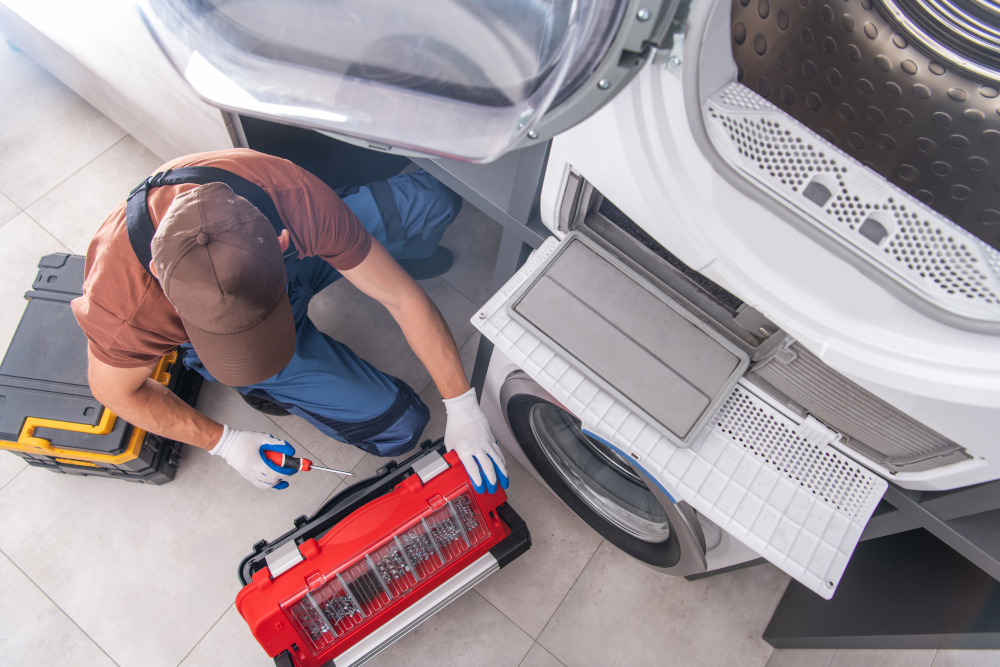
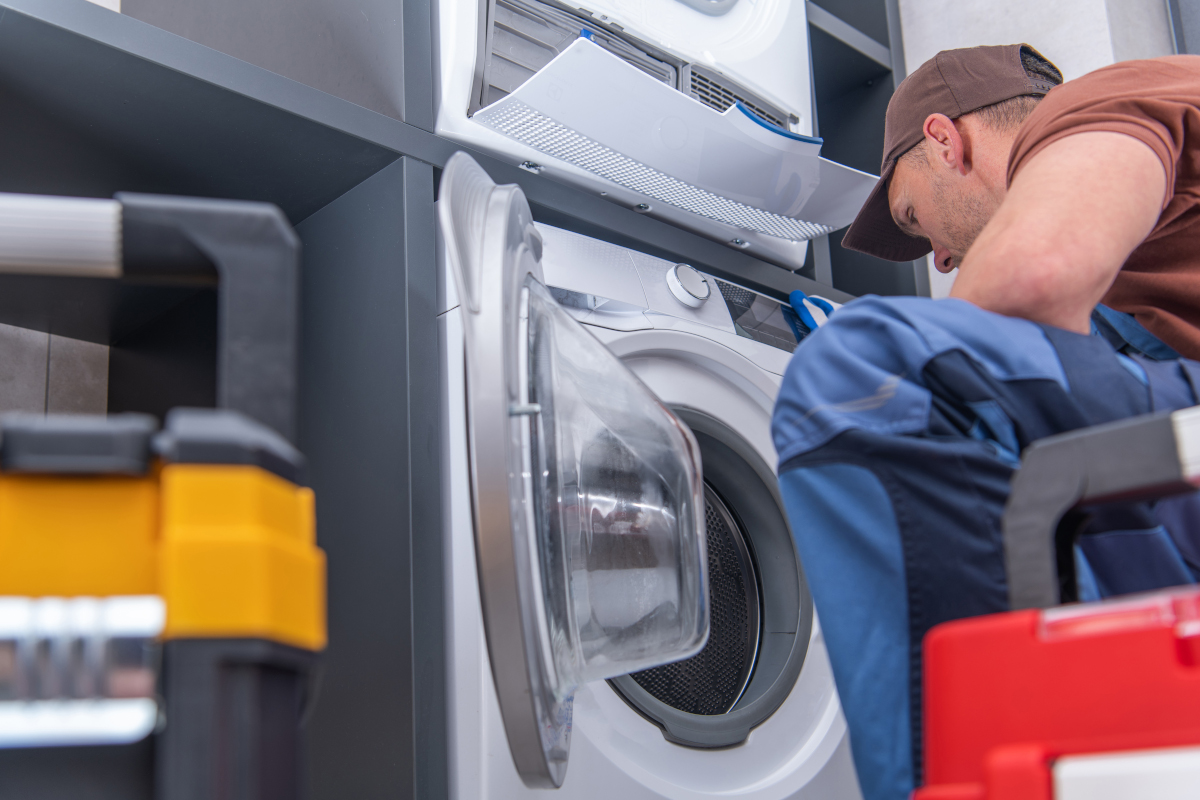
You toss a load of laundry into the dryer, come back an hour later, and everything is still damp. The drum spins fine. The timer counts down. But there’s no heat, and now you’re hanging shirts over chairs like it’s 1952. It’s one of the most common calls we get from homeowners across Ottawa, and the good news is that the cause is usually straightforward once you know where to look.
Here’s what experienced dryer repair technicians in Ottawa check first when they walk through your door.
The Lint Trap and Exhaust Vent
This is always step one. A clogged lint screen or blocked exhaust vent restricts airflow, which causes the dryer to overheat internally. When that happens, a safety mechanism called a thermal fuse trips and cuts power to the heating element. The dryer keeps tumbling, but the heat shuts off entirely.
Most homeowners clean the lint trap between loads, but lint also builds up inside the vent duct that runs from the back of the dryer to the outside wall. Over the years, that duct can become packed, especially if it has sharp bends or runs a long distance. A technician will pull the dryer away from the wall, disconnect the duct, and check for blockages. In many cases, clearing the vent solves the problem completely.
The Thermal Fuse
If the vent was clogged for a while before you noticed the heat was gone, chances are the thermal fuse has already blown. This is a small, inexpensive component mounted on the blower housing or the heating element housing. Once it blows, it doesn’t reset, it has to be replaced.
A technician will test the fuse for continuity with a multimeter. No continuity means it’s done. Replacing the fuse takes about ten minutes, but the repair isn’t complete until the root cause (usually that clogged vent) is addressed. Otherwise, the new fuse will blow again within weeks.
The Heating Element
Electric dryers use a coil of resistance wire to generate heat. Over time, that coil can break or develop a short. When it breaks, you get no heat at all. When it shorts against the housing, it might produce some heat but not enough to dry your clothes properly.
A technician will access the heating element, typically located behind the rear panel or beneath the drum, and test it for continuity and proper resistance. A broken element needs to be swapped out. This is a more involved repair than replacing a fuse, but it’s still something a qualified Ottawa appliance repair technician can handle on the spot.
Gas Igniter and Flame Sensor (Gas Dryers)
If you have a gas dryer, the heating system works differently. Gas dryers rely on an igniter to light the burner and flame sensors (also called coils or solenoids) to regulate the gas valve. When the igniter weakens or the flame sensor fails, the gas never lights and the dryer produces no heat.
A tech will watch the igniter cycle to see if it glows and whether the gas valve opens afterward. A weak glow followed by nothing usually points to worn-out flame sensors, one of the most frequent gas dryer repairs in Ottawa homes.
The Thermostat and Timer
Less often, the cycling thermostat or the timer itself is the culprit. The cycling thermostat monitors drum temperature and tells the heating element when to kick on and off. If it fails in the open position, it never signals for heat. The timer, meanwhile, controls which circuits are active during each stage of the drying cycle. A faulty timer can skip the heating circuit altogether.
These aren’t the first components a technician suspects, but they’re part of a thorough diagnostic process.
When to Call a Professional
Some of these checks, clearing the lint vent, for instance, are things you can do yourself. But testing electrical components requires a multimeter, and working with gas connections carries real safety risks. If your dryer has stopped heating and a vent cleaning didn’t fix it, it’s worth calling in someone with the right tools and training.
Our team handles dryer issues alongside other common household breakdowns, from stove repair to fridge repair across the Ottawa area. A no-heat dryer is frustrating, but it’s rarely a death sentence for the machine. Most of the time, the fix is faster and cheaper than people expect.