
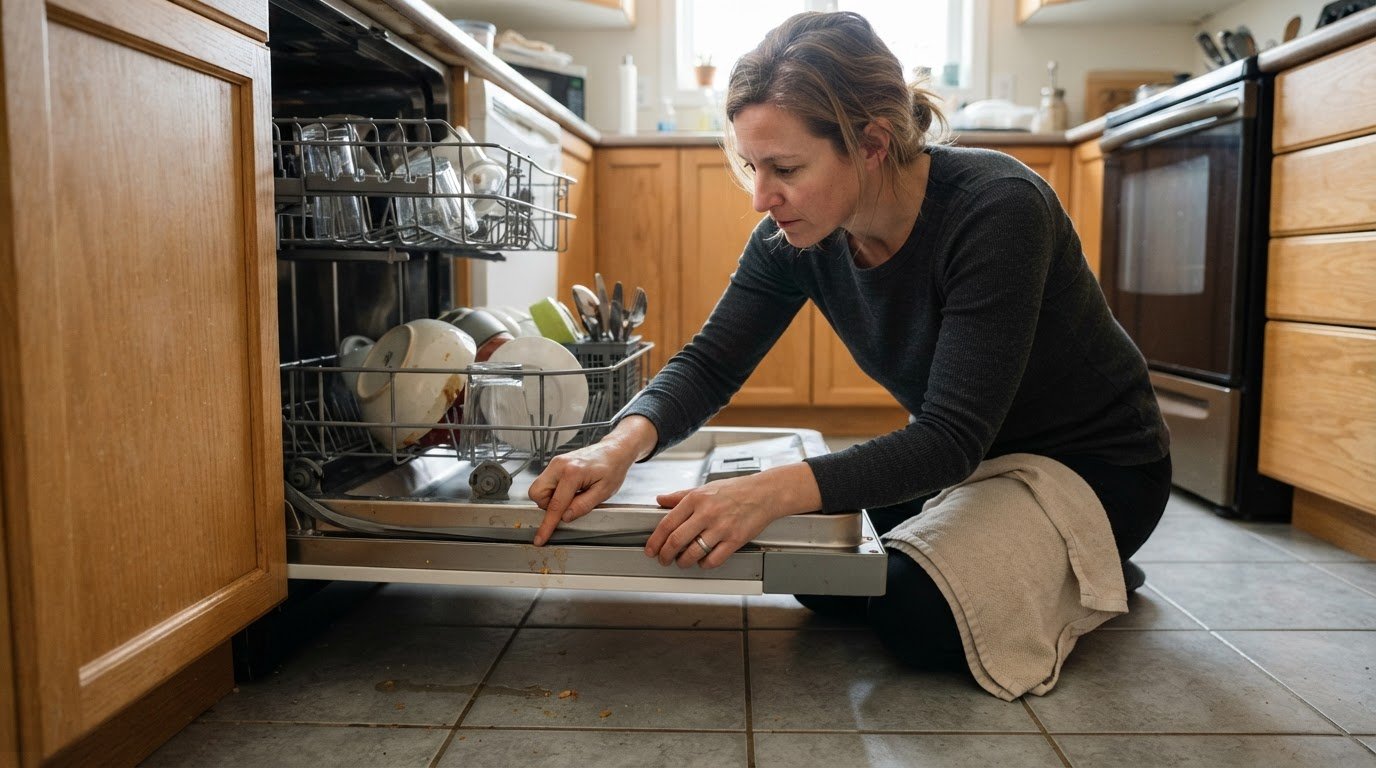
A dishwasher leaking from its door seal in Nepean doesn’t always mean the seal has failed. Food residue, a loose or damaged gasket, or a dish blocking the door can let water escape. A leak underneath may point to a different problem.
A puddle beside the dishwasher is stressful, especially if you’re unsure whether it’s safe to run another cycle. If the leak continues, switch off power at the breaker, shut off the water supply, and leave the appliance off until you identify the source.
This guide explains how to clean up safely, check the seal and load for obstructions, and trace where the water is coming from. You’ll also learn when cleaning may be enough and when a persistent leak, damaged component, or ongoing overfill calls for dishwasher repair in Nepean or Ottawa.
Key Takeaways
- If water keeps leaking, stop the dishwasher, switch off power at the breaker, and shut off its water supply before cleaning up.
- Inspect the door seal and the edges of the load for residue, damage, or items that could keep the door from closing properly.
- Note where water appears: at the door, beneath the appliance, or inside the cabinet. The location can help narrow down the cause.
- Persistent leaks, overfilling, or signs of a damaged internal component call for dishwasher repair rather than repeated test cycles.
Safe cleanup and shutting off power and water
Running the dishwasher during a leak can spread water beneath flooring, into cabinets, or near electrical components. Stop the cycle and keep the appliance off until you identify the source.
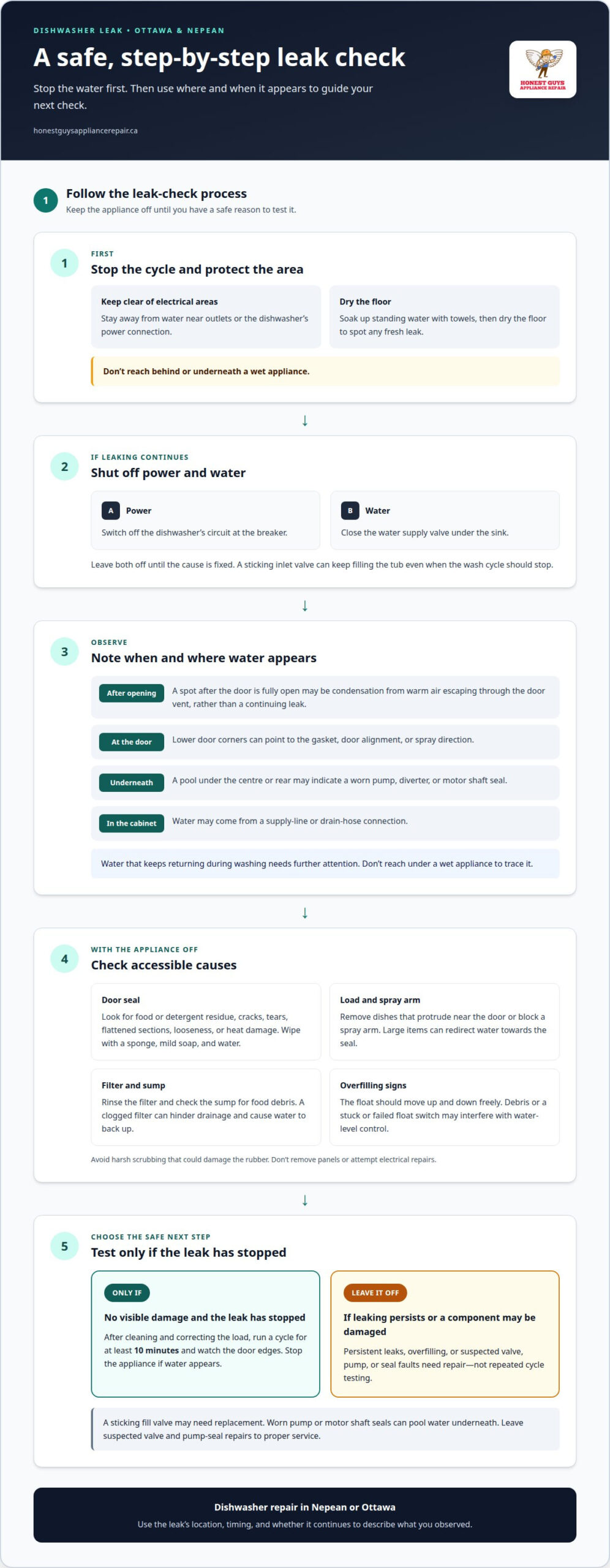
- Stop the cycle and protect the area. Keep clear of water near outlets or the dishwasher’s power connection. Use towels to soak up standing water, then dry the floor so you can see whether another leak appears. Don’t reach behind or underneath a wet appliance.
- Shut off power and water if leaking continues. Switch off the dishwasher’s circuit at the breaker, then close the water supply valve under the sink. Leave both off until the leak’s cause is fixed. A sticking inlet valve can keep filling the tub, even when the wash cycle should stop.
- Notice when water appears. A spot after you open the door fully may be condensation from warm air escaping through the door vent, not a continuing leak. Water that keeps returning during washing needs further attention. Check whether it comes from the door, underneath, or inside the cabinet.
- Look for signs of overfilling without restarting the cycle. A dishwasher float should move up and down freely; debris can stop it from signalling the correct water level. A stuck or failed float switch may allow continued filling and spillover. A clogged filter can also interfere with drainage and contribute to water backing up.
- Leave valve and pump-seal repairs to proper service. If the fill valve is stuck on, keep the under-sink supply shut off; the valve needs replacement. A loose, cracked, or corroded inlet valve can drip during washing, while worn pump or motor shaft seals can pool water underneath. Don’t run another cycle to test either suspected fault.
Are there items between the door seal and the dishwasher tub?
Check the seal, dishes, and drainage path before assuming the gasket needs replacing. A small obstruction or detergent film can prevent the door from sealing properly.
Warranty coverage depends on the appliance’s written warranty and the cause of the leak. Review the terms for gasket coverage and exclusions before arranging a repair.
-
Clean the Door Seal
Wipe the gasket with a sponge, mild soap, and water. For stuck-on film, mix a teaspoon of liquid detergent into a bowl of hot water, then clean the seal and its channel. Remove food and detergent residue, especially around the lower corners. Avoid harsh scrubbing that could damage the rubber.
-
Reseat or Replace the Gasket
Inspect the gasket for cracks, tears, flattened sections, looseness, or heat damage. If it has slipped out of its channel, press it back evenly. A compressed seal may need gentle adjustment. Replace a damaged gasket rather than forcing it to fit. Seat the replacement in a clean channel, then leave the door shut for several hours.
- Check the load and filter. Remove dishes that protrude near the door or block a spray arm. Large items can redirect water toward the seal, causing a leak even when the gasket looks straight. Remove and rinse the filter, then check the sump for food debris. A clogged filter can hinder drainage and cause water to back up.
- Test only after cleaning. If there’s no visible damage and the leak has stopped, run a cycle for at least 10 minutes and watch the door edges. Stop the appliance if water appears. Don’t perform an electric repair or continue testing a persistent leak. If cleaning, loading, and a correctly seated gasket don’t resolve it, dishwasher repair can help identify the fault.
Dishwasher leaks at the front, underneath, or in the cabinet
A door-seal leak can result from a dirty or damaged gasket, misdirected spray, excess suds, or a dishwasher that isn’t level. Where the water appears can help narrow down the cause.
-
Locate the Leak
Dry the floor and note where fresh water appears. Water at the lower door corners points to the gasket, door alignment, or spray direction. A pool under the centre or rear may indicate a worn pump, diverter, or motor shaft seal. Water inside the cabinet may come from a supply-line or drain-hose connection. Don’t reach under a wet appliance.
-
Check Level and Installation
Check that the dishwasher sits squarely in its cabinet and rests firmly on its levelling legs or wheels. It should be level from side to side and front to back so the door closes squarely. A tilted appliance can let water spill over the tub edge and escape beneath the door. Poor installation, loose connections, or a damaged water line or drain tube can also cause leaks.
-
Inspect Pump Seals and Housing
Note where and when water appears, but don’t remove panels or reach into the appliance. A worn pump, diverter, or motor shaft seal can leak underneath, often near the centre or rear. A cracked, loose, or clogged drain hose may leak dirty water during draining. A damaged inlet valve or loose water-line connection can drip during washing. These faults need repair, not repeated cycle testing.
-
Identify Common Leak Causes
Check the door area for a compressed or dirty rubber gasket, a bent latch, or a door that won’t close properly. Overloading dishes or blocking a spray arm can direct water toward the seal. A broken or obstructed spray arm can do the same. Hand soap, dish soap, and laundry detergent create excess suds that may overflow. A bent door or stuck fill valve can also send water beneath the door.
Dishwasher repair service in Ottawa and Nepean
Some leaks stop after cleaning and correcting the load; others point to a failed component. If your dishwasher is leaking from its door seal in Nepean, use these signs to decide when repair is needed and what details to share.
-
Assess When Professional Service Is Needed
Stop using the dishwasher if water continues after you clean the gasket and clear visible obstructions. Arrange service if you suspect a failing inlet valve, repeated overfilling, a cracked tub, or a worn pump or diverter seal. A drain line that appears correctly installed but remains clogged may also need professional attention. Don’t remove panels or keep running cycles to locate an internal leak.
-
Arrange Repair Service in Nepean
For a dishwasher leaking from its door seal in Nepean, describe where the water appears and when it starts: during filling, washing, or draining. Mention whether the leak returns with an empty load, whether the door stays sealed, and whether you recently changed the load or detergent. These details can help narrow down whether the issue involves the gasket, drainage, or another component. Keep the appliance off if the leak continues.
- Prepare useful observations. Note whether water pools at a lower door corner, underneath the dishwasher, or inside the cabinet. Mention any visible cracked hose, loose connection, or unusual overfilling. Don’t pull out a built-in appliance to inspect hidden plumbing, as this can disturb connections and won’t reveal every internal fault. Clear details help the technician focus on likely causes.
- Review the repair plan before work begins. A technician can assess the leak source and explain the recommended repair in plain language. If water keeps escaping despite a clean, properly seated gasket, arrange dishwasher repair rather than risking another wash cycle.
Honest Guys Appliance Repair: Dishwasher Repair & Installation
Honest Guys Appliance Repair provides dishwasher repair and installation when a leaking seal, persistent overfill, or water beneath the appliance points to a fault that cleaning cannot resolve. A technician can assess the source and explain the repair clearly.
Share where the water appears, when the leak starts, and what you’ve already checked. Details such as a damaged gasket, a door that won’t close squarely, or water pooling underneath can help narrow down the issue. If your dishwasher needs attention in Nepean or Ottawa, contact Honest Guys Appliance Repair to discuss the next step.
Keep your kitchen ready for the next cycle
A recurring leak can interrupt more than dishwashing. It can leave you wondering whether the appliance is safe to use and whether the problem will return. If your dishwasher is leaking from its door seal in Nepean, use the timing and location of the leak to describe what you’ve noticed and choose a clear next step.
Honest Guys Appliance Repair also offers dryer, fridge, and oven repair for other essential household appliances. If your dishwasher leak persists after basic checks, reach out with a concise description of the symptoms. That gives you a practical starting point for discussing what the appliance needs, without guessing at the fault or running another wash cycle.
Contact Honest Guys Appliance Repair to discuss your dishwasher repair. A clear plan can help you move forward with confidence and get your kitchen back to its routine.
Frequently Asked Questions
Why is your dishwasher leaking?
A leak can come from a failed seal, excess suds, misdirected spray, or a plumbing connection. The timing offers clues: water during filling may point to a supply-side fault, while water during draining can suggest an issue with the drain path. Note when the puddle forms and where it first appears. This helps distinguish a door leak from water escaping elsewhere.
How do you find a leak in your dishwasher?
Dry the floor and cabinet base, then note where fresh water first appears without reaching under the appliance. Record whether the leak starts during filling, washing, draining, or after you open the door. A single damp spot after opening may come from vent moisture; water that continues to spread suggests an active leak that needs attention.
Does the Tub/Cabinet Seal need to be replaced?
Not necessarily. The tub seal is separate from the door gasket, so identify which seal is affected before considering replacement. Check the tub seal’s placement and visible condition for cracks or tears. A leak near the cabinet or beneath the dishwasher may instead come from a hose, connection, pump, or valve. Persistent water loss needs diagnosis before replacing parts.
How can I tell if a dishwasher door gasket is damaged or dirty?
Residue often looks like a film or food deposits on the rubber, while damage appears as cracks, tears, flattened sections, or a loose portion. Inspect the entire gasket, including its lower corners and channel. If it looks intact but feels unevenly compressed, it may not contact the tub consistently. Dirt can be cleaned; torn or heat-damaged rubber needs replacement.
How do I clean or replace a dishwasher door seal safely?
To clean the gasket, use a sponge, mild soap, and water, then wipe away residue without harsh scrubbing. If replacing it, switch off the appliance and follow the model’s instructions. Don’t force the seal into place. Seat it in a clean channel and keep the door closed for several hours. Stop if the gasket won’t sit evenly.
Can overloading or an unlevel dishwasher cause leaks around the door?
Yes. A protruding plate or tall pan can interfere with the door or redirect spray toward its edge. Keep dishes clear of the seal area, and leave the spray arms free to rotate. An uneven appliance may not close squarely, allowing water to escape beneath the door. Check that it is level from side to side and front to back.