

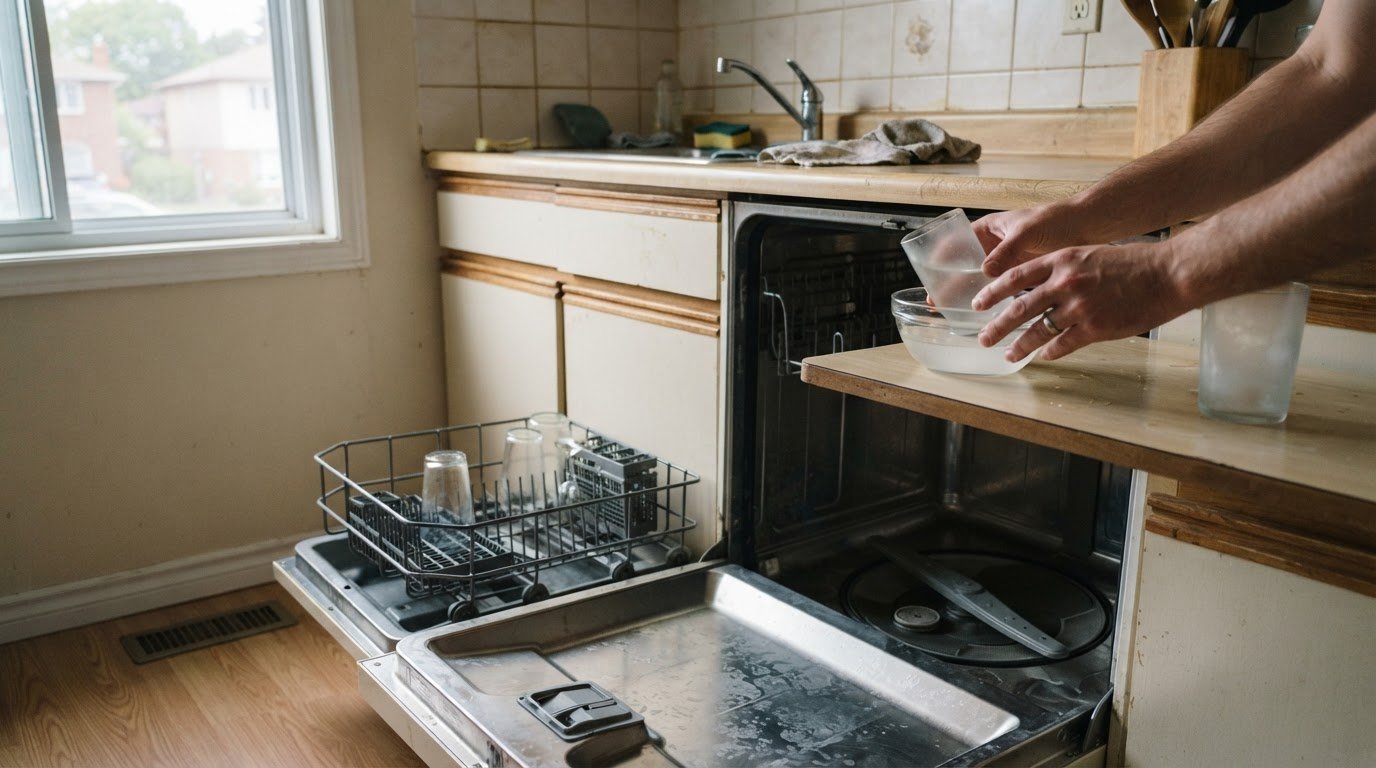
If your dishwasher is leaving white film on glasses, recent mineral deposits can often be removed by soaking the glasses in undiluted white vinegar for 15-30 minutes. If the cloudiness remains, the glass may be etched, which is permanent and can’t be reversed.
It’s frustrating to unload clean glasses only to find them cloudy again. With a dishwasher leaving white film on glasses, first determine whether the haze is removable mineral residue or permanent glass damage.
This guide explains how to test for mineral deposits, clean the filter and spray arms, and adjust detergent, rinse aid, and loading habits to help prevent film from returning. You’ll also learn which signs may point to a dishwasher or water issue that needs attention.
Key Takeaways
- Adjust detergent, rinse aid and dishwasher settings to reduce residue while avoiding conditions that can permanently etch glass.
- Look for mineral scale on taps and other fixtures to see whether hard water may be affecting more than your dishes.
- Try an undiluted white-vinegar soak for recent mineral deposits, but remember that etching cannot be reversed.
- Clear food debris and clean the filter, spray arms, door and seals to support proper water circulation and draining.
Adjusting dishwasher temperature, detergent, rinse aid, and salt
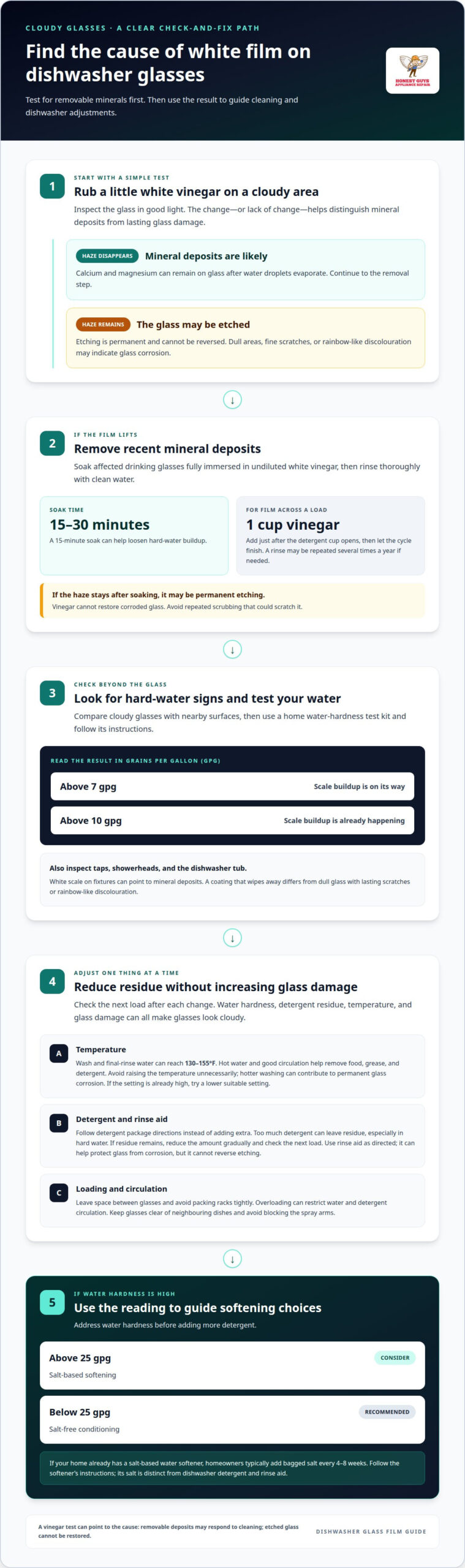
Change one thing at a time and check the next load. Water hardness, detergent residue, temperature, and glass damage can all make glasses look cloudy.
-
Adjust the wash temperature
Check the dishwasher’s temperature setting and confirm its water supply is hot. Wash and final-rinse water can reach 130-155°F, and the machine needs hot water and good circulation to remove food, grease, and detergent. Avoid raising the temperature unnecessarily: hotter washing speeds the chemical reaction between glass, detergent, and water, which can contribute to permanent corrosion. If the setting is already high, try a lower suitable setting.
-
Check for detergent residue
After a cycle, check the glasses and dishwasher tub for a powdery or chalky coating. Too much detergent can leave residue, especially in hard water. Phosphate-free dishwasher detergent may also leave a white film on glassware and the tub. Follow the package directions instead of adding extra detergent. If residue remains, reduce the amount gradually and check the next load.
-
Review detergent and rinse aid
Use rinse aid as directed. It can help protect glass from corrosion, but detergent and rinse aid cannot reverse etching. Dull areas, fine scratches, or rainbow-like discolouration may indicate permanent glass corrosion. Overly soft water can speed corrosion, and excess detergent can contribute to the problem. If the haze remains after residue is rinsed away, changing products may not restore the glass.
- Address water hardness before adding more detergent. A water-hardness reading above 25 gpg is a point to consider salt-based softening; below 25 gpg, salt-free conditioning is recommended. If your home already has a salt-based water softener, homeowners typically add bagged salt every 4-8 weeks. Follow the softener’s instructions, since salt for that system is distinct from dishwasher detergent and rinse aid.
Is hard water causing problems beyond the dishwasher?
Hard water can leave mineral deposits on glasses and other surfaces. Test whether the haze is removable before changing dishwasher settings.
As water droplets evaporate after a cycle, minerals such as calcium and magnesium can remain on the glass. Overloading may also restrict water circulation, leaving detergent or food residue behind.
In Canada, use a home water-hardness test kit and follow its instructions. Readings above 7 gpg indicate scale buildup is on its way; above 10 gpg, scale buildup is already happening.
-
Test a cloudy glass with vinegar
Rub a little white vinegar on a cloudy area and inspect the glass. If the haze disappears, limescale is likely; if it remains, the glass may be corroded. This test helps distinguish removable deposits from permanent damage. Repeating dishwasher cycles is unlikely to clear mineral buildup if the haze is unchanged.
-
Check for hard-water minerals
Look for white scale on taps, showerheads, or the dishwasher tub. Calcium and magnesium in hard water can settle on glass as droplets evaporate, creating a milky film. Hard water can affect more than dishes, so compare cloudy glasses with residue on nearby fixtures. A white coating that wipes away differs from dull glass with lasting scratches or rainbow-like discolouration.
-
Test your water hardness
Use a water-hardness test kit at home and follow the kit’s directions for collecting and reading a sample. Record the result in grains per gallon (gpg), the unit used in the thresholds here. A result above 7 gpg means scale buildup is on its way; above 10 gpg, buildup is already happening. Use the reading to guide your next steps, rather than guessing from cloudy dishes alone.
- Load glasses with space between them, and don’t pack the racks tightly. Overloading can stop water and detergent from circulating effectively, leaving residue on items even when the cycle runs. Keep each glass clear of neighbouring dishes and avoid blocking the spray arms. If hard water and repeated cloudy loads continue, dishwasher repair can help address a machine that isn’t circulating or draining properly.
Removing recent mineral deposits with vinegar
To remove white hard-water stains, soak affected glasses in undiluted white vinegar for 15-30 minutes. Then rinse each glass thoroughly and check whether the haze has cleared.
-
Identify mineral deposits on glassware
Look for a milky layer on the glass surface. Hard water minerals such as calcium and magnesium can remain after droplets evaporate. A recent deposit may respond to vinegar, while an unchanged haze may have another cause. Check several affected glasses to see whether the same film appears across the load.
-
Distinguish deposits from etching
Rub a small cloudy area with white vinegar and inspect it in good light. If the haze disappears, mineral deposits are likely; if it remains, the glass may be corroded or etched. Etching causes tiny scratches and is permanent, so vinegar cannot restore the glass. Dull stains, scratches, and rainbow-like discolouration can also indicate lasting damage.
- Soak affected drinking glasses fully immersed in undiluted white vinegar for 15-30 minutes. For a quick test, a 15-minute soak can help loosen hard-water buildup. Rinse the glasses thoroughly with clean water before using them again. If the film remains after soaking, avoid repeated scrubbing that could scratch the glass; the cloudiness may be permanent etching rather than removable residue.
- For film on otherwise clean dishes, run a vinegar rinse in the dishwasher. Add 1 cup of vinegar just after the detergent cup opens, then let the cycle finish. This method can help address mineral residue across a load, while soaking targets individual glasses. A vinegar rinse may be repeated several times a year if needed, but it won’t reverse existing glass corrosion.
Cleaning the dishwasher filter, spray arms and seals
Grease, food particles, detergent residue, and minerals can build up inside a dishwasher. Clean key areas to help maintain washing, circulation, and drainage.
-
Clean the dishwasher filter
Remove the filter as directed in your dishwasher’s instructions and clear visible food debris. Rinse away residue, then check the mesh for grease or mineral buildup. Refit the filter securely before running another load. A clogged filter can leave soil in the wash water that redeposits on glasses. Don’t force a filter that resists turning, since locking mechanisms vary by model.
-
Clean the spray arms
Check each spray arm for food debris or blocked openings. If an arm needs to be removed, follow the appliance instructions. Rinse it and clear visible material without forcing or damaging the openings. Once reinstalled, check that the arms rotate freely. Blocked spray arms can reduce circulation and leave detergent or food residue on dishes.
- Wipe the dishwasher door and seals with a clean, damp cloth. Check the edges and folds for trapped food, grease, or detergent residue, then remove visible debris. Clean seals help keep the door area free of buildup that could wash back into the tub. Avoid pulling or stretching the seals while wiping them.
- After cleaning, check that the dishwasher drains properly. Standing water or persistent residue after a washing cycle may point to a drainage or circulation problem, rather than a dirty filter alone. If the filter, spray arms, and seals are clean but dishes still come out coated, arrange dishwasher repair to address a machine issue.
Honest Guys Appliance Repair: Dishwasher Repair & Installation
If cloudy glasses persist after cleaning and adjusting settings, Honest Guys Appliance Repair provides Dishwasher Repair & Installation. Residue that continues after you’ve checked the filter, spray arms, detergent, and water circulation may point to a mechanical issue affecting wash performance.
Repair may be the next step if the film returns across loads or the dishwasher does not drain properly. A technician can assess the appliance and explain the repair clearly, helping you make an informed decision. Honest Guys Appliance Repair also provides dishwasher installation.
Contact Honest Guys Appliance Repair to discuss your dishwasher concern.
Get a clear next step for your dishwasher
A dishwasher leaving white film on glasses is frustrating, especially when the haze keeps returning. Work out whether the problem is limited to the glassware or whether residue is appearing across loads. Note what you’ve tried and what you see, such as film on other dishes or water left in the tub. These details can help focus a repair assessment.
If cleaning and routine adjustments haven’t solved the problem, contact Honest Guys Appliance Repair to discuss your dishwasher. The company also repairs dryers, fridges, and ovens. Rather than guessing at a mechanical cause, arrange an assessment to clarify what the dishwasher needs and what to do next. Honest Guys Appliance Repair serves Ottawa and surrounding areas.
Contact Honest Guys Appliance Repair to talk through the dishwasher issue and take a practical next step toward clearer glassware.
Frequently Asked Questions
Can I remove the white film once it’s there?
If your dishwasher is leaving white film on glasses, a suitable glass-restoration product may help with some surface deposits. Check that it is intended for the type of glass, follow the directions, and rinse thoroughly before use. Don’t put crystal through a dishwasher treatment. Test the method on a suitable glass surface first.
How do you prevent white stains on your glassware?
Keep crystal glasses out of the dishwasher and wash them by hand. For other glassware, consider the water left to dry on each item: mineral-bearing droplets can leave residue as they evaporate. If the film returns across loads, consider whether your household’s water hardness needs to be addressed, rather than relying only on another detergent adjustment.
How do you remove glass corrosion?
Permanent glass corrosion cannot be removed. If cleaning leaves the appearance unchanged, stop treating the glass as though it has a removable coating. Set aside affected pieces if their cloudy surface is unsuitable for serving. Compare damaged glasses with unaffected pieces from the same load to help distinguish individual wear from film across the load.
How do you remove limescale?
For limescale on glassware, place two denture-cleaner tablets in the dishwasher’s cutlery basket and run a cycle with the affected glasses. Start with otherwise clean glasses. After the cycle, inspect the surfaces and rinse the glassware before use. This method targets limescale, not permanent corrosion or scratches.
How long after installing a softener will the film stop?
Existing dishwasher buildup may take 2-3 cycles to flush out after water treatment is installed. Judge the result after those cycles, rather than expecting the first wash to clear residue already inside the machine. If film continues on later loads, look for another cause, such as poor water circulation or detergent residue, instead of assuming the softener has removed permanent damage from the glass.
What if Cleaning Doesn’t Make Cloudy Glasses Crystal Clear Again?
Use a glass-restoration product only if its directions say it is suitable for that glass surface. Rinse the treated glass thoroughly before using it again. If the cloudiness remains, compare several pieces: a surface deposit may respond to polishing, but lasting glass damage will not. Don’t reapply products without checking their intended use and rinsing instructions.