
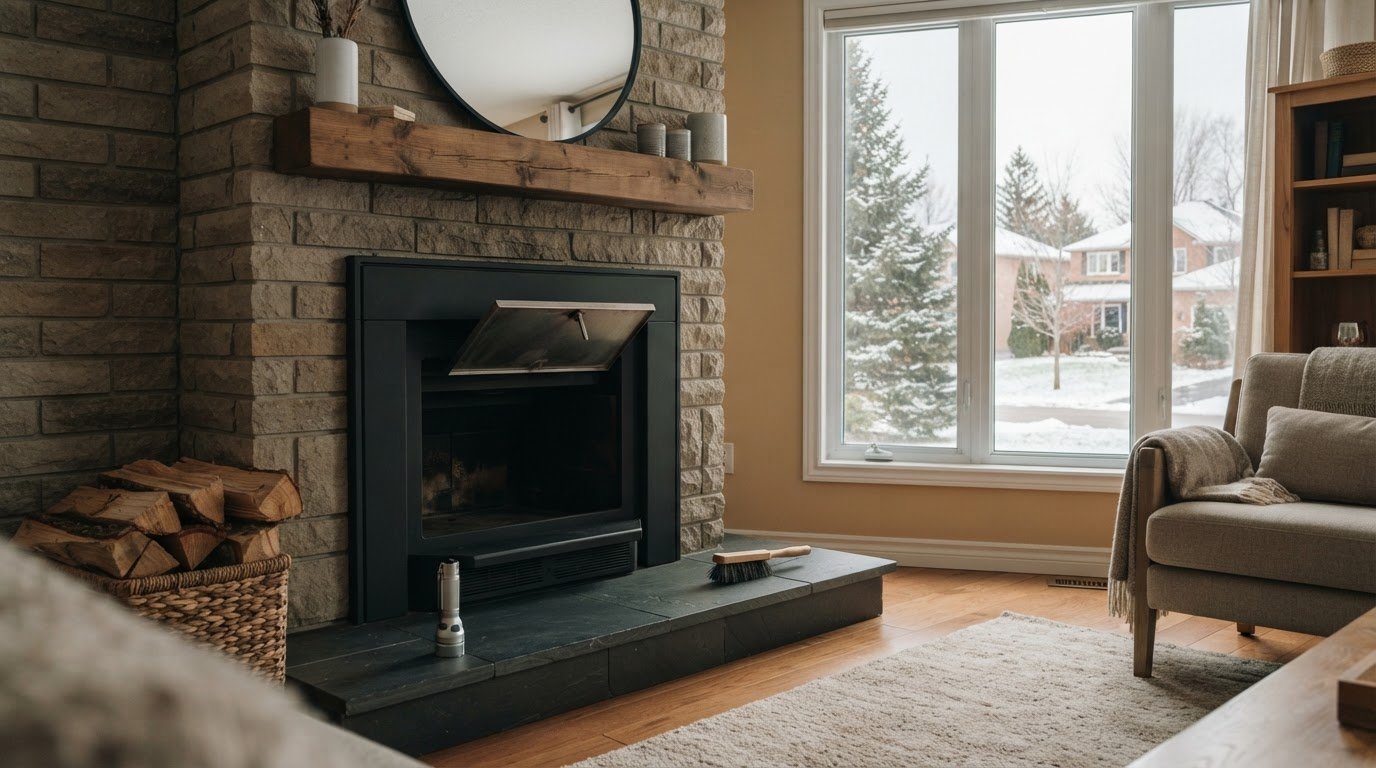
A safe first fire starts with a proper check, not just a quick look at the hearth. For a pre-winter fireplace checkup in Kanata, arrange a professional inspection and cleaning every year, as recommended by the National Fire Protection Association and the Chimney Safety Institute of America. Before lighting a wood-burning fireplace, make sure the damper is fully open and the chimney is clear of nests, branches and debris.
It’s easy to focus on the firebox and overlook the parts that keep a fireplace working safely. Gas fireplace owners should also pay attention to components such as the ignition system, pilot light and fuel connections. A careful visual check can help you spot visible problems, but smoke backing into the room, unusual odours or signs of damage call for professional attention.
This guide walks you through checking fireplace components, looking for chimney and flue concerns, clearing nearby hazards and preparing for the first fire. You’ll also learn what to look for in gas fireplaces and when to stop using the fireplace until an issue is assessed.
Key Takeaways
- Arrange a professional fireplace inspection and cleaning once a year, and watch for signs of chimney damage or creosote buildup.
- Keep papers, kindling and other flammable items away from the hearth, and let fireplace ashes cool for at least 24 hours before removing them.
- Before the first fire, check that the damper opens, the chimney is clear and the fireplace components show no visible damage.
- Test smoke and carbon monoxide alarms before fireplace season, and follow the owner’s manual for gas fireplace maintenance.
- Stop and seek professional attention if smoke backs into the room, the fireplace has trouble igniting or you spot cracks or damaged fuel connections.
Inspecting chimneys and flues for damage and creosote
Before the first seasonal fire, inspect the firebox, damper and visible chimney surfaces for blockages or damage. A professional inspection can identify problems that a ground-level check cannot reveal.
-
Checking the Damper and Chimney for Blockages
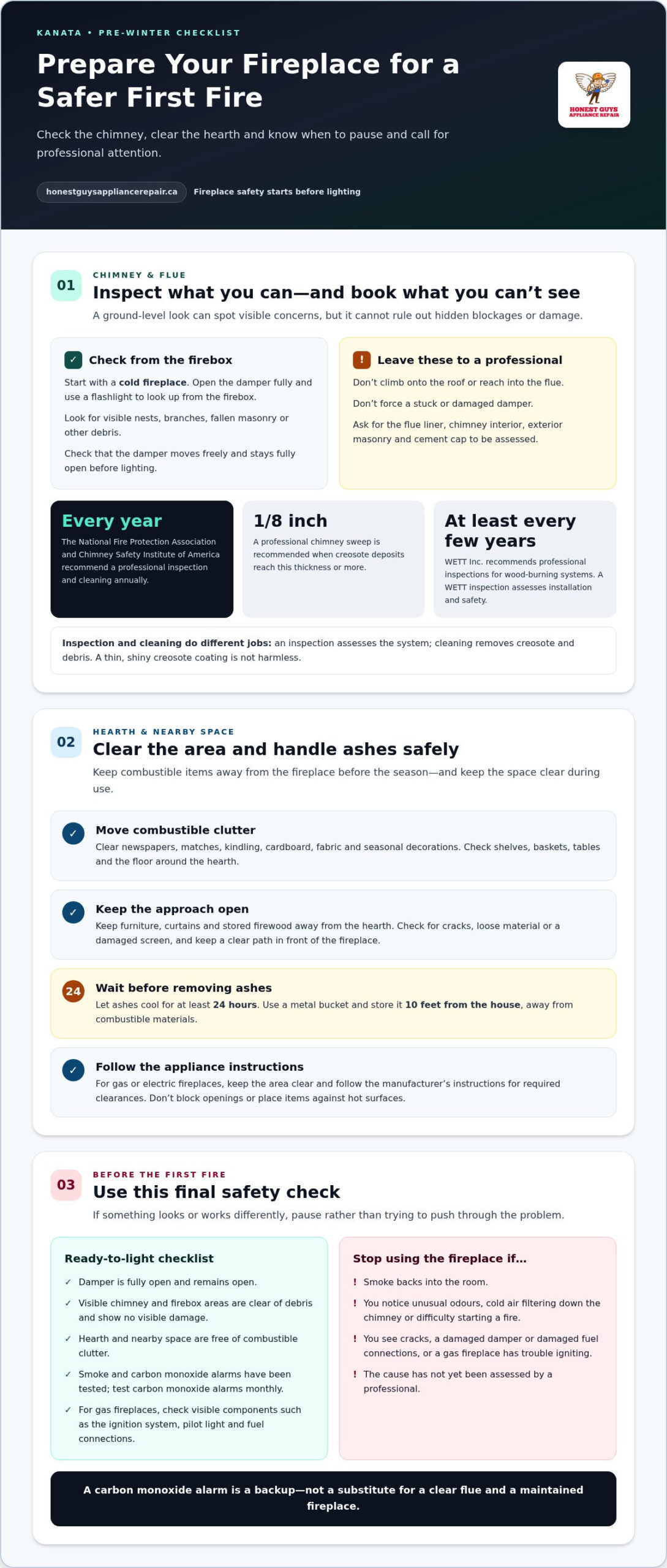
Start with a cold fireplace, open the damper fully and use a flashlight to look up from the firebox. Check for visible nests, branches, fallen masonry or other debris, but don’t climb onto the roof or reach into the flue. A clear view from below cannot rule out hidden blockages. Before lighting, confirm the damper remains fully open so smoke can escape.
Check whether the damper moves freely and closes securely. A stuck or damaged damper can let smoke back up, while also allowing cold air, moisture or pests inside. If it binds, appears damaged or won’t stay open, don’t force it. Arrange an inspection before using the fireplace.
-
Arranging a Professional Fireplace Inspection
Book a professional fireplace inspection before the heating season. The National Fire Protection Association and the Chimney Safety Institute of America recommend a professional inspection and cleaning every year. The inspection should assess structural damage, chimney blockages and creosote buildup, including areas that aren’t visible from the firebox.
Choose a qualified chimney-cleaning professional. For a wood-burning system, a WETT inspection assesses the installation and safety; WETT Inc. recommends professional inspections at least every few years. Inspection and cleaning have different purposes: one assesses the system, while the other removes creosote and debris.
- Ask the inspector to check the flue liner, chimney interior and exterior masonry. Look for cracked mortar joints, loose bricks, a damaged cement cap or signs of water entering the chimney. These defects can worsen over time and affect safe flue operation. Don’t cover cracks with a quick surface patch; the right repair depends on the location and extent of the damage.
Have creosote buildup assessed during the inspection. A professional chimney sweep is recommended when deposits reach 1/8 inch or more. Even a small amount of creosote from burning wood can create a fire hazard, so don’t treat a thin, shiny coating as harmless. Cleaning removes combustible deposits that can catch fire inside the chimney.
- Take smoke, odours and changes in airflow seriously. An unusual smell, cold air filtering down the chimney, smoke backing into the room or difficulty starting a fire can point to a blockage or another underlying problem. Stop using the fireplace until the cause is assessed; poor draft can let smoke and carbon monoxide enter the home.
Test carbon monoxide alarms monthly and make sure they work before fireplace season. An alarm is a backup, not a substitute for a clear flue and a maintained fireplace. Without an annual inspection, a developing blockage, creosote deposits or structural damage may go unnoticed, increasing the risk of a chimney fire or smoke entering living spaces.
Clearing clutter and flammable objects near the fireplace
Before fireplace season, clear the hearth and nearby area of papers, kindling and other combustible items. Work through the space systematically, then keep it clear during use.
-
Clearing Combustible Clutter
Move newspapers, matches, kindling, cardboard and fabric away from the fireplace and hearth. Check nearby shelves, baskets and tables too: reading material or a decorative blanket can put combustible items close to the fire. Store fire-starting materials separately and bring out only what you need when preparing to light a fire.
Look at the whole area, not just the floor. Curtains, furniture and seasonal decorations can also be too close to the fireplace. Arrange the room so these items aren’t beside the hearth or in a spot where sparks could land. Don’t use the hearth for storage, even when the fireplace is cold.
- Check the fireplace surround and hearth for damage before arranging furniture. Look for loose or cracked material, a damaged screen or objects that could be knocked into the firebox. Keep the space in front of the fireplace open, with a clear path so people can pass without brushing against the hearth or stored firewood.
For a gas or electric fireplace, keep the area around the unit clear and follow the manufacturer’s instructions for required clearances. Don’t place baskets, cords, furniture or decorations where they could block an opening or touch a hot surface. If a component looks damaged, don’t use the fireplace until it has been assessed.
-
Clearing Ashes and Debris
Wait at least 24 hours after the fire has gone out before removing ashes. Ash can hold heat even when it looks cold. Use a metal bucket for removal, and store it 10 feet from the house. Keep the bucket away from combustible materials rather than placing it beside the woodpile, deck or outdoor storage.
Clear cooled ashes from the firebox as part of regular seasonal maintenance. Remove loose debris from the hearth and surrounding area before use, including paper, bark or fallen kindling. Collect ash and debris carefully rather than sweeping it toward stored materials, so fine particles don’t scatter across the floor.
- Before lighting, check the hearth, nearby floor, shelves and furniture for combustible clutter. Confirm that stored items aren’t blocking the fireplace opening or any vents. Keep matches and other fire-starting materials out of children’s reach, and return them to storage after preparing the fire.
After each use, wait for ashes to cool before handling them, then clear debris from the surrounding area. This routine helps prevent clutter from building up during the season. If you notice damage to the fireplace or its components while tidying, leave the unit unused until the issue is addressed.
How Do You Prepare Your Fireplace for the First Fire of the Season?
Prepare the fireplace according to its fuel type and owner’s manual. For a wood-burning unit, check the firebox and use dry, well-seasoned wood. For a gas model, follow the model-specific instructions for burner and fire-media maintenance.
- Read the owner’s manual before cleaning a gas burner or fire media. Requirements vary by model, and moving synthetic logs or decorative media from their specified positions can affect fireplace operation. Turn the unit off and let it cool before routine cleaning. Don’t remove burner parts or adjust gas connections yourself.
Have a licensed gasfitter or furnace repair professional clean and inspect gas fuel-delivery jets. Check the ignition system and pilot light as part of seasonal preparation, and leave repairs to a qualified professional if ignition fails or the flame behaves unusually. Synthetic logs generally need replacement every 2-3 years, depending on use.
- Clean the firebox and accessible surfaces only after the fireplace has cooled. Remove loose soot and debris using a method suited to the materials, taking care not to scatter residue into the room. For a wood-burning fireplace, surface tidying is not chimney cleaning. Creosote inside the flue needs proper attention because it can contribute to a chimney fire.
Use seasoned wood for a cleaner, more efficient burn and less creosote buildup. Never start a fire with gasoline or another flammable liquid. If you find fresh debris, flaking material or soot after maintenance, pause and have the underlying condition assessed before lighting.
- Inspect the fireplace blower only as directed by its manual. Check that its controls work, look for visible fraying on accessible wiring, and make sure exhaust ports aren’t blocked. Keep the unit off during inspection, and don’t open electrical housings or attempt wiring repairs. A damaged wire, blocked outlet or blower that won’t operate needs proper assessment.
For a gas fireplace, follow the model’s cleaning instructions for the burner and fire media. Keep water and cleaning products away from parts the manual says must remain dry. If the instructions call for removing components, or you see damage, stop rather than forcing parts back into place.
- Before the first fire, confirm the fireplace is clean, its components are in place and its operating instructions are close at hand. If the fireplace has been unused for three seasons, have it inspected before lighting. Start with a small fire using well-seasoned wood, then watch for smoke entering the room, poor draft or unusual operation.
Stay in the room while the fire burns and monitor it throughout use. For a gas fireplace, follow the manual’s start-up steps rather than improvising if the pilot or burner doesn’t light. Stop using the fireplace if you notice smoke, persistent ignition trouble or signs of damage.
Common fireplace and wood-stove deficiencies
Ontario requires a carbon monoxide detector on every floor of a home effective January 1, 2026. Have wood-burning appliances assessed before the heating season each fall, and address visible defects before burning.
- Inspect the firebox and masonry for deep cracks, gaps or loose material. Deep cracks can compromise fireplace safety and efficiency, so don’t use a unit with obvious damage. Check the chimney exterior for cracked mortar joints or a damaged cap, too. These defects can let moisture in or affect the chimney’s condition; arrange appropriate repairs before lighting a fire.
Look above the roofline for overhanging branches. Cut back branches that impede chimney draw or create an external fire hazard. Poor draw can make a fire difficult to start and allow smoke into the room. If smoke repeatedly backs up, stop burning and have the cause assessed rather than trying to overcome it with a larger fire.
- Consider the age and installation history of a wood stove, especially in an older Ottawa-area home. Some stoves found in area inspections were installed in the 1970s and 1980s, before current standards were in place or without professional guidance. Age alone doesn’t identify a fault, but it makes a careful assessment valuable.
Watch for uneven heat, persistent ignition trouble, smoke entering the room or recurring chimney issues. These signs can point to problems beyond routine cleaning. Don’t assume a stove is safe because it worked last season; changes to the chimney, appliance or installation can affect its operation.
- Prepare wood-burning appliances with dry firewood stored in a dry place for at least 6 months. Firewood moisture content should be below 20% for it to burn well. Wet or poorly seasoned wood can add to creosote buildup, so don’t bring damp logs indoors and treat them as ready fuel.
Choose firewood suited to the appliance and follow its operating instructions. While the fire burns, watch for poor draft, unusual smoke or a fire that struggles to stay lit. These symptoms deserve attention because incomplete or inefficient burning can leave deposits and increase fire risk.
- Test carbon monoxide detectors before using a fireplace, and keep them working on every floor. A detector alerts occupants to carbon monoxide, but it doesn’t fix a blocked chimney, poor draft or faulty appliance. Treat an alarm or smoke entering the room as a reason to stop using the fireplace and respond promptly.
Keep a record of recurring problems, such as a crack that returns, weak draft or repeated ignition trouble. Share your observations during an inspection. For older wood stoves, include the appliance’s installation history and any visible certification label; WETT inspections assess whether a wood-burning appliance is certified, including whether it has a CSA or ULC label.
Checking fireplace components
With the fireplace cold and well lit, visually check parts that seal the opening and protect the firebox. Look for changes since the last heating season, and record anything that appears loose, cracked or worn.
- Inspect the fireplace gasket every year. Check the full seal around the door for gaps, loose sections, splits or flattened areas, especially at corners and where gasket lengths meet. A damaged seal may let heat escape or create a fire hazard. Don’t glue, stretch or replace a gasket by guesswork; the right material and fit depend on the fireplace model.
Note the location of any visible wear and take a clear photo while the unit is cool. This makes it easier to compare the same spot during a later check and describe the issue during service.
- Examine glass doors, masonry and caulking for cracks or gaps. Check the edges of each glass panel and the joints where the surround meets the wall. Note whether a crack crosses the glass, caulking has pulled away or masonry looks chipped. These details help distinguish a small surface change from damage that affects the seal or firebox.
Don’t use the fireplace if a glass panel is cracked or a door no longer sits correctly. Avoid household sealant; materials near a fireplace must suit its heat exposure and construction.
- Look at the chimney cap from the ground, using binoculars if available. A cap helps keep rain, leaves, birds and debris out. Note whether it appears present, crooked, visibly damaged or obstructed. A ground-level view cannot show every part of the cap, so don’t climb onto the roof to inspect it.
Record what you can see and arrange a closer assessment if the cap appears damaged or displaced. Keep this observation separate from your firebox notes to help identify whether the concern is at the chimney top or inside the fireplace.
- Check fireplace draft with a small piece of paper, following the safe operating instructions for your unit. Observe whether the smoke moves toward the chimney or drifts back into the room. Stop if smoke enters the living area, and don’t proceed to a fire. This simple observation can flag an airflow concern, but it cannot identify the cause.
Keep a brief component log with the date, the part checked and its condition. For example, write “door gasket split at lower corner” rather than “fireplace looks worn.” Specific observations give a qualified professional clearer information to assess.
Honest Guys Appliance Repair: Dryer Repair
Honest Guys Appliance Repair can help when your seasonal home check also uncovers an appliance problem. A fireplace inspection addresses the fireplace; a dryer that won’t heat, tumbles noisily or stops mid-cycle needs appliance repair instead.
For a dryer fault, arrange Dryer Repair to identify what’s preventing normal operation. Honest Guys Appliance Repair also handles Fridge Repair, Oven Repair and Stove Repair. Keep these appliance concerns separate from chimney, gas-fireplace or wood-stove issues, which need fireplace-specific assessment.
If your pre-winter preparations reveal a household appliance problem, contact Honest Guys Appliance Repair to discuss the repair you need.
Keep your home’s maintenance on track
Use a pre-winter fireplace checkup in Kanata as a starting point for a simple home-maintenance record. Note the date, changes you observed and items needing follow-up. This record can help you track recurring concerns and make the next seasonal check more focused. Keep fireplace issues separate from appliance faults, as they involve different equipment and repair needs.
If your seasonal preparations also uncover an appliance problem, Honest Guys Appliance Repair offers Dryer Repair, Fridge Repair and Oven Repair. Clear information about the appliance and the problem helps you take the next step without confusing it with fireplace maintenance.
For help with a household appliance issue, contact Honest Guys Appliance Repair. Keep your maintenance notes handy and move into the season with a practical plan.
Frequently Asked Questions
What Maintenance Should Be Done on a Gas Fireplace?
Use the owner’s manual for routine gas fireplace care, since cleaning steps differ by model. If the pilot light or flames go out while the fireplace is on, wait at least five minutes before trying to relight it. Don’t keep retrying if the fireplace fails to start; note what happened and arrange qualified help to assess the cause.
Do Fireplaces Need to Be Serviced?
Yes. Professional service helps assess parts that aren’t accessible during a homeowner’s visual check, including the appliance’s installation and internal condition. The work depends on the fireplace: wood-burning systems need attention to the flue and deposits, while gas models have fuel and ignition components. Keep service records with the fireplace manual so future technicians can see what work was done.
Why Is Fireplace Preparation Essential Before Winter?
Preparing early gives you time to address a problem before regular cold-weather use makes the fireplace harder to do without. A pre-winter fireplace checkup in Kanata can help you note changes since the previous heating season and plan follow-up work before relying on the unit. This is especially useful if the fireplace is a key part of your home’s heating routine.
What are the warning signs that a fireplace or chimney needs repair?
Pay attention to problems that return after maintenance or a previous repair. For example, a fireplace that still has poor draft after debris is cleared may have an underlying issue. Also look for moisture staining or crumbling material around the chimney. Record where the change appears and when you noticed it; those details can help a professional assess the cause.
What should homeowners do to prepare a fireplace for winter?
For a pre-winter fireplace checkup in Kanata, record the fireplace model, last service and any changes noticed during use. Keep the owner’s manual accessible, and make sure everyone at home knows how to stop the unit using its normal controls. For gas fireplaces, follow the manual’s relighting instructions instead of repeatedly trying to start the unit if the pilot or flame goes out.
How much does a fireplace and chimney inspection cost in Kanata or Ottawa?
The material gives no price for a separate fireplace or chimney inspection.