
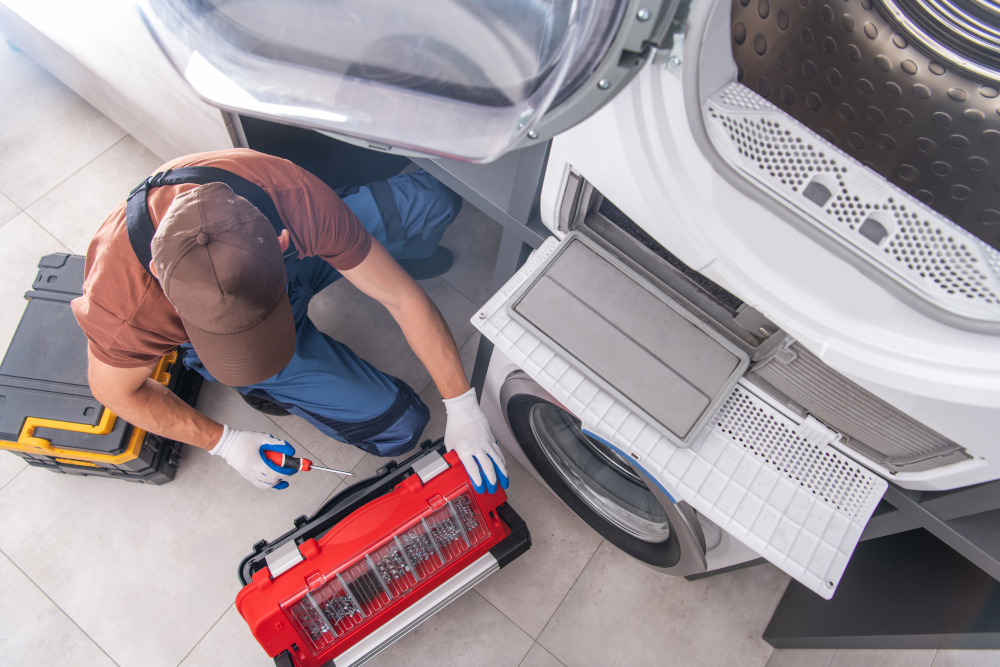
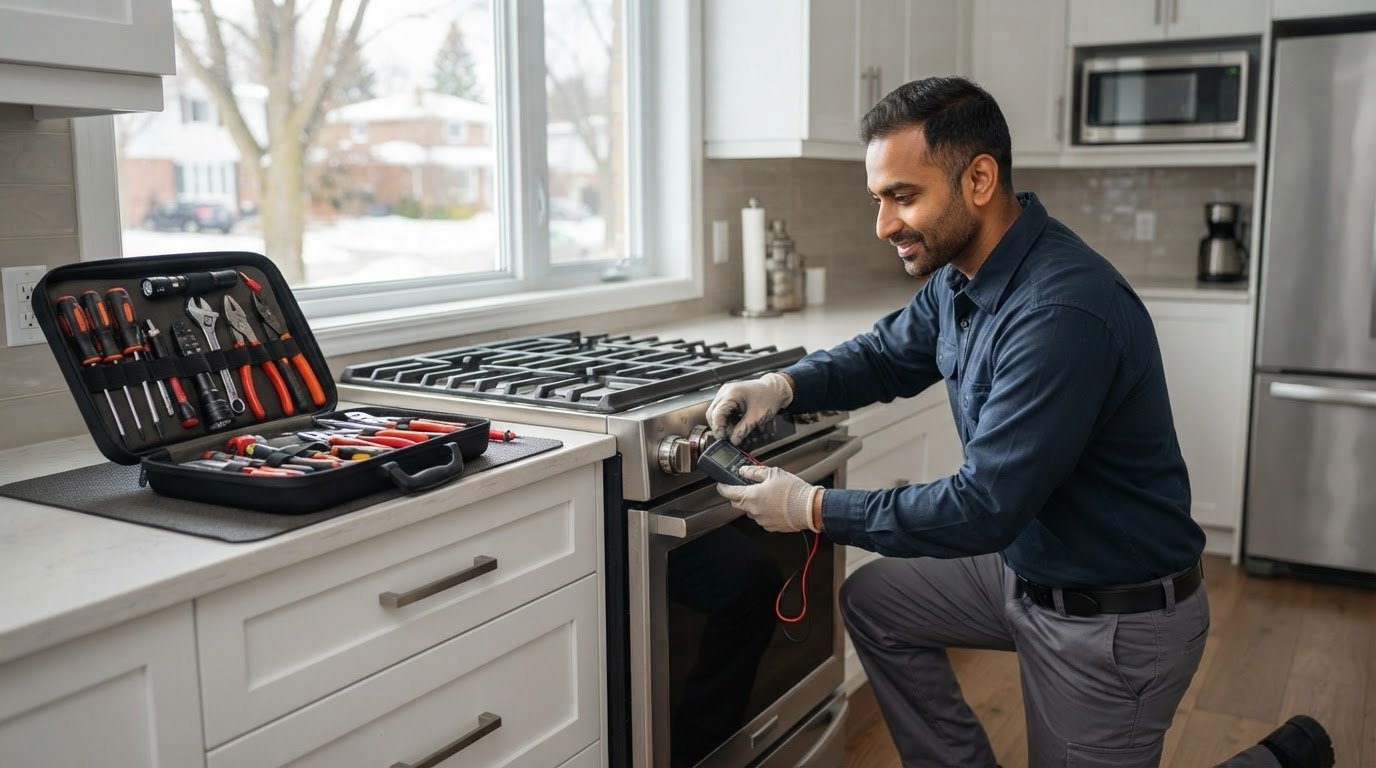
Does “certified” mean the same thing for every appliance repair? Not in Ontario. If you’re looking for a certified appliance technician Nepean homeowners can trust, the right qualification depends on the work, especially when a gas appliance is involved. You should be able to understand what the technician is qualified to do, how the repair will be approached and what work is proposed before it begins.
For gas appliances, TSSA certification is required for technicians working on equipment connected to a natural gas or propane line. Electrical appliance repairs are different: Ontario’s Appliance Service Technician trade certification is voluntary, though relevant training and experience can still help you assess a technician’s qualifications.
This guide explains which credentials matter for common repairs, what to look for when comparing service practices and how to prepare for a repair visit. Honest Guys Appliance Repair is owner-operated and serves Nepean and the Ottawa region, including communities such as Kanata, Stittsville, Orleans, Barrhaven, Greely, Findlay Creek and Gloucester. The company repairs household appliances and provides support for gas appliances.
Key Takeaways
- Match a technician’s qualifications to the specific repair, rather than relying on the word “certified” alone.
- For gas-appliance work, understand why TSSA certification matters and what it applies to.
- Compare repair services by relevant experience, clear explanations and service area.
- Before a visit, note when the problem began and any error message, then make safe access to the appliance.
- Expect a clear explanation of the recommended work and a quote before work begins.
What Does a Certified Appliance Technician in Nepean Actually Mean?
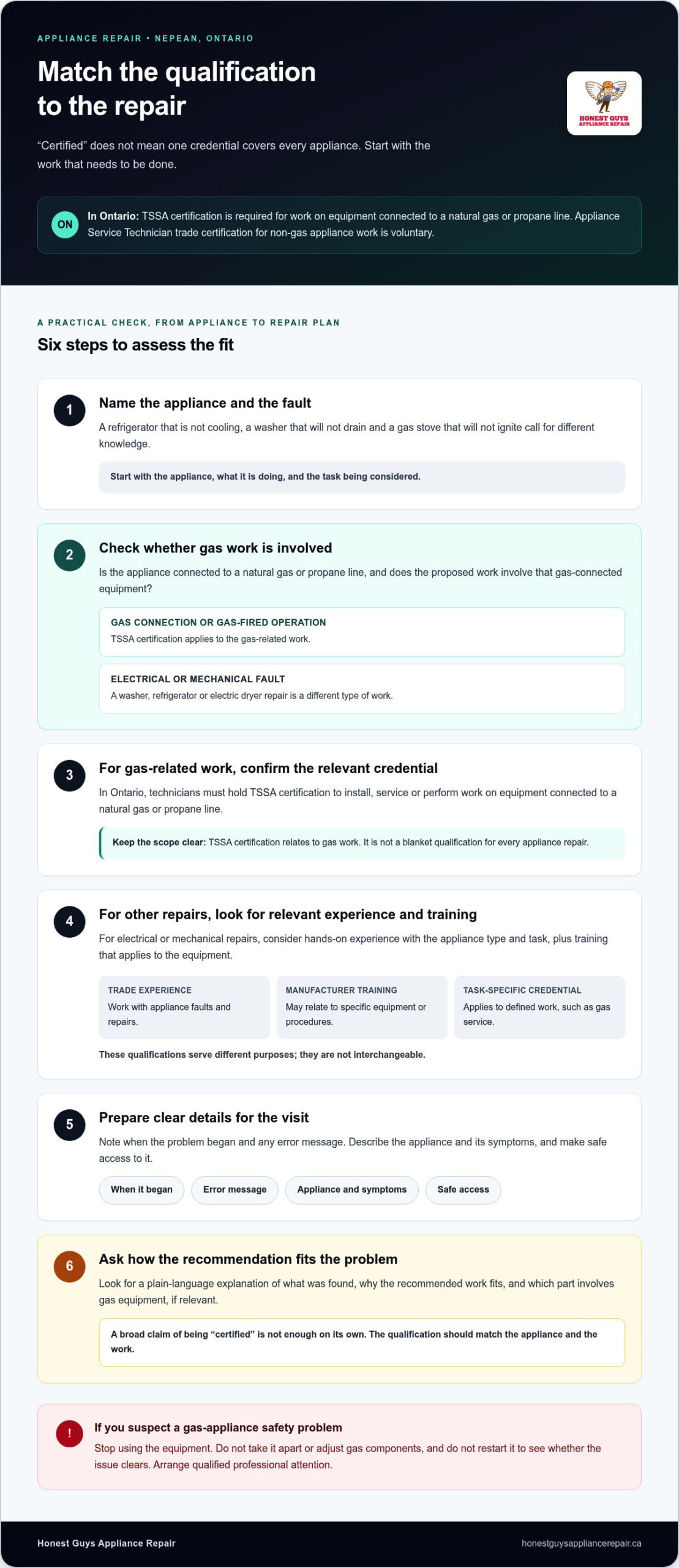
“Certified” can sound like a simple pass-or-fail label, but it doesn’t tell you by itself what work someone is qualified to perform. A certified appliance technician has a credential relevant to particular training or work, not one universal certificate covering every appliance and repair. For Nepean homeowners, the practical question is whether the technician’s qualifications fit the appliance and the task.
A refrigerator that isn’t cooling, a washer that won’t drain and a gas stove that won’t ignite call for different knowledge. A general claim of certification doesn’t tell you whether the person has experience with that appliance, training for its make or model, or the credential required for gas-related work.
Why the word certified needs context
In Ontario, Appliance Service Technician trade certification is voluntary for work on non-gas appliances. That means “certified appliance technician” doesn’t refer to one mandatory provincial certificate for every electrical or mechanical repair. Trade experience, manufacturer training and task-specific certification can each be useful, but they aren’t interchangeable.
Trade experience shows that someone has worked with appliance faults and repairs. Manufacturer training may relate to particular equipment or repair procedures. A task-specific credential applies to defined work, such as gas-appliance service. Look for a clear explanation of what a credential covers instead of assuming it proves expertise across every household appliance.
What Nepean homeowners should match to the repair
Start with the appliance and the work it needs. For a gas stove, fireplace or another appliance connected to a natural gas or propane line, the technician performing work on that gas-connected equipment must hold TSSA certification in Ontario. The credential relates to gas work; it isn’t a blanket qualification for every appliance repair.
For electrical or mechanical repairs, such as investigating a dishwasher that won’t drain or a dryer that won’t tumble, consider relevant hands-on experience and training that applies to the appliance. A technician who can describe similar work in plain language gives you a clearer sense of their practical background than a broad claim of being certified.
- Gas appliance: Match the technician’s TSSA certification to the gas-related work being performed.
- Electrical or mechanical fault: Consider experience with the appliance type and repair task, along with relevant training.
- Any repair: Look for an explanation of what was found and why the recommended work fits the problem.
A certified appliance technician Nepean residents can assess should be able to distinguish trade credentials, manufacturer training and task-specific certification, then explain how each relates to the repair. Specific, plain-language answers help you judge whether the technician’s background fits the job without relying on a broad label alone.
TSSA Certification and Gas Appliance Work in Nepean
A gas appliance needs a different qualification from an electric washer or refrigerator. In Ontario, TSSA certification is required for technicians who install, service or perform work on equipment connected to a natural gas or propane line. It applies to that gas-related work, not every appliance repair in a home. Knowing the difference helps Nepean homeowners keep safety at the centre of the decision.
When TSSA certification is relevant
If a repair involves the gas connection or gas-fired operation of a stove, fireplace or other gas appliance, TSSA certification is relevant to the work. A fridge that isn’t cooling, a washer that won’t drain or an electric dryer fault is a different type of repair. Those jobs don’t become gas work simply because the same technician also services gas appliances.
Appliance Service Technician trade training and gas credentials serve different purposes. Skilled Trades Ontario outlines the apprenticeship and certification process for the appliance service trade, including the Red Seal endorsement, a national standard for qualified tradespeople. Its Appliance Service Technician information can help clarify that trade pathway. It doesn’t replace TSSA certification for work on gas-connected equipment.
Gas appliance concerns that call for professional attention
If a gas stove fails to operate as expected or a fireplace has a problem during use, don’t take the appliance apart or try to adjust its gas components. If you suspect a safety problem, stop using the equipment and arrange for qualified professional attention. Don’t restart it to see whether the issue clears. A suspected gas-appliance fault calls for a careful assessment, not guesswork.
- Stove or range: A fault affecting gas operation calls for a technician qualified for the gas-related work.
- Fireplace: If it appears unsafe or isn’t operating normally, stop using it and have the concern assessed.
- Other gas appliance: Describe the appliance and symptoms clearly so the work can be matched to the right qualification.
Honest Guys Appliance Repair provides support for gas appliances and holds TSSA certification for gas-related work. That credential shouldn’t be read as a claim that one certification covers every appliance or repair. A clear explanation should identify which part of the proposed work involves gas equipment and how it relates to the appliance concern.
For a gas-appliance concern, choose a service that addresses the safety question directly and explains the proposed work without pressure. Learn about gas-appliance repair support from Honest Guys Appliance Repair, with a focus on clear communication and accountable service.
How to Compare Appliance Repair Services in Nepean
A useful comparison starts with the repair you need, not a broad promise about being “the best.” A fridge that isn’t cooling, a dryer that won’t start and a stove problem call for different experience. Compare how clearly a service connects your appliance and symptoms to the work, explains what it finds and describes the proposed repair before you decide whether to proceed.
| What to compare | What clear service looks like |
|---|---|
| Relevant experience | The technician’s background relates to the appliance and fault you describe, such as a washer that won’t spin or an oven that won’t heat. |
| Task-specific credentials | Any credential is described in relation to the work it covers, rather than presented as proof of expertise across every repair. |
| Explanation quality | The technician describes the finding, recommended repair and work involved in language you can understand. |
| Service area | The company identifies the communities it serves so you can see whether your Nepean address is covered. |
Questions that reveal clear communication
Can the technician explain how the symptom relates to the suspected fault? Do you understand what the recommended work includes and what it aims to address? These questions help you assess whether the recommendation is specific to your appliance. You should have a chance to understand the proposed work before deciding to approve it.
Repair or replacement advice should account for the appliance’s condition and the issue found. A useful explanation lays out the reasoning without pushing unnecessary work. If a technical term comes up, ask what it means for your appliance and how it relates to the recommendation.
Match appliance experience to the problem
Appliance categories matter. A dryer that stops heating is a different concern from one that makes noise; a dishwasher that leaves water behind differs from a stove that won’t ignite. Relevant experience means the technician can discuss the particular appliance and symptom, then explain how the diagnosis supports the proposed next step.
Comparison checklist: Match experience to the appliance and fault, check that credentials fit the task, listen for a clear explanation, and make sure the service covers your address.
Use those criteria to compare options for your Nepean home. Look for a service that connects the reported problem to a diagnosis, explains the recommended work in practical terms and gives you enough information to make your own decision. A specific, understandable explanation is more useful than a broad claim of expertise.
What to Expect Before an Appliance Technician Visits Your Nepean Home
A little preparation can make a repair visit more focused. You don’t need to diagnose the appliance yourself. Describe what you’ve noticed, make the appliance safely accessible and leave technical checks to the technician. These steps help explain the problem without putting you or your home at risk.
- Describe the symptom. Explain what the appliance is doing or what has stopped working. Mention whether the issue happens every time or only in certain situations.
- Identify the appliance. Note whether it’s a fridge, dryer, oven, stove, washer or dishwasher. If you can safely see the make and model information, have it ready.
- Clear safe access. Move nearby items out of the way if you can do so safely. Don’t pull out a heavy appliance, remove panels or handle wiring or gas components.
- Review the explanation. Listen to the diagnosis, ask about anything that’s unclear and understand the proposed work before deciding how to proceed.
Information to have ready
Note when the problem began and what you observed. A display message, leak or unusual sound can help describe the issue, as long as you can notice it safely. These details give the technician useful context, but they don’t replace an in-person assessment.
Don’t keep running an appliance that appears unsafe just to reproduce a sound or error. If you suspect a gas or electrical safety problem, stop using it. Don’t open the appliance, touch exposed wiring or attempt work on gas parts. Share what happened and let a qualified professional assess it.
How the diagnosis and approval should work
After assessing the appliance, the technician should explain the suspected fault and recommended repair in plain language. You should understand what the work involves and why it’s being proposed. At Honest Guys Appliance Repair, customers receive a clear quote before work begins, so you can review the proposed work before approving it.
For another practical preparation reference, use this Barrhaven appliance repair homeowner checklist. The same basics help Nepean households: record the symptoms, keep the work area safely accessible and ask for an explanation you can follow.
Looking for a certified appliance technician Nepean residents can speak with clearly? Arrange appliance repair support with Honest Guys Appliance Repair and describe what your appliance is doing.
Appliance Repair in Nepean: Local Service and the Next Step
Once you understand which qualifications fit the repair and what to expect from a clear service process, the next step is choosing help for the appliance that’s giving you trouble. Honest Guys Appliance Repair is an owner-operated company serving Nepean and the Ottawa region, including Kanata, Stittsville, Orleans, Barrhaven, Greely, Findlay Creek and Gloucester. Its residential repair and installation services cover common household appliances, with recommendations explained in plain language.
Appliances Honest Guys Appliance Repair can help with
Different appliances call for different troubleshooting. A fridge that isn’t cooling, a dryer that won’t start and a washer that won’t complete its cycle each need an assessment suited to the appliance and its symptoms. Repair services include fridges, dryers, ovens, stoves, washers and dishwashers. For gas appliances, TSSA certification relates to gas work rather than serving as a general credential for every repair.
Service also includes dishwasher installation and hood fan repair and installation. Homeowners arranging a dryer repair can find practical context in the Ottawa dryer repair guide, while those planning a new dishwasher installation can review the Ottawa dishwasher installation guide. These resources connect the service to the appliance and the decision at hand.
For other needs, the company also provides support for gas appliances and fireplaces, commercial coffee machine repair and dryer vent cleaning. Each service has a different purpose, so describe the appliance and issue clearly when arranging help. That gives the conversation a practical starting point without assuming the same expertise or credentials apply to every job.
Take the next step with a local repair team
Not sure how to explain the problem? Start with what you’ve noticed: the appliance type, the symptom, when it began and any display message or unusual sound you observed safely. A straightforward description helps the technician understand the concern and assess the appliance. Before work begins, you’ll receive an explanation of the recommendation and a clear quote for the proposed work.
Local accountability matters when someone is working in your home. Honest Guys Appliance Repair serves Nepean and surrounding Ottawa communities, including Kanata, Stittsville, Orleans, Barrhaven, Greely, Findlay Creek and Gloucester. If you’re comparing a certified appliance technician Nepean homeowners can rely on, focus on whether the recommended work fits the fault, the explanation makes sense and the service process is clear.
Describe the appliance issue and symptoms you’ve noticed to get started. Explore appliance repair services from Honest Guys Appliance Repair and find the right next step for your Nepean home.
Make Your Next Repair Decision With Confidence
A repair appointment should leave you with a clear understanding of what happens next, not more uncertainty. Before approving a recommendation, consider whether the explanation connects the appliance’s symptoms to the proposed work. You should feel comfortable asking for clarification and taking the time you need to make an informed decision.
Choosing a certified appliance technician Nepean homeowners can trust isn’t about collecting credentials for their own sake. It’s about finding the right fit for the specific job and understanding what work is being recommended. A calm, straightforward conversation can turn an inconvenient breakdown into a manageable next step.
If an appliance at home needs attention, share what it’s doing and what you’ve observed. Contact Honest Guys Appliance Repair for help with your appliance and move forward with a clearer plan.
Frequently Asked Questions
Is there one certification that covers every type of appliance repair?
No. Appliance qualifications relate to different kinds of work, so a credential for one task shouldn’t be assumed to cover every repair. For example, TSSA certification applies to gas-appliance work, while training or experience may relate to other appliance types. When comparing qualifications, focus on the specific repair needed and what the credential or training covers, rather than relying on the word “certified” alone.
Can an appliance technician diagnose a problem if I do not know the model number?
Yes. The technician can start with the appliance type and symptoms even if you don’t know its model number. For example, describe whether a dryer won’t start, stops mid-cycle or makes an unusual sound. A model number can help identify the exact unit, but don’t move a heavy appliance or remove panels to find it. Share it only if you can locate it safely.
How long does an appliance repair appointment usually take?
There isn’t one reliable appointment length for every repair. The time needed depends on the appliance, the fault and what the technician finds during the assessment. A straightforward issue may take less time than a problem that needs more investigation. Describe the symptoms when arranging service, then ask for an update after the appliance has been assessed so you can plan around the repair.
Should I keep using an appliance that is making an unusual noise or smell?
No, stop using it if the noise or smell suggests a safety concern. A burning smell, for example, is a reason to switch the appliance off if it’s safe to do so and arrange a professional assessment rather than running another cycle. If you suspect a gas-related problem, don’t try to inspect or adjust the appliance yourself. Explain what you noticed when arranging help.
Does TSSA certification apply to refrigerator and washer repairs?
Routine refrigerator and washer repairs usually don’t involve gas-appliance work, so TSSA certification isn’t a blanket requirement for those jobs. The relevant qualification depends on the task being performed. If a repair involves work on equipment connected to a natural gas or propane line, TSSA certification matters for that gas-related work. Describe the appliance and fault clearly so the work can be assessed appropriately.
Can Honest Guys Appliance Repair help with more than one appliance?
Yes. Honest Guys Appliance Repair provides repair services for household appliances including fridges, dryers, ovens, stoves, washing machines and dishwashers. If more than one unit needs attention, describe each appliance and its symptoms when arranging service. For instance, note whether a washer won’t drain and whether the dryer has stopped heating. That gives the team a clearer picture of the help you need.
What should I do if my appliance stops working before a service visit?
Stop using the appliance if it appears unsafe, and don’t attempt repairs involving wiring, internal components or gas connections. Note what changed, such as a new display message or a leak, and update the service team if the symptoms have changed since you arranged the visit. Keep the area safely accessible, but don’t pull out a heavy unit or remove covers to investigate.