
When a dishwasher isn’t cleaning the top rack, the cause may be a simple obstruction, such as an overloaded rack or a blocked spray arm. But a dishwasher not cleaning top rack Ottawa homeowners rely on can also have a worn or failed component.
It’s frustrating when plates on the bottom rack come out clean but glasses above them don’t. If the load looks fine, it can be hard to tell whether there’s a blockage or a mechanical problem. Start with safe, simple checks before assuming the dishwasher needs repair.
This guide explains what can interrupt the spray path, which checks you can do without taking the appliance apart, and which symptoms call for a technician. You’ll also learn when dishwasher repair in Ottawa makes sense. Whether you’re in Ottawa, Nepean, Kanata, Stittsville, Orleans, Barrhaven, Greely, Findlay Creek, or Gloucester, trace how water reaches the top rack before deciding on the next step.
Key Takeaways
- Compare food residue with detergent marks or water spots to describe what you’re seeing.
- Check whether dishes or visible debris could be obstructing the upper spray arm before suspecting a failed part.
- Follow your dishwasher’s manual before removing or cleaning any component.
- If a dishwasher not cleaning top rack Ottawa problem continues after safe checks, professional repair can help identify the cause.
- Honest Guys Appliance Repair serves Ottawa and nearby communities with clear explanations and an upfront quote before work begins.
Dishwasher Not Cleaning the Top Rack in Ottawa: What the Symptom Can Tell You
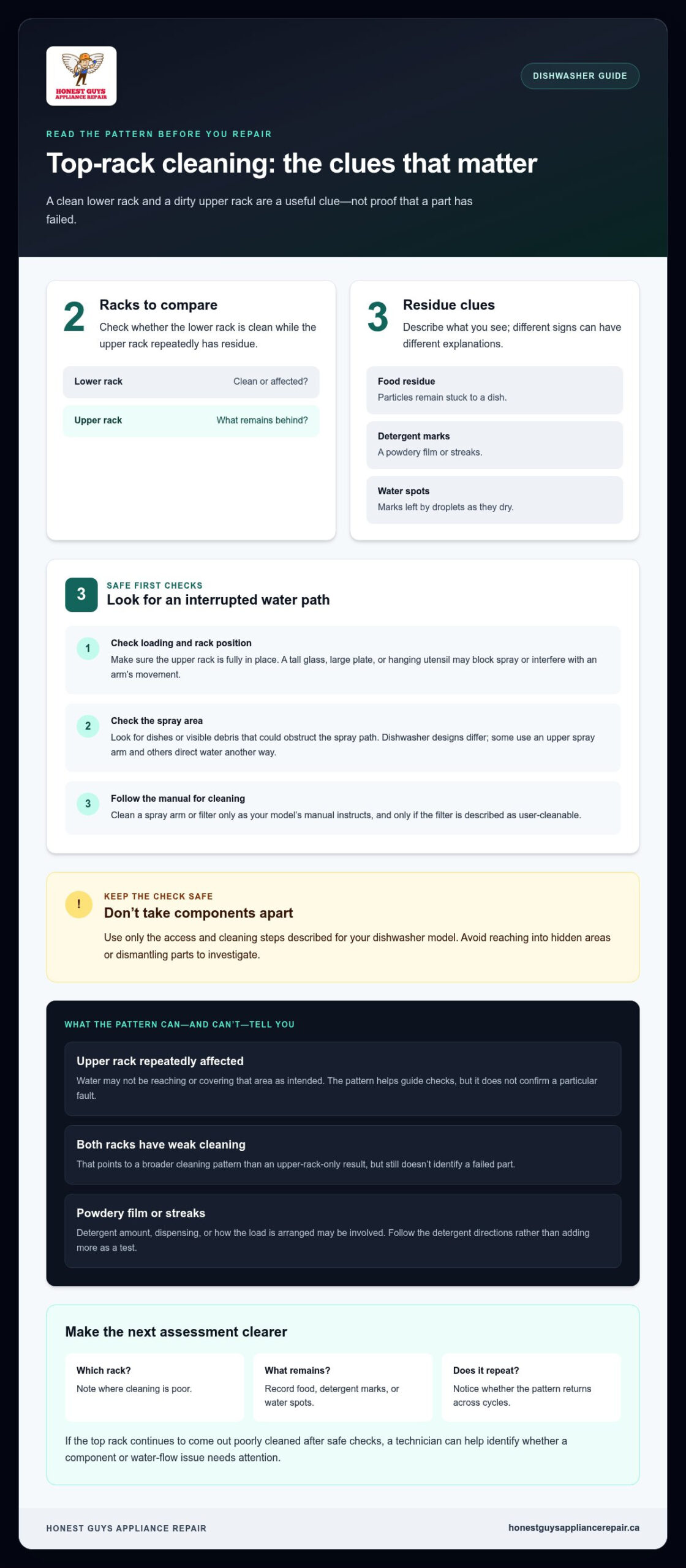
The lower rack comes out clean, but cups or plates above still have food on them. That contrast is frustrating, but one wash result doesn’t identify a failed part. Note what’s left behind and whether the problem happens again before deciding what to do next.
Food residue means particles remain stuck to a dish. Detergent marks may look like a powdery film or streaks, while water spots are usually marks left by droplets as they dry. These signs can have different explanations. Describe what you see rather than treating every cloudy glass or dirty plate as proof of the same fault.
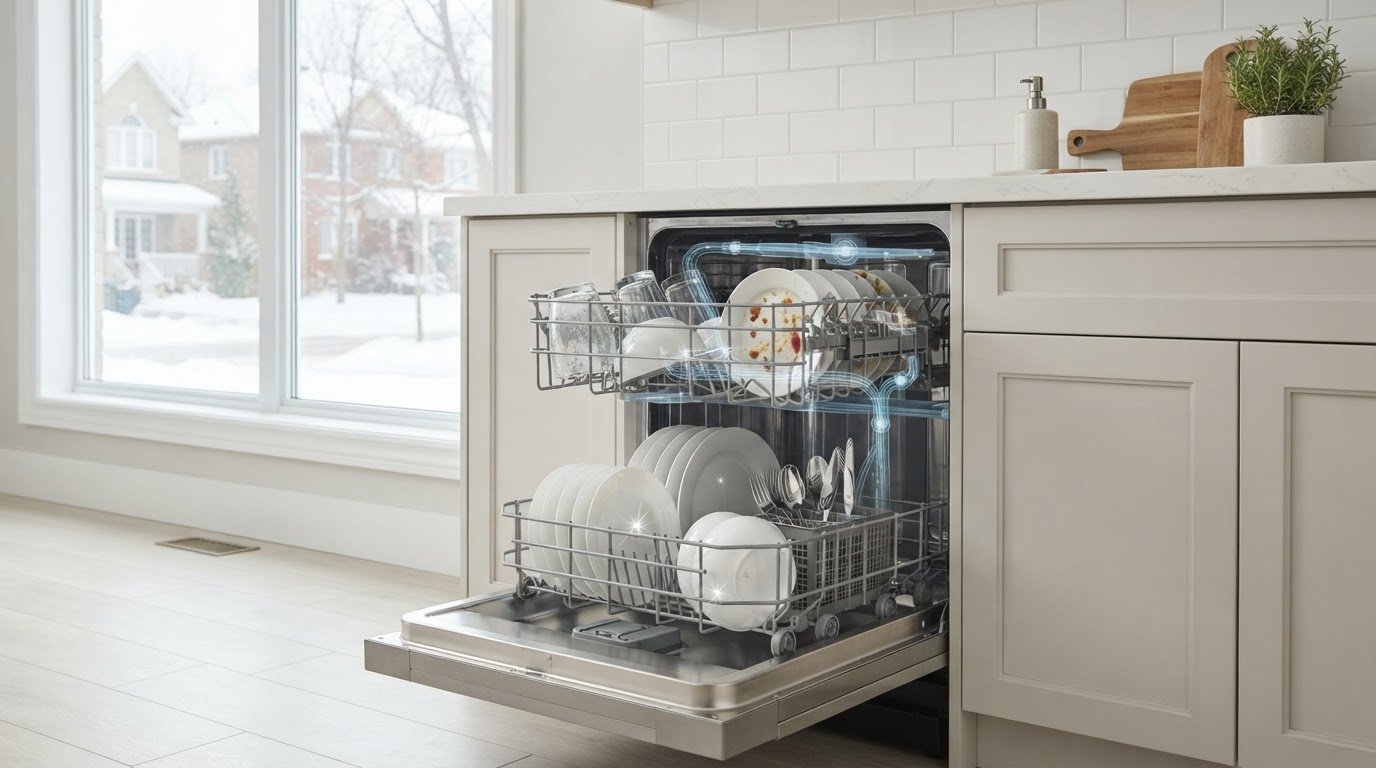
Upper-rack cleaning depends on wash water reaching that area and covering the dishes. The how a dishwasher works overview explains the role of water circulation and spray arms. If only the upper rack is affected, the pattern is a useful clue about where to look, not a diagnosis.
What does it mean when only the top rack stays dirty?
If dishes across both racks are dirty, the cleaning problem is broader. If the lower rack looks clean while the upper rack repeatedly has residue, the issue may be more specific to how water reaches or covers that area. Check whether the upper dishes have food debris, detergent film, or signs of incomplete rinsing. The pattern can narrow down what to investigate, but it can’t confirm a particular fault on its own.
Compare dishes from the same load, too. Food stuck to a few items may be related to their position or exposure during the cycle, while a similar film across several upper-rack dishes suggests a recurring pattern. Neither observation proves what has gone wrong. Together, they can help distinguish an isolated loading result from an ongoing upper-rack concern.
Which details should Ottawa homeowners observe first?
Note when you first noticed the change and whether it happens on every cycle or only occasionally. Check that the upper rack is pushed fully into place, then think about recent changes, such as different loading, a new detergent, or a change in how often the dishwasher runs. These details put a disappointing wash in context.
- Record which rack is affected and what kind of residue remains.
- Notice whether the pattern repeats across cycles.
- Recall any recent changes to loading, detergent, or dishwasher use.
Keep your observations factual. For example, “cups on the upper rack had food residue in repeated cycles” is more useful than guessing that a pump or spray arm has failed. A clear description helps guide the next checks without turning a clue into a premature repair decision.
How Dishwasher Water Reaches the Top Rack, and Where Flow Can Be Interrupted
A dishwasher moves wash water through its circulation system and directs it around the load through spray arms. The arrangement varies by model. Some designs have an upper spray arm, while others direct water to the upper rack through a different path. Either way, upper-rack cleaning depends on water reaching that area and having a clear route to the dishes.
Water-flow problems can leave dishes consistently unrinsed, while detergent marks or poor loading can create similar-looking results for different reasons. That distinction matters. A dirty top rack doesn’t prove a pump has failed, and replacing a part based on the symptom alone can miss a simpler obstruction.
How the upper spray arm and water path affect cleaning
On dishwashers with an upper spray arm, it distributes water across the rack during the wash. A tall glass, a large plate, or a utensil hanging below the rack may block the spray or interfere with the arm’s movement. Spray openings can also become obstructed. Check the owner’s manual for the correct spray-arm access and cleaning instructions, because models differ.
Rack position matters, too. If the upper rack isn’t fully seated, it may not line up as intended with the water path in that model. A crowded rack can also shield items behind other dishes, even if the spray arm itself is clear. Before concluding that water isn’t circulating, look for items that extend beyond their spaces or sit in the path of moving parts.
How filters, circulation, and detergent may contribute
Food scraps and other debris can collect in accessible filter areas. If the manual describes a user-cleanable filter, follow its steps. A dirty filter may affect wash performance, though it doesn’t confirm the cause of an upper-rack-only issue. Avoid reaching into hidden areas or taking components apart to investigate.
Detergent can offer clues, too. A powdery film or streaks may relate to the amount of detergent, dispensing, or the way the load is arranged rather than a blocked water path. Follow the detergent directions and your dishwasher manual instead of adding more detergent as a test. If both racks have weak cleaning, that points to a broader pattern than an isolated upper-rack result, but it still doesn’t identify a specific failed part.
For a safe first look, check that dishes aren’t obstructing the spray area and that the rack is correctly in place. Use only the access and cleaning steps described for your model. If the top rack continues to come out poorly cleaned, dishwasher repair in Ottawa can help identify whether a component or water-flow issue needs attention.
Top-Rack Dishwasher Cleaning Problems in Ottawa: Compare the Clues Before Repair
A dishwasher not cleaning top rack Ottawa households depend on can leave clues in where residue appears and whether the problem repeats. Use the comparisons below to decide what’s safe to check next, not to identify a failed component. For example, a dish placed directly behind a large bowl may be shielded from water even if other items on the rack come out clean.
What clues point to loading or spray-arm obstruction?
If only a few dishes or one area of the upper rack is dirty, check whether nearby items could have blocked spray access. Crowded dishes can limit water contact with their surfaces, and a tall item may obstruct the spray arm on models that use one. Reposition the dishes and leave components in place. Don’t force or dismantle anything.
| What you notice | Possible explanation | Safe next step |
|---|---|---|
| A patch of upper-rack dishes remains dirty, especially near a large item. | A dish or utensil may have blocked spray access, or the rack may be crowded. | Rearrange the load so dishes have space and aren’t obstructing moving parts. |
| Visible food debris remains in an accessible area. | Debris may affect wash performance, though its presence doesn’t confirm the cause of the top-rack problem. | Check the manual for any user-accessible cleaning steps. Don’t reach into hidden areas. |
| Residue keeps appearing on upper-rack dishes after loading changes. | A repeated pattern may point to a water-flow or coverage issue that needs closer assessment. | Note which items are affected and whether the pattern continues on later cycles. |
| Dishes on multiple racks come out poorly cleaned. | The issue may affect overall washing rather than only upper-rack coverage. | Record what you observe and consider a technician’s assessment if basic checks don’t help. |
These clues help organize troubleshooting, but none proves that a particular component has failed. Residue across several racks, for example, is a reason to look beyond a single blocked dish, not a diagnosis of a pump problem. Likewise, a change after rearranging the load is useful information, but it doesn’t rule out an intermittent issue.
When may the problem need a technician’s diagnosis?
Consider a professional assessment if poor cleaning returns after safe loading and accessible-area checks. Unusual operating sounds or weak cleaning across several racks also warrant closer attention, especially if they occur together. A noise alone doesn’t identify a failed part. Describe when it happens, which racks are affected, and what checks you’ve tried.
If the clues suggest the problem goes beyond an obstructed load, explore dishwasher repair in Ottawa. Sharing the pattern you’ve observed can keep the discussion focused on what’s happening without treating a symptom as proof of a specific repair.
Safe Checks for a Dishwasher Not Cleaning the Top Rack
Start with what you can see and reach safely. These checks can help rule out loading or visible obstructions, but they aren’t a reason to take the dishwasher apart. Follow your owner’s manual before removing or cleaning any component. Instructions can differ by model.
A practical check sequence before the next wash
Work through these steps in order. Stop if a part is stuck, damaged, or difficult to access.
- Rearrange the load. Move tall glasses, large plates, or utensils that may block a spray arm or shield other dishes. Leave enough space for water to reach the surfaces, and push the upper rack fully into position without forcing it.
- Look for visible obstructions. With the dishwasher off, check for items that could interfere with the spray arm’s movement. Don’t bend, force, or remove the arm unless the owner’s manual gives clear instructions for your model.
- Check accessible spray openings and the filter. Clean these areas only if the manual describes them as accessible and provides a method. Don’t poke into openings or remove parts based on instructions for a different dishwasher.
- Run a suitable cycle and observe the result. After rearranging the load and completing any manual-approved cleaning, see whether the upper rack cleans better. Note whether the same dishes or rack area still have residue.
A dishwasher not cleaning top rack Ottawa homeowners notice may improve after a loading change, but one better wash doesn’t necessarily explain why the problem began. Look for a repeatable result and keep track of what you changed. That gives you clearer information if the issue returns.
When to stop troubleshooting and protect your appliance
Stop if a component won’t move freely, appears damaged, or needs tools or difficult access. Don’t open electrical panels, disconnect plumbing, or force stuck parts as part of a cleaning check. Those steps go beyond routine observation and can create safety risks or damage the appliance.
If setup or replacement becomes part of the decision, an installation guide may help you consider the next step. For now, keep troubleshooting to the checks in your manual. If the same cleaning problem continues, note the cycle used, the racks affected, and the safe checks you’ve already tried. A clear record can help keep a repair assessment focused.
If the checks don’t resolve the problem, book dishwasher repair in Ottawa. Prepare a brief symptom history, including when the issue started and whether cleaning is weak on one rack or throughout the dishwasher.
When to Book Dishwasher Repair in Ottawa for a Top-Rack Problem
If the upper rack still comes out dirty after you’ve adjusted the load and completed the checks allowed by your dishwasher’s manual, professional repair is a reasonable next step. The same applies if cleaning has become weak across multiple racks or you’ve noticed unusual operating sounds. These clues don’t identify a failed part, but they can show that the problem needs more than a safe visual check.
There’s no need to take the dishwasher apart to decide what to do next. A clear description of the symptoms gives a technician a useful starting point. Honest Guys Appliance Repair is an owner-operated company serving Ottawa and nearby communities, including Nepean, Kanata, Stittsville, Orleans, Barrhaven, Greely, Findlay Creek, and Gloucester.
What to share when arranging a dishwasher assessment
Before arranging an assessment, gather a few practical details. Note whether poor cleaning is limited to the upper rack or affects dishes throughout the dishwasher, when you first noticed it, and which safe checks you’ve tried. If the brand and model information is easy to access, have it available, but don’t move the appliance or remove panels to find it.
- Describe the residue or rinsing problem you’re seeing.
- Say whether it happens repeatedly or only occasionally.
- List any recent changes to loading, detergent, or dishwasher use.
- Share whether you’ve noticed unusual sounds during a cycle.
Specific observations are more helpful than a guess about which part has failed. They keep the discussion focused on the actual symptom and the next sensible step.
How Honest Guys Appliance Repair can help
When basic checks don’t resolve a dishwasher not cleaning top rack Ottawa problem, a technician can assess the appliance and explain the findings in plain language. Honest Guys Appliance Repair provides dishwasher repair for Ottawa-area households, with clear communication and an upfront quote before work begins. You can review the proposed work and make an informed decision without pressure.
Repair isn’t automatically the right choice for every situation. An assessment can help you understand the issue and consider the available options. If replacement is the path you choose, the company also provides professional dishwasher installation.
Arrange dishwasher repair in Ottawa when poor cleaning continues after safe checks. Share what you’ve observed so the assessment can clarify what should happen next.
Take the Next Step with Confidence
You don’t have to identify the failed part before asking for help. If the dishwasher not cleaning top rack Ottawa problem keeps returning after safe checks, a professional assessment can clarify what’s happening and what options make sense. Keep your notes about the symptoms nearby, but leave diagnosis and work inside the appliance to a technician.
Choosing what happens next should feel straightforward, not pressured. Ask for the issue to be explained in plain language, review the recommended work, and decide whether it’s right for your household. Clear information can help you move forward, whether the answer is a repair or another practical option.
Book dishwasher repair in Ottawa if the problem keeps returning after safe checks. Share the symptoms you’ve observed and let a technician explain the next step.
Frequently Asked Questions
Can a dishwasher clean the bottom rack but not the top rack?
Yes. Wash water may reach the lower dishes effectively while upper dishes receive less coverage, so different results don’t automatically mean the whole dishwasher has stopped working. Note whether the upper rack is consistently affected or only certain items are missed. For a dishwasher not cleaning top rack Ottawa homeowners can describe the exact pattern to a technician, helping distinguish a localized cleaning concern from a problem affecting the full load.
Can overloading a dishwasher stop the top rack from getting clean?
Yes. A crowded load can shield dish surfaces from wash water or leave a tall item in the path of a spray arm. For example, a cutting board or serving utensil positioned across the rack may affect nearby cups. Try a lighter, well-spaced load and keep items stable in their slots. If cleaning improves, loading may have contributed. If it doesn’t, don’t assume overloading is the only possible cause.
Should I remove the dishwasher spray arm to clean it?
Only remove it if your dishwasher’s owner’s manual explains how to do so for your model. Spray arms and their attachments can differ, and forcing one may damage it or its connection. If the manual describes cleaning the arm in place, follow those directions. If removal isn’t clearly covered, or the arm feels stuck, leave it in place and don’t use tools to pry it loose.
Can detergent leave residue on dishes in the top rack?
Yes. Detergent that doesn’t dissolve or rinse away fully can leave a film or streaks, and upper-rack dishes may show it more clearly depending on their position. Check that the detergent is intended for dishwashers, follow its package directions, and confirm the dispenser isn’t blocked by a dish. If residue persists despite using detergent as directed, treat it as a clue rather than proof that detergent is the only cause.
Is it safe to keep using a dishwasher that is not cleaning the top rack?
Poor cleaning alone doesn’t necessarily mean the dishwasher is unsafe to operate, but don’t ignore other warning signs. Stop using it if you notice an active leak, a burning smell, or electrical problems such as a tripped breaker. Don’t touch wiring or open panels to investigate. If there are no warning signs, follow the manual’s normal operating guidance while arranging an assessment for a recurring cleaning problem.
Does a dishwasher that is not cleaning the top rack need replacement?
No. An upper-rack cleaning problem by itself doesn’t mean the dishwasher needs replacing. The cause may be something that can be addressed through repair, but a technician needs to assess the appliance before recommending a solution. Consider the dishwasher’s overall condition and whether other problems are developing, not just one symptom. In Ottawa, Nepean, Kanata, and nearby communities, an informed assessment can help you weigh repair against replacement without guessing.