
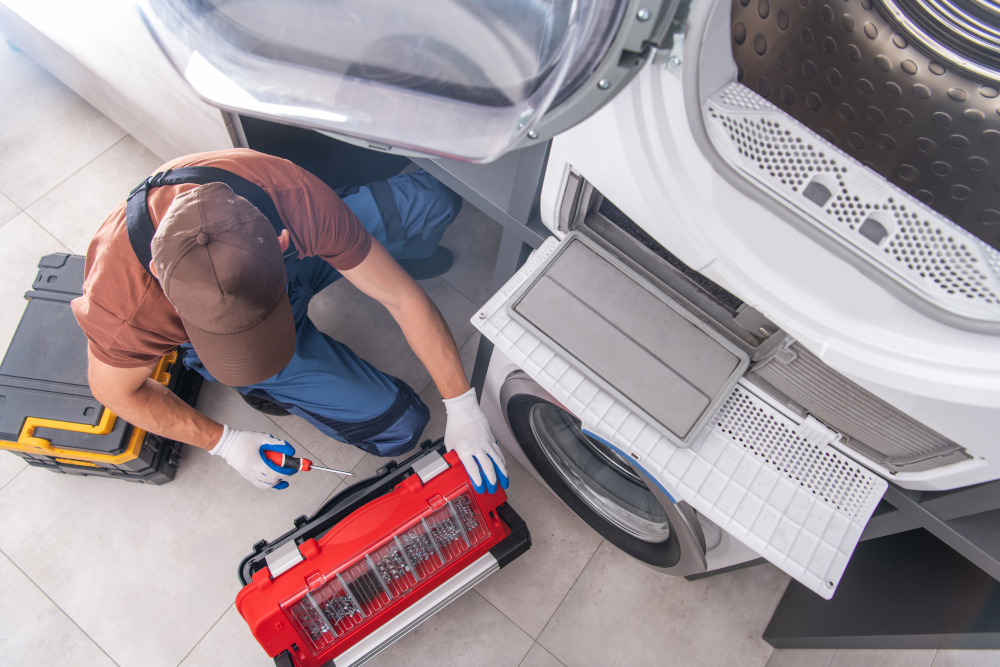
Imagine it’s a damp Tuesday evening in Nepean and you’re staring at a pile of laundry that’s already been through the machine twice. You’ve spent hours waiting, yet your towels are still heavy with moisture and your hydro bill is likely climbing with every extra minute of tumbling. You find yourself asking, “why is my dryer not drying like it used to?” It’s a common frustration for many Ottawa homeowners, especially when you’re balancing a busy schedule and just want the peace of mind that your appliances are working safely and efficiently.
We understand how a malfunctioning dryer can disrupt your entire household routine. It’s more than just a minor inconvenience; it’s a worry about wasted energy and even potential fire hazards from hidden lint buildup. In this guide, we’ll help you identify the five most common reasons your dryer is failing you. You’ll learn which issues are simple fixes you can handle yourself and when it’s time to call an Ottawa professional for a reliable repair. We’ll provide clarity on the path forward so you can get back to having dry clothes in a single cycle while feeling confident about your home’s safety.
Key Takeaways
- Understand why heat alone isn’t enough to dry your clothes and why airflow is actually the most critical factor in the “Drying Triangle.”
- Learn how to identify why is my dryer not drying by checking two often-overlooked areas: the deep-seated residue on your lint screen and kinks in the transition duct.
- Recognize the signs of a blown thermal fuse or a burnt-out heating element so you know exactly when a professional repair is necessary for safety.
- Apply the “50% Rule” to determine if your appliance is worth fixing or if it’s time to invest in a new model based on 2026 lifespan expectations.
- Discover how a transparent diagnostic process can save you money and provide peace of mind for all major dryer brands in the Ottawa area.
The Science of Drying: Why Airflow Matters More Than Heat
Most homeowners assume that if a dryer is hot, it should be working. However, professional technicians look at the “Drying Triangle” to diagnose performance issues. This triangle consists of three essential elements: consistent heat, steady drum rotation, and high-volume airflow. If your drum is spinning and you feel heat when you open the door, but you are still asking “why is my dryer not drying,” the culprit is almost certainly a breakdown in airflow. Without a clear path for air to move, moisture has nowhere to go.
The blower wheel serves as the mechanical heart of this system. It creates a vacuum that pulls fresh air into the heater box and forces it through the tumbling clothes. To truly understand how clothes dryers work, you must realize that heat only serves to “excite” the water molecules in your laundry. Airflow is what actually carries those molecules out of the house. If the air can’t escape, your dryer essentially becomes a high-temperature sauna where your clothes simply steam instead of drying.
The “Hot but Wet” Paradox
It sounds counterintuitive, but a dryer that is too hot often dries less effectively. When airflow is restricted, humid air becomes trapped inside the drum. Once the air reaches 100% humidity, it can no longer absorb moisture from your clothes, no matter how high the temperature climbs. This is why overloading the drum is so detrimental; it physically blocks the air passages between garments, preventing the “Drying Triangle” from functioning properly.
Beyond damp clothes, poor circulation is a leading cause of appliance failure. When air can’t move, heat builds up around the internal components rather than being exhausted. This creates a dangerous cycle where the heating element or thermal fuse operates at its absolute limit, eventually leading to a premature burnout or a safety shut-off. Keeping your loads balanced ensures that air can weave through the fabric, maintaining the efficiency of the cycle.
Identifying Airflow Restrictions Early
You don’t have to wait for a total breakdown to spot a problem. The first warning sign is almost always a subtle increase in cycle times. If a load of towels that used to take 45 minutes now requires 90, your dryer is struggling to breathe. You can perform a quick check by heading outside while the machine is running. Feel the air coming out of the exterior vent hood; it should be a strong, warm gust. If it’s a weak trickle, you likely have a blockage in the ductwork.
Understanding the physics involved helps you maintain your machine better. Evaporative cooling is the process where heat is absorbed from the fabric to turn liquid water into vapour, a transition that requires a constant stream of fresh air to move the saturated molecules away from the wet laundry. By ensuring your dryer has the ventilation it needs, you protect both your appliance and your monthly electricity bill.
The Homeowner Checklist: 3 Simple Fixes to Try Today
Before you conclude that a major mechanical failure has occurred, it’s worth investigating a few external factors. Often, the answer to “why is my dryer not drying” lies in simple maintenance tasks that have been overlooked. These quick checks can save you the cost of a service call and get your laundry schedule back on track immediately. Safety Warning: Always disconnect the power cord from the wall outlet before inspecting any internal components or moving the appliance.
Deep Cleaning the Lint Screen
Most Ottawa homeowners diligently clear the visible fuzz from their lint screen after every load. However, if you regularly use dryer sheets or liquid fabric softener, an invisible waxy film can build up over the mesh. This residue acts like a solid wall, suffocating the airflow we discussed in the previous section. Even a screen that looks perfectly clear can be the primary reason your clothes remain damp.
You can verify this with a simple “Water Test.” Take your lint screen to the sink and run some water over it. If the water pools or beads up instead of flowing straight through the mesh, your screen is clogged. To fix this, scrub the screen gently with a nylon brush and warm, soapy water. Rinse it thoroughly and let it dry completely before sliding it back into the machine. This small step ensures your energy efficient dryers can actually breathe and perform as designed.
Optimizing the Transition Duct
The transition duct is the flexible hose that connects the back of your dryer to the wall. Over time, these hoses can become a major bottleneck. If you have pushed your dryer too close to the wall, you may have unknowingly crushed the duct, restricting the exit path for moist air. Ensure there is enough space for the hose to maintain its shape without any sharp kinks or flattened sections. For maximum efficiency, you should always maintain a clear 4-inch diameter throughout the entire length of the duct.
Check the material of your ducting as well. If you are still using flexible foil or plastic accordion-style hoses, consider upgrading to semi-rigid metal. Plastic and thin foil are not only prone to sagging and trapping lint, but they also represent a significant fire hazard if the dryer overheats. A sturdy, straight duct path is one of the best ways to guarantee your clothes dry in a single cycle. If you find your ductwork is damaged or improperly installed, a professional dryer repair expert can help you reconfigure the setup for safety and speed.
Finally, take a moment to wipe down the moisture sensor bars. These are usually two small metal strips located near the lint filter housing inside the drum. If they become coated with dryer sheet residue, they will “falsely” tell the dryer that the clothes are already dry, causing the cycle to end prematurely. A quick wipe with a cotton pad and rubbing alcohol is often all it takes to restore their accuracy and solve the mystery of why is my dryer not drying.
Deep-Seated Issues: When to Call an Ottawa Professional
If you’ve worked through the homeowner checklist and your laundry is still damp, the problem has likely moved beyond simple maintenance. Internal mechanical failures or external environmental factors often require a more technical approach. When you reach the point of asking “why is my dryer not drying” despite a clean lint screen and a straight duct, it’s time to look at the components that actually generate and regulate heat.
Thermal Fuses and Heating Elements
The thermal fuse is your dryer’s primary line of defence against house fires. It’s a small, heat-sensitive switch designed to “pop” and cut power to the heating circuit if the internal temperature exceeds safe limits. This usually happens because of the airflow restrictions we discussed earlier. While you can technically replace a fuse yourself, doing so without identifying the root cause of the overheating is a temporary fix. The new fuse will simply blow again during the next cycle.
Electric dryers rely on a heating element, which is essentially a heavy-duty coil of wire that glows red-hot. Over years of use, these coils can become brittle and eventually snap. If the coil is broken, the dryer will tumble perfectly but will never produce a single degree of warmth. Diagnosing this requires a multimeter to test for electrical continuity. Because this involves opening the cabinet and working near high-voltage circuits, this is a task best left to a professional who can ensure the repair is handled safely and correctly.
Local Challenges: Snow, Ice, and Pests
Living in the National Capital Region presents unique challenges for appliance performance. During a typical Ottawa winter, snow can quickly drift upward and block your exterior vent hood. Even more frustrating is the “ice plug” phenomenon. When warm, moist air hits the freezing Canadian air at the vent exit, condensation can freeze instantly. Over several weeks, this ice builds up until the vent is completely sealed, forcing all that moisture back into your drum.
Pests are another common local headache. In neighbourhoods like Barrhaven and Kanata, birds and rodents often see a warm dryer vent as the perfect winter penthouse. A single bird’s nest can be packed so tightly that it completely halts airflow, creating a significant fire risk. Professional dryer repair in Ottawa involves not just fixing the machine, but also inspecting these external factors to ensure your home is safe. If you suspect a blockage deep in the walls or a failed internal sensor, an expert technician can provide the “straight-talk” you need to resolve the issue for good.

Repair vs. Replace: Is Your Dryer Worth Saving?
When you’re constantly asking “why is my dryer not drying,” it’s natural to feel frustrated and tempted by the shiny new models at the local appliance store. However, before you commit to a major purchase, it’s wise to perform a quick cost-benefit analysis. In the appliance industry, we often point to the “50% Rule.” If the cost of a professional repair exceeds half the price of a brand-new unit, replacement might be the logical path. But for most Ottawa families, a quality dryer is often worth saving because the purchase price is only one part of the equation.
The Cost-Benefit Analysis
A new dryer in 2026 involves more than just the sticker price. You must also factor in the cost of delivery, professional installation, and the disposal fee for your old unit. These hidden expenses can easily add hundreds of dollars to your total bill. Also, older machines were often built with simpler, more robust mechanical components that are easier to service. A professional repair typically costs a fraction of a new unit and can add years of service to a quality appliance. By choosing to fix a reliable machine, you’re often avoiding the planned obsolescence that plagues many high-tech modern units.
Signs It’s Time to Say Goodbye
While we love extending the life of household appliances, there are certain red flags that signal the end of the road. If the drive motor and the main timer fail simultaneously, the combined labour and parts costs often tip the scales toward replacement. Excessive rust on the drum or the chassis is another dealbreaker; it indicates structural decay that can snag or stain your clothes. If your dryer is approaching the 12-year mark, you might also consider the efficiency gains of 2026 models, which are designed to meet stricter energy standards and potentially lower your hydro bill.
Choosing repair over replacement is the greener choice for Ottawa homeowners. Keeping a heavy appliance out of the landfill reduces your environmental footprint and honours the craftsmanship of your existing machine. Most dryers have a lifespan of 8 to 12 years. A well-timed intervention can push your unit toward the top end of that range. If you’re unsure about the health of your machine, our team can provide a transparent assessment. You can book a reliable dryer repair to get a clear picture of your appliance’s future before making a major financial decision.
Professional Dryer Repair: The Honest Guys Advantage
When you’ve reached the limit of DIY fixes and are still left wondering why is my dryer not drying, you need a partner who values your time and your budget. At Honest Guys Appliance Repair, we don’t just swap parts; we diagnose the entire ecosystem of your laundry room. Our team brings over six years of experience to every driveway, providing an owner-operated level of accountability that large corporate networks simply can’t match. We realize that an appliance breakdown is a source of stress, so we’ve built our service around a foundation of transparency and reliable craftsmanship.
Our diagnostic process is designed to eliminate the anxiety of “surprise” repairs. Before any work begins, we provide a clear explanation of the issue and a fair assessment of the costs involved. Whether you’re using a high-tech Samsung or LG unit, or a classic Whirlpool or Maytag model, we have the technical proficiency to restore its performance. Beyond just fixing the immediate failure, we perform a comprehensive safety inspection. This includes checking for internal lint accumulation and ensuring your venting system isn’t a fire hazard, giving you genuine peace of mind every time you start a cycle.
Why Local Expertise Matters
Ottawa is a city of diverse housing styles, from the century homes in the Glebe to the modern builds in Riverside South. Each of these structures presents unique venting challenges that a “one-size-fits-all” service might miss. We understand how local construction standards and our harsh climate affect your appliance’s longevity. Serving the entire Ottawa region, from the growing streets of Stittsville to the established neighbourhoods in Orleans, we take pride in being your neighbourly professionals.
Our commitment to the community is reflected in our personalized approach. When you call us, you’re gaining direct access to owner-operators who care about the well-being of your household. We often point our clients toward the homeowner’s checklist for appliance repair in Barrhaven to help them prepare for a visit. This local knowledge ensures that we arrive with the right tools and the right parts to solve the mystery of why is my dryer not drying on the first visit whenever possible.
Booking Your Service Call
Getting your dryer back in peak condition starts with a simple phone call or message. To help us serve you faster, please have your dryer’s model number and a brief description of the symptoms ready. Does it tumble but stay cold? Does it get hot but leave clothes damp? This information allows us to prepare our “straight-talk” assessment before we even step through your door.
Our “Straight-Talk” guarantee is the heart of our business. If your dryer has reached a point where a repair is no longer a sound investment, we’ll tell you honestly. We value character and ethical conduct as much as technical skill, and we would rather help you avoid an unnecessary expense than push for a temporary fix. Proactive maintenance is always the best way to prevent future breakdowns, and we’re here to help you keep your home running smoothly and safely for years to come.
Restore Your Laundry Routine and Home Safety
A dryer that fails to perform is more than just a nuisance; it’s a disruption to your household’s peace of mind. By understanding the critical role of airflow and performing regular maintenance on your lint screen and transition ducts, you can often solve the mystery of why is my dryer not drying without a major investment. However, when internal components like thermal fuses or heating elements fail, or when the Ottawa winter creates ice blockages in your vents, professional expertise is the safest and most efficient path forward.
Choosing to repair your appliance rather than replace it is a sustainable choice that saves you money and reduces waste. With over six years of trusted service across the entire Ottawa region, we specialize in providing the transparent, “straight-talk” advice you need to make an informed decision. We offer expert repairs for all major dryer brands with the accountability only a local, owner-operated business can provide. Don’t let damp laundry add stress to your week. Book Your Professional Dryer Diagnostic with Honest Guys Today. We’re here to help you get your home back in working order with precision and care.
Frequently Asked Questions
How do I know if my dryer vent is clogged or if the heating element is broken?
If the dryer is blowing cold air, the heating element is likely broken. If it’s blowing hot air but taking multiple cycles, the vent is probably clogged. You can test this by disconnecting the vent; if it dries quickly without the hose attached, you have a blockage. A broken element requires a multimeter test for continuity to confirm the coil has snapped. This check helps you decide between a cleaning or a repair.
Is it safe to run my dryer if it takes two cycles to dry my clothes?
No, it is not safe to continue running a dryer that requires multiple cycles to finish a single load. This is a primary indicator of restricted airflow, which causes the internal temperature to spike. Overheating can lead to a blown thermal fuse or, in more severe cases, a lint fire. It’s better to address the blockage immediately than to risk your home’s safety for a load of laundry.
Why is my dryer getting hot but the clothes are still wet?
This “hot but wet” scenario usually indicates that moisture is trapped inside the drum because of poor ventilation. If you’re asking why is my dryer not drying despite the heat, look for a kinked transition duct or a blocked exterior vent hood. Without a clear exit path, the humid air just recirculates, preventing evaporation. Cleaning the moisture sensor bars with rubbing alcohol can also help the machine sense dampness correctly.
How often should I have my dryer vent professionally cleaned in Ottawa?
You should have your dryer vent professionally cleaned at least once a year, though large families may need it every six months. In Ottawa, our humid summers and freezing winters can cause lint to clump more easily. Annual cleaning prevents the accumulation of debris that forces your machine to work harder. Regular inspections also ensure that local pests haven’t turned your warm vent into a winter nest.
Can I replace a dryer thermal fuse myself?
While a homeowner can technically replace a thermal fuse, we don’t recommend it without professional diagnostic equipment. A blown fuse is a symptom of a deeper problem, usually a major airflow restriction. Simply replacing the part without fixing the underlying blockage will cause the new fuse to pop again almost immediately. A technician ensures the root cause is resolved so your repair actually lasts and your home remains safe.
What is the average lifespan of a clothes dryer in Canada?
The average lifespan of a clothes dryer in Canada is between 8 and 12 years. This duration depends heavily on how often the machine is used and whether the venting system is kept clear. Regular maintenance can push a high-quality unit toward the 15-year mark. If your machine is over a decade old and requires a major repair, it’s worth considering the efficiency of newer models available in 2026.
Why does my dryer smell like it is burning?
A burning smell is often caused by lint accumulating on the heating element or inside the dryer cabinet. This is a serious warning sign that requires immediate attention. You should stop the cycle and disconnect the power right away. In some cases, the smell could also indicate a worn drive belt that is slipping or a motor that is beginning to seize. Professional cleaning and inspection can prevent a potential fire.
Does a dryer use more electricity if the vent is partially blocked?
Yes, a partially blocked vent significantly increases your electricity consumption. When airflow is restricted, the dryer must run for much longer to remove moisture, which can double your energy usage per load. This inefficiency is a common reason why is my dryer not drying and leads to higher monthly hydro bills. Keeping the vent clear ensures your machine operates at peak efficiency, saving you money on every cycle and extending the life of your appliance.