
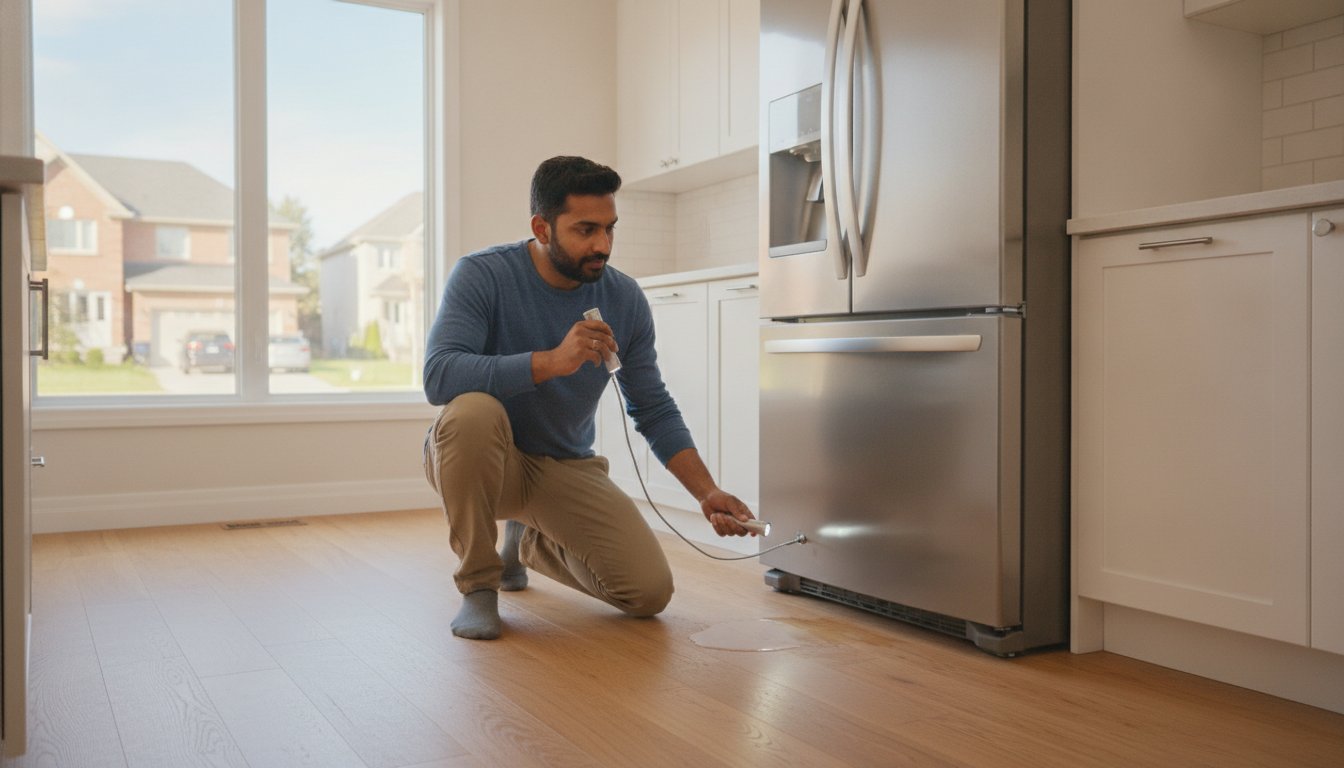
You walk into your kitchen for a morning coffee only to feel a cold, unsettling squelch beneath your feet. Finding a puddle on the floor is a stressful way to start the day, especially when you realize it could lead to permanent damage to your laminate or hardwood. If you’re currently searching for fridge leaking water repair Ottawa, you’re likely worried about both your expensive flooring and the potential for a fridge full of spoiled groceries.
We understand the anxiety that comes with a malfunctioning appliance; nobody wants to deal with the mess or an unexpected repair bill that feels like a total guess. You deserve clarity and a solution that doesn’t involve unnecessary guesswork. We’ll show you exactly how to trace the leak to its source, whether it’s a simple clogged defrost drain or a more complex issue with a water inlet valve. This diagnostic checklist will help you identify the problem quickly, determine if it’s a simple DIY task, and give you the confidence to know when it’s time to call a trusted professional in your neighbourhood.
Key Takeaways
- Learn how the specific location of the puddle—whether it is inside your crisper drawers or on the kitchen floor—reveals the likely source of the leak.
- Understand why a clogged defrost drain is often the culprit and how simple debris or ice buildup can lead to water pooling in your unit.
- Discover how to inspect brittle water lines and inlet valves to determine if you need professional fridge leaking water repair Ottawa to prevent permanent floor damage.
- Identify which tasks are safe for a quick DIY fix, such as re-seating a filter, and which repairs require an expert’s precision to ensure a long-term solution.
- Find out how to choose a reliable technician who prioritizes honest diagnostics and serves neighbourhoods from Kanata and Nepean to Orleans and beyond.
The Immediate Response Checklist: Identifying the Leak Source
Don’t panic when you see a puddle. While a leak is certainly an urgent matter, the location of the water provides the most valuable clue for your diagnostic journey. Before you reach for the phone to book a fridge leaking water repair Ottawa service, take five minutes to perform a visual inspection. Identifying where the moisture originates will help you determine if you’re facing a minor maintenance task or a more technical repair.
- Check inside the fridge: Are your crisper drawers half-full of water? If you find pooling at the very bottom of the internal cabinet, the issue is almost certainly internal.
- Inspect the floor: Is the puddle at the front or the back of the unit? Water at the front often suggests a drainage issue inside the cabinet, while water at the back usually indicates a problem with the supply lines.
- Look at the ceiling of the fridge: Are there drips coming from the light housing or the control panel? Moisture here can signal blocked internal channels or even airflow issues.
- Examine the freezer: Is there a solid sheet of ice on the bottom floor? This is a telltale sign that the defrost system is struggling to move melt-water away from the cooling coils.
Water Inside vs. Water Outside
Differentiating between water inside and water outside is the key to a fast diagnosis. Internal pooling usually signals a blockage in the drainage system, often caused by food debris or ice. Understanding how a defrost drain works helps clarify why these blockages happen; if the water can’t reach the pan, it has nowhere to go but your crisper drawers. Conversely, water on your kitchen floor typically points to a compromised water supply line or a cracked drain pan. Cleaning up the water immediately is essential to prevent permanent warping of your Ottawa hardwood or laminate flooring.
Safety First: Power and Water Shut-off
Safety is paramount during any appliance inspection. Before you start moving components or checking valves, unplug the unit to eliminate any risk of electrical shock. You should also locate the water shut-off valve; it’s usually tucked directly behind the fridge or found in the basement ceiling directly below the kitchen. If you need to pull the appliance away from the wall to see the back, use floor sliders or a piece of clean cardboard. This simple precaution ensures you don’t scratch your kitchen tiles or tear your linoleum. If the leak seems to be spraying rather than dripping, shut off the water supply first to prevent further damage before investigating fridge leaking water repair Ottawa options.
Common Cause #1: The Clogged Defrost Drain
While external plumbing issues often get the most attention, the single most common reason for internal pooling is a clogged defrost drain. This narrow tube is designed to carry melt-water from the cooling coils down to a drain pan located near the compressor, where the heat evaporates the liquid. If you are wondering why your refrigerator is leaking, it often comes down to this simple drainage path being obstructed by food particles, dust, or mineral deposits. When the tube is blocked, the water has nowhere to go; it backs up, overflows the internal drain trough, and eventually pools under your vegetable crispers or freezes into a thick sheet of ice on the freezer floor.
Identifying this issue early can save you from a more expensive fridge leaking water repair Ottawa service. The symptoms are quite specific. If you see water dripping from the back wall of the fridge or find your crisper drawers filled with water like a miniature aquarium, the drain is likely the culprit. In many bottom-mount freezer models, you might even hear the fan hitting ice, creating a rhythmic clicking or buzzing sound that signals a drainage failure. It is also worth noting that a fridge struggling with drainage may simultaneously struggle to maintain its set temperature; if you suspect both issues, our guide on what to do when your fridge stops cooling in Ottawa can help you diagnose whether a deeper cooling system problem is at play.
The ‘Warm Water’ Flush Method
If the clog is caused by a simple ice dam, you can often clear it yourself with a few household items. First, locate the drain opening, which is usually found on the back wall of the freezer or fridge compartment. Using a turkey baster filled with warm (not boiling) water, gently flush the opening. Repeat this process until you hear the satisfying sound of water trickling into the drain pan below. Don’t use a screwdriver, coat hanger, or any sharp object to poke at the drain hole. These can easily puncture the plastic liner or, worse, the cooling lines, turning a simple fix into a total appliance replacement. If the water doesn’t clear after several flushes, the blockage is likely too deep or solid for a DIY approach.
Preventing Future Drain Clogs
Keeping the drain clear is mostly about smart organizing and regular maintenance. Avoid pushing food containers directly against the back wall of the fridge; this allows for better airflow and prevents items from freezing to the wall and blocking the drain trough. Check the drain opening every few months for crumbs, bits of plastic wrap, or stray peas that might have fallen inside. For more comprehensive advice on keeping your appliances in top shape, check out our guide on 5 Tips to Extend the Life of Your Refrigerator. A little bit of proactive care goes a long way in preventing the stress of a soggy kitchen floor.
Common Cause #2: Water Line and Filter Issues
If your diagnostic check reveals water pooling behind or underneath the refrigerator, the problem likely lies within the water supply system. Unlike internal clogs, these leaks involve pressurized water, which means a small drip can quickly turn into a significant flood. Most modern units use 1/4-inch plastic tubing to supply the ice maker and water dispenser. Over time, the heat generated by the refrigerator’s compressor can make these plastic lines brittle and prone to hairline cracks. When homeowners seek fridge leaking water repair Ottawa, we often discover that a small split in the line has been spraying a fine mist against the wall for weeks, potentially leading to hidden mould growth behind the cabinetry.
The water inlet valve is another frequent point of failure. This valve is the gatekeeper that opens and closes to allow water into the unit. While Ottawa’s municipal water is generally considered soft, fine sediment or localized mineral fluctuations can still cause deposits to form on the valve’s internal seals. If these seals don’t seat perfectly, the valve will “weep,” creating a slow, persistent leak that is difficult to detect until a puddle appears. Inspect the area where the house water line connects to the back of the fridge. If you see white, crusty mineral buildup or a damp valve body, the component is likely compromised and requires professional attention.
The Ice Maker Connection
The ice maker itself can be the source of a “phantom” leak. Sometimes, the small fill tube that delivers water into the ice tray becomes blocked with ice. When the valve opens to fill the tray, the water hits this ice dam and splashes back, running down the back of the freezer or out onto the kitchen floor. If you notice your ice cubes are becoming smaller or hollow, it is a sign that the flow is restricted. A failing solenoid valve might also stay open a fraction of a second too long, overfilling the tray and causing water to spill over the sides during every harvest cycle.
Water Filter Troubleshooting
Many homeowners don’t realize that the water filter housing is a common failure point. If a filter is not seated perfectly or if the internal bypass valve is cracked, water will spray out of the filter head inside the fridge. Always ensure you are using the exact model recommended by your fridge manufacturer. While cheap knock-off filters are tempting, they often have slightly different dimensions or inferior O-rings that fail to create a watertight seal. Check the black rubber O-rings on the filter before installation; if they are twisted, dry, or torn, the filter will leak. A properly installed filter should click firmly into place and show no signs of moisture around the connection point.

Pro vs. DIY Checklist: When to Call an Ottawa Technician
Deciding whether to tackle a leak yourself or call for professional fridge leaking water repair Ottawa depends entirely on the source of the moisture. Minor issues like a dusty drain pan or a misaligned water filter are well within the reach of most homeowners. If you’ve identified that the water is simply overflowing from a surface-level blockage, a quick cleaning might be all you need. However, once the diagnostic path leads you toward the mechanical heart of the appliance, the risks of a DIY mistake begin to outweigh the potential savings. If during your inspection you also notice the interior feels warmer than usual, it may be worth reading our comprehensive guide on fridge not cooling repair in Ottawa to rule out a simultaneous cooling system failure.
- DIY: Cleaning the condenser coils, emptying the drain pan, or re-seating a water filter.
- Pro: Replacing a cracked water inlet valve or a leaking internal water manifold.
- Pro: Addressing a leaking evaporator coil or complex refrigerant issues that require specialized tools.
- Pro: Any repair that involves the removal of the back panel or complex disassembly of the internal cooling system.
The Risk of Incomplete Repairs
A small, persistent drip might seem manageable; what you can’t see is often the real danger. In Ottawa’s humid summers, water trapped behind kitchen cabinetry can quickly lead to mould growth. This is far more expensive to remediate than a simple fridge repair. Professional technicians bring the precision needed to ensure a leak is truly sealed. They also possess the necessary TSSA certification required for certain gas-related components or complex cooling systems. By opting for an expert diagnostic, you avoid the “parts cannon” approach. This is a common DIY trap where you spend hundreds of dollars on various sensors and valves hoping one of them fixes the problem.
Evaluating Repair Costs in Ottawa
Before committing to a major fix, it’s wise to consider the age and condition of your appliance. Many industry experts suggest the 50% rule: if the repair cost exceeds half the price of a comparable new unit, replacement is likely the better long-term investment. For a detailed breakdown of current market rates and longevity factors, read our Refrigerator Repair vs. Replacement Cost in Ottawa guide. At Honest Guys Appliance Repair, we prioritize transparency and fairness. We provide clear, upfront pricing during every visit, so you can make an informed decision without any hidden surprises. If you’re ready for a reliable fix, book your fridge repair diagnostic with our local team today.
Trusted Fridge Leaking Water Repair in Ottawa
When you’re dealing with a kitchen floor covered in water, the last thing you need is a technician who recommends unnecessary parts. Our approach to fridge leaking water repair Ottawa is built on a foundation of absolute transparency. We only fix what is actually broken. Whether you’re located in Nepean, Kanata, Stittsville, Orleans, or anywhere else in the capital, we bring the same level of precision and care to your home. Our team possesses deep expertise across all major brands, including Samsung, LG, Whirlpool, and Maytag. You can expect a tidy workspace and a comprehensive diagnostic report that explains the root cause of the leak before any work begins.
Why Neighbourhood Reputation Matters
We’ve been serving the Ottawa community with integrity since 2017. As an owner-operated business, we understand that our reputation is built one household at a time. We centre our service around your busy schedule because we know that kitchen downtime is more than just an inconvenience; it’s a disruption to your family’s rhythm. Our straight-talk philosophy means we’ll always be honest about the longevity of your appliance. We believe in telling you the truth about whether a specific repair is a sound investment or if you are simply delaying the inevitable replacement of an aging unit.
Book Your Diagnostic Today
Ready to get your kitchen back to normal? Providing our team with your model number, which is usually found on a sticker inside the fridge door or behind the crisper drawer, allows us to arrive prepared with the most likely components. Before our technician arrives, please clear a small path to the appliance and remove any items from the top of the unit. This helps us work efficiently and safely. Don’t let a small drip turn into a major renovation project. Schedule your professional fridge repair with Honest Guys and regain your peace of mind today.
Restore Your Kitchen’s Peace of Mind
Dealing with a leak doesn’t have to be a source of constant anxiety. By following our diagnostic checklist, you’ve already taken the most important step toward a solution. You now know that water inside the cabinet often points to a simple drainage fix. External puddles, however, usually signal a pressurized line issue. Whether you’ve managed a quick DIY flush or realized the problem requires a technical touch, addressing the moisture now protects your home’s value and your family’s food supply.
If your troubleshooting suggests the need for professional fridge leaking water repair Ottawa, our team is ready to help. We bring over 8 years of expert service to every home in the region. As a family-owned and owner-operated business, we take personal accountability for every job, including both residential and commercial appliance repair. Book Your Reliable Fridge Repair in Ottawa Today. Your kitchen is the heart of your home; let’s keep it running smoothly and dry.
Frequently Asked Questions
Is a leaking fridge a fire hazard?
A leaking refrigerator can become a fire hazard if water comes into contact with electrical components like the compressor or wiring. This contact can cause a short circuit or electrical arc. If you notice water pooling near the back of the unit where the power cord enters, you should disconnect the power at the circuit breaker immediately to ensure your home’s safety.
Why is there water pooling at the bottom of my fridge under the drawers?
This is most commonly caused by a clogged defrost drain tube. When food debris or ice blocks this narrow passage, the melt-water from the cooling cycle has nowhere to go. It eventually overflows the internal drain trough and collects at the lowest point of the cabinet. Clearing this blockage is a standard part of fridge leaking water repair Ottawa services and prevents messy internal spills.
Can a clogged water filter cause my fridge to leak on the floor?
Yes, a clogged or improperly seated water filter can lead to significant leaks. If the filter is old or a low-quality knock-off, the internal seals may fail under pressure. This causes water to spray out of the filter housing, where it can run down the back of the fridge and pool on your kitchen floor. Always use manufacturer-approved filters to maintain a watertight seal.
How much does it typically cost to fix a fridge leak in Ottawa?
Most professional repairs for a leaking refrigerator in the Ottawa area fall between $180 and $450. The final price depends on whether you need a simple drain clearing or a more expensive component like a new water inlet valve. While service call fees are typically around $89 plus tax, many local companies will waive this fee if you proceed with the quoted repair.
How do I know if my fridge water line is leaking or if it’s just condensation?
A water line leak is usually a persistent, steady drip or spray that creates a growing puddle. Condensation looks more like sweat or fine droplets on the interior walls and is often caused by a faulty door gasket allowing warm air inside. If the water is coming from the back of the unit, it is almost certainly a supply line issue rather than simple humidity.
Should I unplug my fridge if it is leaking water?
You should definitely unplug the unit if you see water anywhere near the electrical outlet or the compressor area at the bottom rear. Safety should always be your first priority when water and electricity are involved. Once the power is disconnected, you can safely move the appliance to inspect the lines and determine if you need professional fridge leaking water repair Ottawa to resolve the issue.
What happens if I ignore a small leak in my refrigerator?
Small leaks are deceptive because they often cause hidden damage. Persistent moisture will warp your laminate or hardwood flooring and can lead to toxic mould growth behind your kitchen cabinets. Additionally, a leak often indicates that your fridge is struggling to maintain its temperature, which can lead to premature compressor failure and higher electricity bills over time.
Does homeowner’s insurance cover floor damage from a leaking fridge?
Insurance coverage depends on the specific wording of your policy. Most Canadian insurers cover damage from sudden and accidental leaks, such as a burst water line. However, they frequently deny claims for damage caused by gradual seepage or a lack of maintenance. It is always better to fix a small leak immediately rather than relying on a potentially complicated insurance claim later.