
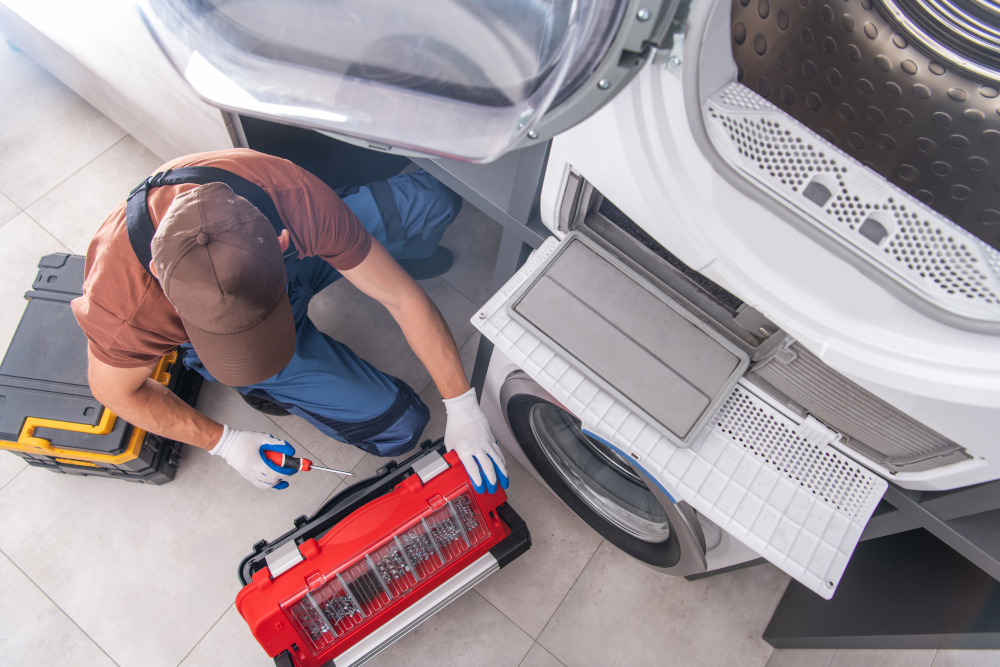
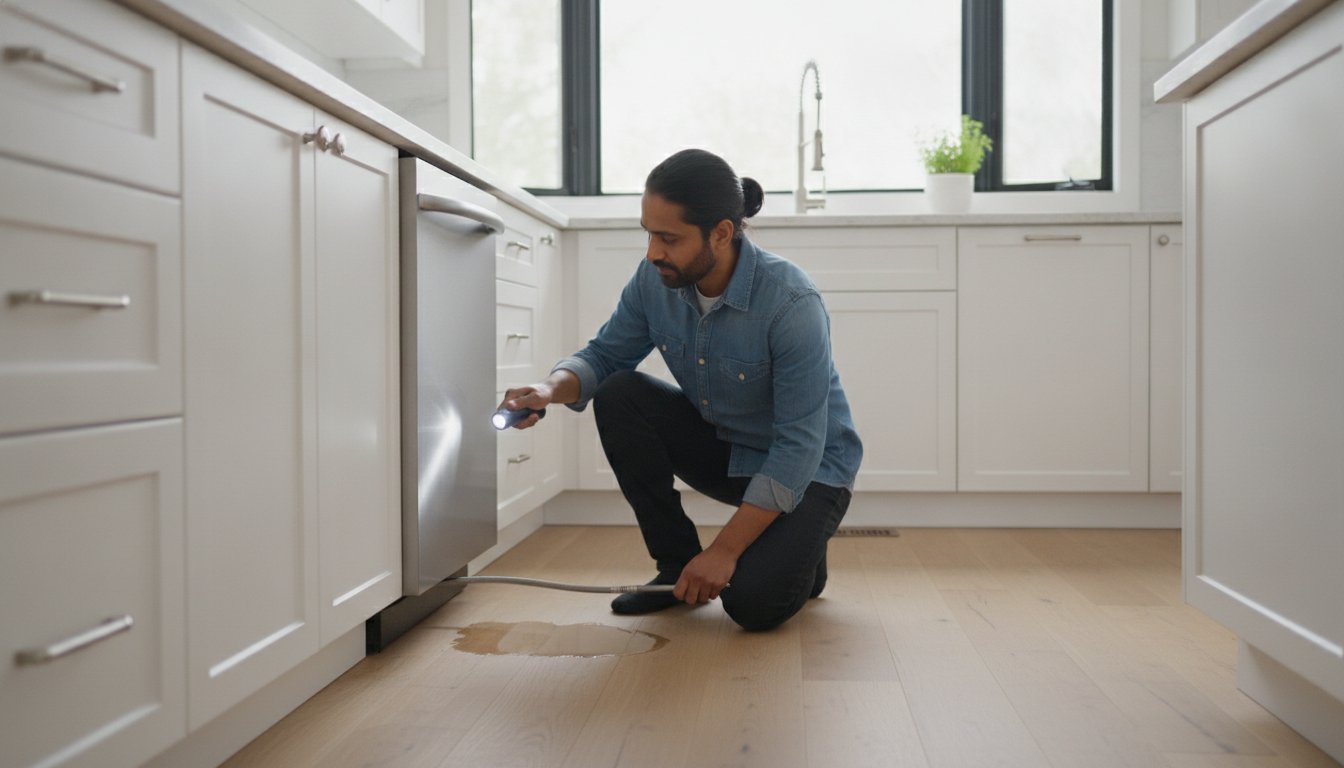
Imagine walking into your kitchen on a Tuesday morning only to feel the cold, damp squelch of water soaking into your socks. It’s a moment that immediately triggers a sinking feeling in your stomach; you start worrying about ruined hardwood floors and the stress of a broken household routine. Learning how to fix a leaking dishwasher doesn’t have to be a source of panic or a descent into confusing technical jargon like “solenoids” or “float switches.”
We understand that a leaking appliance feels like an urgent crisis that threatens your peace of mind. This guide will help you identify exactly where that water is coming from and provide the clarity you need to move forward. You’ll discover the most common causes of dishwasher leaks and learn exactly when you can handle the repair yourself versus when it’s time to call an Ottawa professional. We’ll also look at how Ontario’s 2026 Right to Repair laws empower you to take control of your home maintenance with better access to parts and manuals. By the end, you’ll know if you’re facing a quick DIY fix or a job for an expert.
Key Takeaways
- Learn the essential safety steps to take the moment you spot a puddle, including how to safely cut power and water to prevent further damage.
- Identify simple mechanical issues like worn door gaskets or blocked spray arms that you can often resolve yourself with basic tools.
- Understand the technical threshold for how to fix a leaking dishwasher so you can decide if a $20 part or a professional service is the right path for your home.
- Discover how to safely inspect the internal components behind the kickplate to find hidden drips in supply lines and water inlet valves.
- Gain the confidence to know when a leak involves complex electrical intersections that require the precision of a certified Ottawa technician.
Immediate Action: What to Do When You Find a Puddle
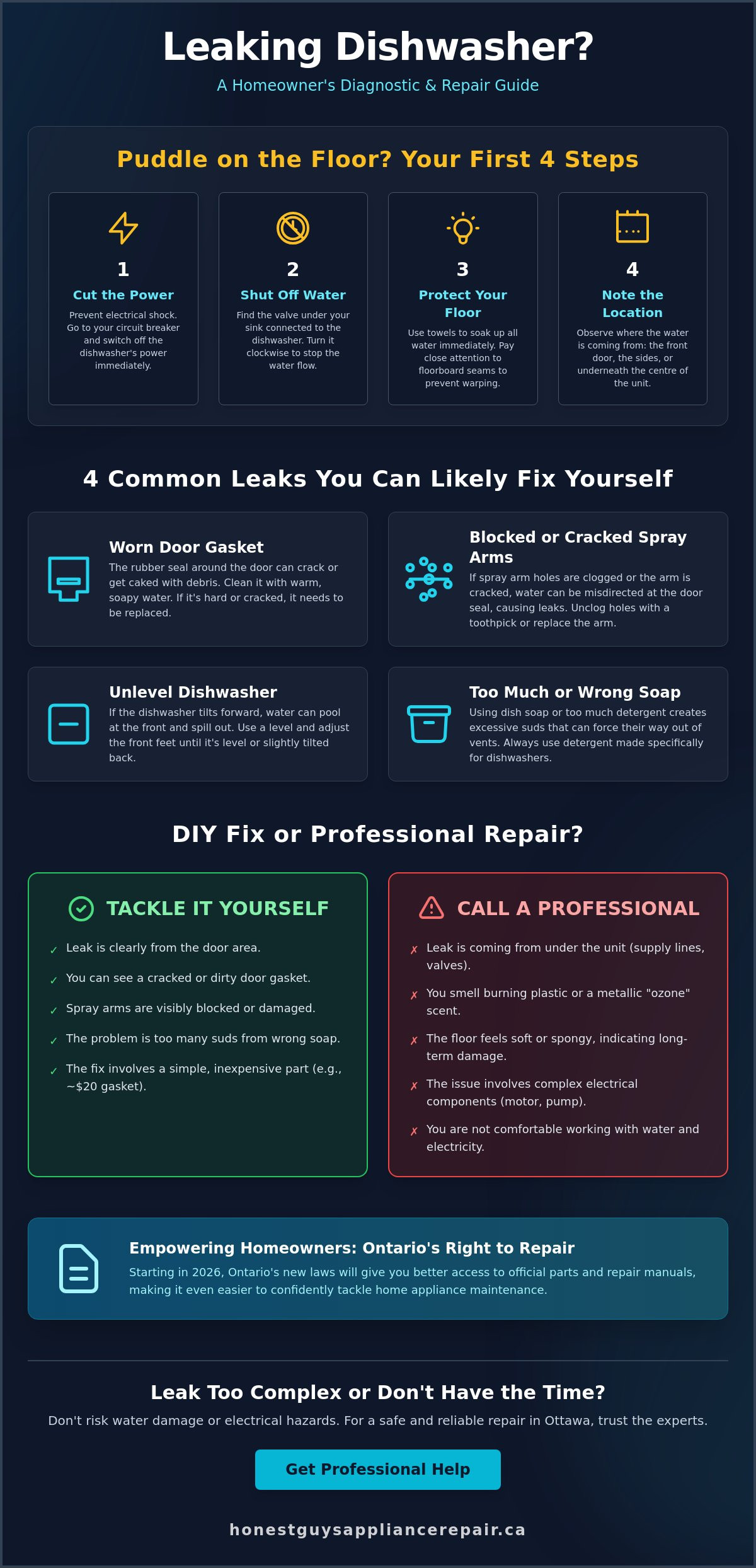
Finding a puddle on your kitchen floor is an immediate stressor. Your first instinct might be to grab a wrench, but the most critical step in learning how to fix a leaking dishwasher is ensuring your home remains safe. Before you touch the water or the machine, you must eliminate the risk of electrical shock. Water and electricity are a volatile combination, and a leak can easily find its way into live components.
Reach for your circuit breaker panel and shut off the power to the dishwasher immediately. If your unit is plugged into a wall outlet under the sink, only unplug it if you can do so without stepping in standing water. This step is non-negotiable. Water often migrates into the wiring harness or the motor assembly, creating a “live” puddle that poses a serious threat to anyone nearby. Safety is always the priority over a quick repair.
Next, locate the water supply valve. You will typically find this under the kitchen sink, connected to a flexible braided hose or a copper line. Turn the handle clockwise until it stops completely. Cutting off the water source prevents a small drip from turning into a full-scale flood while you investigate the cause. Once the power and water are secured, clear the area. Ottawa homes often feature hardwood or laminate flooring in kitchens. These materials are highly susceptible to moisture damage. Use thick towels to soak up every drop, especially near the seams of your floorboards, to prevent permanent warping or “cupping.”
Before you start disassembling parts, document the leak. Note if the water is appearing at the front door, seeping from the sides, or pooling directly underneath the centre of the unit. This information is vital whether you decide to use a comprehensive dishwasher repair guide to tackle the job yourself or choose to call a technician. Clear documentation saves time and ensures the root cause is addressed, not just the symptoms. If you want a deeper look at the most frequent reasons water ends up on your kitchen floor, our detailed breakdown of dishwasher leaking in Ottawa common causes and immediate solutions walks you through each scenario step by step.
The “Dry Test” Diagnosis
Knowing how to fix a leaking dishwasher starts with a clear diagnosis. Finding a leak is significantly easier when the machine is bone dry. Use a microfibre cloth to wipe down all exterior surfaces, the door frame, and the area under the kickplate. Lay down fresh, dry paper towels around the base of the unit. Run a short five-minute rinse cycle and watch closely with a flashlight. The first sign of moisture on a paper towel will pinpoint exactly where the failure begins, allowing you to focus your efforts on the specific culprit.
Safety Precautions for Ottawa Homeowners
Never reach your hand under the dishwasher while it is connected to power. The underside contains moving parts and exposed electrical terminals that can cause serious injury. Be alert for the scent of burning plastic or a metallic “ozone” smell. These scents indicate that water has reached the electrical components and the unit requires immediate professional attention. Finally, check the floor for “soft spots.” If the wood feels spongy, you might be dealing with a hidden, long-term leak that has already damaged the subfloor, requiring more than just a simple appliance fix.
Identifying the Source: 4 Common Culprits You Can Fix Yourself
Once you’ve secured the area, the hunt for the source begins. Many homeowners assume a leak signifies the end of their appliance’s life, but often, the solution is remarkably simple. Understanding how to fix a leaking dishwasher frequently involves looking at the most high-traffic components that wear down over time. Before diving into complex mechanical repairs, check for dishwasher safety recalls to ensure your model doesn’t have a known manufacturing defect that could be causing the issue.
The first culprit is the door gasket, the rubber seal that lines the tub. If this seal is brittle or caked with food debris, water will seep through. Next, inspect the spray arms. If they are cracked or blocked, they can spray water at angles the door wasn’t designed to handle. Third, check the level of your machine. If the front is lower than the back, water can slosh over the tub lip during heavy cycles. Finally, reconsider your soap. Using too much detergent or the wrong type can create an “oversuds” condition, forcing foam and water out of the vents.
Cleaning and Replacing the Door Gasket
Inspect the rubber seal for any signs of black mould or white calcium deposits. You can often restore a leaky seal by wiping it down with warm, soapy water and a soft cloth. If the rubber feels hard or shows visible cracks, it has lost its elasticity and needs replacement. When installing a new one, a helpful trick is to use a hair dryer on a low setting to warm the rubber, making it more pliable as you press it into the channel. If the seal still won’t seat, it might be time for a professional dishwasher repair to ensure a watertight fit.
Hard Water and Spray Arm Maintenance
Ottawa’s water supply contains minerals that can clog the tiny nozzles on your spray arms over time. When these holes are blocked, the internal pressure increases, sometimes causing the plastic seams of the arm to split. You can clear these blockages by removing the arm and performing a “vinegar soak” for several hours. This dissolves the scale and restores proper water flow. Always check the seams of the plastic arms for warping caused by high-heat drying cycles; a warped arm will redirect water directly at the bottom corners of the door, leading to mysterious puddles. If you own an LG appliance and are seeing error codes alongside these symptoms, our LG dishwasher repair Ottawa specialists can diagnose both the leak and any underlying performance issues in a single visit.
Dealing with Under-Unit Leaks: Supply Lines and Drain Hoses
When the source of the water isn’t obvious on the door or the floor in front of the unit, you need to look deeper. Learning how to fix a leaking dishwasher often requires getting down on the floor to remove the kickplate. This is the narrow panel at the very bottom of the machine, usually held in place by two screws. Removing this panel reveals the “guts” of the dishwasher, where the most critical plumbing connections reside. Without this access, you are simply guessing at the source of the moisture.
With the kickplate removed, use a flashlight to inspect the water inlet valve. This component is usually made of brass or plastic and sits where your home’s water line enters the unit. Look for slow drips at the threaded connection points. Even a tiny, rhythmic drip here can saturate your subfloor over time. Understanding how to fix a leaking dishwasher involves differentiating between a constant supply leak and a drain leak. If you see water pooling only when the machine is draining, the culprit is likely the drain hose or the pump seal. Unlike a constant supply leak, these issues only manifest during specific parts of the wash cycle.
Inspecting the Water Supply Line
Most modern installations use braided stainless steel lines because they are incredibly durable. However, many older Ottawa homes still rely on plastic supply lines. These are particularly vulnerable to the temperature fluctuations we experience in Ontario. Over years of shifting from freezing winters to humid summers, plastic lines can become brittle and develop hairline fractures. When tightening these connections, use caution. It is easy to over-torque the brass nuts, which can strip the threads on the plastic valve body. A snug fit is usually sufficient to stop a minor weep, but a cracked line requires immediate replacement.
Drain Hose and High-Loop Issues
If you find water under your sink or backing up into the dishwasher, you might be missing a “high loop.” This is a simple but vital plumbing requirement where the drain hose is looped higher than the sink’s drain level. Without it, dirty sink water can flow back into your dishwasher, causing “clog-induced leaks” where pressure forces water out of the hose joints. You should also check the integrity of the hose itself for cracks or loose clamps near the pump. A How to Repair a Dishwasher guide can help you identify if a crack is repairable or if the entire hose needs replacement. If your sink has an air gap, ensure it is clear of debris to prevent sink-side flooding during the drain cycle.
Pro vs. DIY: When is a Leaking Dishwasher Actually a Major Risk?
Deciding how to fix a leaking dishwasher often comes down to a simple question: can you see the problem without pulling the machine out? If the answer is no, you have likely crossed the “complexity threshold.” Most built-in dishwashers are tightly integrated into kitchen cabinetry. Removing them requires disconnecting hard-wired electrical lines and copper plumbing; a process that carries a high risk of causing a secondary flood if not handled with precision. While online forums might suggest a quick pump swap, they often overlook the danger of improper installation. A single misaligned clamp or a loose wire can lead to a slow, hidden leak behind your cabinets or, worse, an electrical fire.
Electrical intersections are the most significant risk factor. When water drips onto the motor or the main wiring harness, the repair is no longer a simple plumbing task. It becomes a high-voltage safety issue. Furthermore, your manufacturer’s warranty often hinges on professional service. In many cases, attempting a DIY repair on internal components can void your protection, leaving you responsible for the full cost of a replacement if something goes wrong. You also need to consider your toolkit. A standard screwdriver isn’t enough when you’re dealing with specialized Torx bits, multimeters, or custom hose clamps that require specific tensioning tools to remain watertight. For Ottawa homeowners who want to understand the full scope of what they’re dealing with before calling a technician, our guide on dishwasher leaking in Ottawa covers how to protect your property from permanent water damage while you wait for professional help.
If you’re unsure whether your machine is safe to operate, our team provides expert dishwasher repair in Ottawa that prioritizes your home’s safety and ensures your appliance remains compliant with warranty standards.
The Professional Diagnostic Advantage
Professional technicians in Ontario undergo a rigorous three-year apprenticeship to earn their Certificate of Qualification. This expertise allows them to perform specialized pressure tests that can find microscopic cracks in the tub or pump housing that a flashlight might miss. A local expert also provides an “honest” assessment. They can help you determine if a repair is a wise investment or if the cost of parts and labour exceeds 50% of the price of a new unit. This transparency is especially vital for high-end or gas-integrated models found in many Ottawa kitchens. For LG owners in particular, a technician experienced in LG dishwasher repair in Ottawa can interpret brand-specific error codes like OE or LE that often accompany leak-related motor and pump failures.
Red Flags That Require a Professional
There are certain “no-go” zones for the average homeowner. If you see water leaking directly from the motor housing or the main circulation pump, the internal seals have failed. This requires a complete teardown of the machine’s base. Evidence of scorched wires, melted plastic near the heating element, or a persistent smell of ozone are critical warnings. Finally, if you have already replaced the door gasket and the leak persists, the issue is likely a structural misalignment or a failing tub weld. These recurring leaks require the precision of a certified technician to resolve permanently.
Dishwasher Repair in Ottawa: Why Honest Guys is the Right Call
Dealing with a wet kitchen floor is exhausting. While learning how to fix a leaking dishwasher can save you from minor gasket issues, some mechanical failures require a level of precision that only comes with years of field experience. We believe in a “Straight-Talk” approach. This means we don’t hide behind technical jargon or surprise fees. Instead, we explain exactly what failed, why it happened, and what the total cost will be
Restoring Your Kitchen’s Peace of Mind
A dry kitchen floor and a functional routine are within reach. By identifying common culprits like worn gaskets or blocked spray arms, you can often handle the initial troubleshooting yourself. However, when a leak involves internal pumps or complex electrical components, the risk to your flooring and home safety increases significantly. Knowing how to fix a leaking dishwasher is truly about recognizing the difference between a minor adjustment and a job for a certified expert.
At Honest Guys, we bring over six years of dedicated service to the Ottawa region. As an owner-operated team, we take pride in providing transparent, “straight-talk” solutions for all major residential brands, including Bosch, LG, Samsung, and Whirlpool. We prioritize repairs that extend the life of your appliance without the stress of hidden fees or aggressive sales tactics. Whether you’re in Kanata, Orleans, or downtown, we’re here to provide the professional clarity you deserve.
Get Expert Dishwasher Repair in Ottawa Now
Don’t let a small puddle become a major headache; take the first step toward a worry-free kitchen today. You can trust our team to get your household back on track with precision and care.
Frequently Asked Questions
Is it worth fixing a 10-year-old leaking dishwasher?
Yes, it’s often worth the investment if the repair cost is less than half the price of a new unit. Since the average lifespan of these appliances is between 8 and 15 years, a 10-year-old machine still has potential life left. If you are investigating how to fix a leaking dishwasher and find the issue is a simple gasket or hose, a repair is a smart, eco-friendly choice. However, if the motor or tub has structural damage, replacement is likely the more cost-effective path.
Can a clogged filter cause a dishwasher to leak from the bottom?
Absolutely, a clogged filter is a frequent cause of drainage backups. When the filter is obstructed by food debris or grease, water can’t exit the tub fast enough during the drain cycle. This causes the water level to rise too high, eventually forcing its way past the bottom seals or out through the overflow float. Regular monthly cleaning of your filter is one of the simplest ways to prevent these types of under-unit puddles.
How much does it typically cost to fix a dishwasher leak in Ottawa?
Industry averages for professional repairs in the Ottawa region vary based on the specific part that has failed. Minor fixes like a door seal replacement are generally quite affordable, while complex issues involving the main circulation pump or motor will be higher. While we don’t quote specific prices without a diagnostic, most local homeowners find that a professional repair is significantly cheaper than replacing a water-damaged hardwood floor.
Why is my dishwasher leaking only sometimes or during certain cycles?
Intermittent leaks usually point to a specific component that only activates during certain parts of the wash. If you only see water during the final minutes of a wash, the drain pump or its associated hose likely has a small crack that only leaks under pressure. Leaks that happen during high-heat sanitizing cycles often occur because the heat causes plastic spray arms to expand, widening hairline fractures that remain closed during a cold rinse.
Can hard water buildup cause my dishwasher door to leak?
Yes, mineral deposits from Ottawa’s water supply can accumulate on the rubber door gasket over time. This white, chalky scale creates a rough surface that prevents the seal from making watertight contact with the tub. You can often fix this by cleaning the gasket with a warm, vinegar-soaked cloth. If the buildup has already caused the rubber to become brittle or permanently deformed, the entire seal will need to be replaced to stop the drip.
Should I call a plumber or an appliance repair technician for a dishwasher leak?
You should call an appliance repair technician for any leak that originates from within the machine itself. Plumbers focus on the pipes leading to and from the unit, but they aren’t trained to handle internal mechanical parts like pumps, solenoids, or control boards. If the leak is coming from the kitchen sink or the main shut-off valve, a plumber is the right call. For any issue involving the dishwasher’s internal components, a certified appliance expert is the correct choice.
How do I prevent my dishwasher from leaking in the future?
The best prevention is a consistent maintenance routine. Clean your filter every month and wipe down the door seal to ensure no debris prevents a tight closure. You should also periodically check the spray arm nozzles for mineral clogs that could redirect water toward the door’s weak points. Learning how to fix a leaking dishwasher often starts with these preventative steps, which keep internal pressure at safe levels and extend the life of the seals.
Is a leaking dishwasher a fire hazard?
Yes, a leak can pose a fire hazard if water reaches the motor or the electrical wiring harness. Most dishwashers have their electrical components located at the very bottom of the unit, which is exactly where water pools during a failure. If you notice a burning plastic smell or see water dripping onto exposed wires, shut off the circuit breaker immediately. Don’t use the machine again until a professional has confirmed the electrical system is dry and the leak is resolved.