
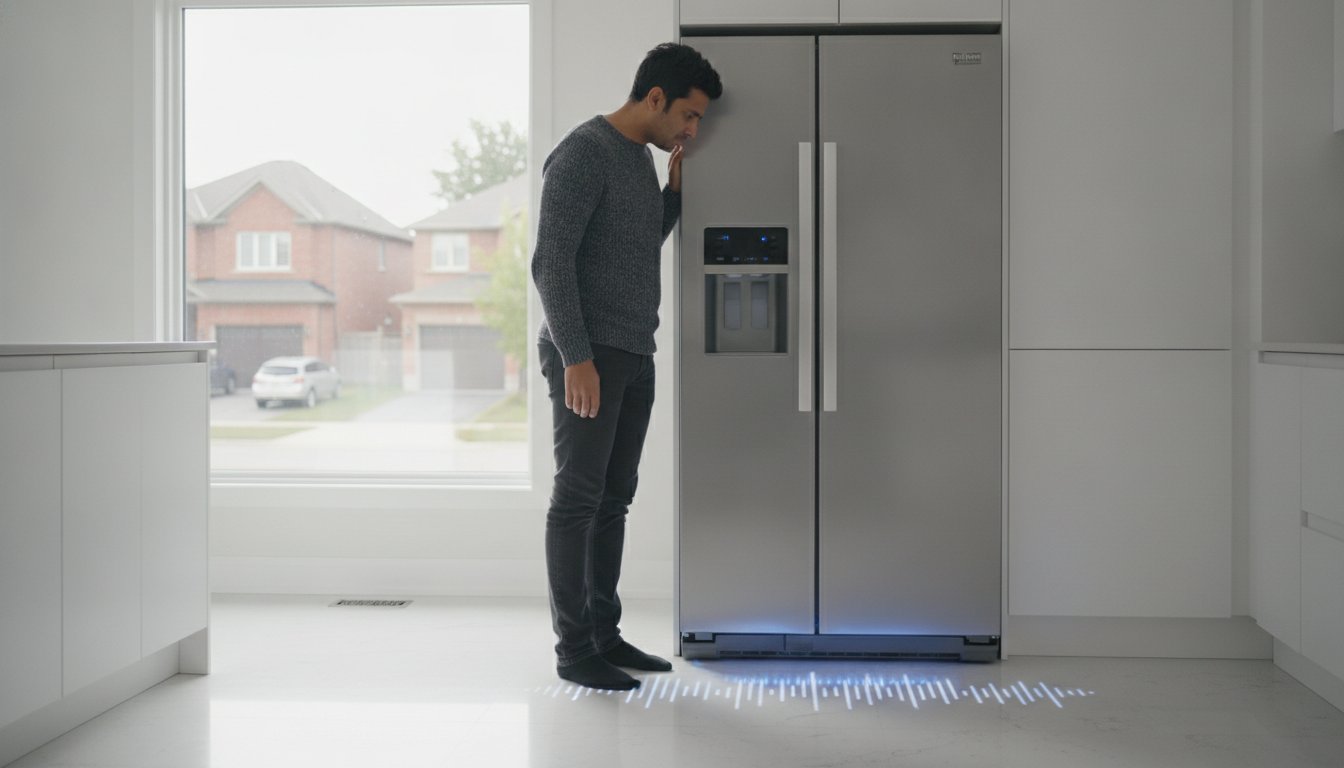
What if that steady, low-frequency hum vibrating through your Ottawa kitchen isn’t just background noise, but a warning sign from your most expensive appliance? It’s easy to tune out a constant sound until you realize the motor hasn’t cycled off in hours. You start to worry about the potential cost of a replacement or the possibility of waking up to a floor full of spoiled groceries. If you’re searching for a reliable fridge humming noise repair, you’re likely caught between the daily annoyance of the sound and the fear of a massive, unexpected bill.
We know how stressful it is when your home’s rhythm is disrupted by a failing appliance. You deserve a kitchen that’s quiet and a refrigerator you can trust to keep your family’s food safe. This guide will help you understand exactly what those different vibrations mean and how to resolve them before they lead to a total mechanical breakdown. We’ll walk through the common causes of excessive noise, from dusty condenser coils to failing evaporator fans, and help you decide if a simple cleaning or a professional diagnostic is the best path forward for your peace of mind.
Key Takeaways
- Learn to distinguish between normal expansion sounds and the persistent vibrations that signal an underlying mechanical issue.
- Identify the specific culprits behind the noise, including the compressor and the evaporator fan motor, based on where the sound originates.
- Master simple diagnostic techniques, such as the door test, to see if your fridge humming noise repair is a minor adjustment or a major fix.
- Explore safe DIY troubleshooting steps like cleaning condenser coils and levelling the appliance to eliminate floor-transfer vibrations.
- Understand when a professional diagnostic is necessary to protect your groceries and prevent a costly replacement bill.
Understanding Refrigerator Humming: Normal Operation vs. Warning Signs
A silent refrigerator is usually a broken one. Modern appliances are designed to be efficient, but they are never completely quiet. Between the expansion of refrigerant and the regular cycling of fans, your kitchen will always have a baseline level of sound. For most Ottawa homeowners, a healthy fridge produces a consistent, low-decibel hum that quickly becomes background noise. If you find yourself searching for a professional fridge humming noise repair, it’s likely because that baseline has shifted into something much more intrusive.
The key to peace of mind is learning the difference between the sounds of hard work and the sounds of a mechanical struggle. A healthy unit operates within a predictable rhythm. When that rhythm breaks, or when the volume spikes, your appliance is communicating a specific need. Ignoring these early acoustic warnings often leads to higher energy bills and, eventually, a warm fridge full of spoiled food.
The Baseline: What a Healthy Fridge Sounds Like
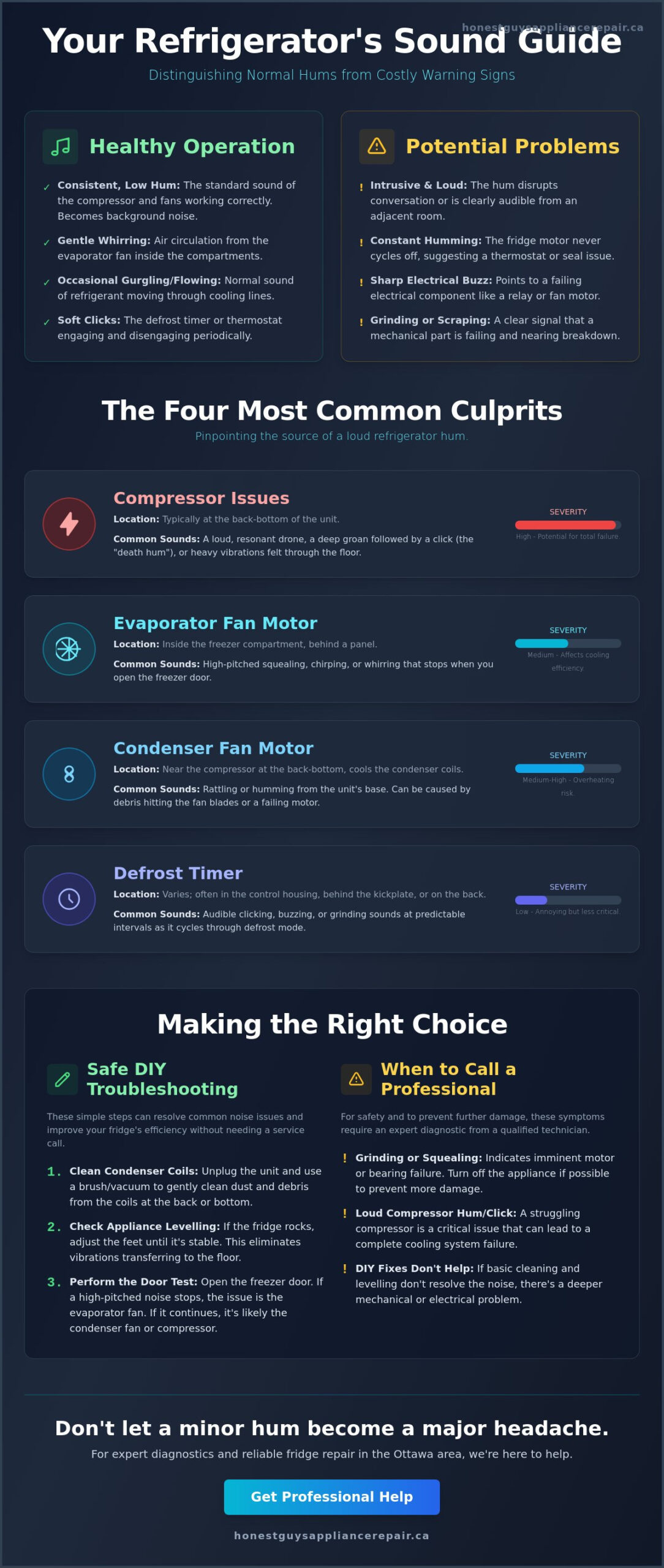
Every refrigerator has a unique “voice” dictated by its internal components. When your unit is functioning properly, you should hear a gentle whirring. This is typically the evaporator fan moving air through the freezer and fridge compartments. You might also notice occasional gurgling or flowing sounds. These are perfectly normal; they occur as the system manages how refrigerators create cold air by moving refrigerant through the lines. Finally, a soft click every few hours is just the defrost timer engaging or disengaging. These sounds are rhythmic, predictable, and should never feel like they are taking over the room.
When the Hum Becomes a Headache
How do you know when a sound is a symptom of a larger problem? A good rule of thumb involves your own comfort and the layout of your home. If the hum is loud enough to disrupt a conversation or if you can hear it clearly from the neighbouring room, the unit is likely struggling. Standard kitchen acoustics shouldn’t be overwhelmed by a single appliance. A hum that never stops is another red flag. Usually, this indicates a faulty thermostat or a compromised door seal, forcing the compressor to work overtime without a break.
Distinguishing between types of noise is also vital for an accurate fridge humming noise repair diagnostic. A mechanical hum sounds like a motor under load, often vibrating against the floor or walls. In contrast, a sharp electrical buzz often points to a failing component like a relay or a fan motor. If the pitch or rhythm of the noise changes suddenly or sounds like metal grinding on metal, your unit is sending a clear signal that a component is nearing the end of its lifespan. Address these shifts early to ensure your kitchen stays quiet and your groceries stay cold.
The Four Most Common Culprits Behind a Loud Fridge Hum
Identifying the source of the noise is the first step in deciding if you need a professional fridge humming noise repair. While many vibrations are normal operating sounds, a loud, persistent hum usually signals that a specific component is under stress. Most noise issues stem from four main areas: the compressor, the evaporator fan, the condenser fan, or the defrost timer. Each part has a distinct acoustic signature that tells a story about the health of your appliance.
Understanding these components helps you narrow down the problem before you even pick up the phone. A sound from the back-bottom of the unit suggests a different issue than a chirp coming from inside the freezer. By paying close attention to the location and rhythm of the sound, you can provide vital information to a technician or even handle a simple cleaning yourself.
If you are unsure about the sounds you are hearing, you can discover PrimeTech Appliance Repair for expert guidance on identifying common appliance malfunctions.
Compressor Issues and Vibrations
The compressor is the heart of your cooling system and the most expensive component to replace. It’s the part you simply can’t afford to ignore when it starts sounding “off.” Often, a loud hum doesn’t mean the motor itself is dead. Instead, the rubber mounting grommets that support the compressor may have hardened or cracked over time. When these cushions fail, the compressor’s vibrations transfer directly to the metal chassis, creating a loud, resonant drone. Have you noticed a deep groan followed by a sharp click? This “death hum” suggests the compressor is struggling to start; this is a clear sign that you should consult a specialist in fridge repair before the unit stops cooling entirely.
Fan Motor Failures in the Freezer and Base
Fans are the second most common source of noise in a modern refrigerator. The evaporator fan motor, located in the freezer section, often produces a high-pitched hum or a rhythmic chirping when it begins to fail. If ice builds up around the fan blades, you’ll hear a distinct thumping sound as the blades strike the frost. This usually points to a defrost system failure rather than a broken fan motor.
In Ottawa, our homes often deal with significant dust and pet hair buildup, which creates a specific problem for the unit’s base. The condenser fan motor is the component responsible for dissipating heat from the coils. When pet hair and debris clog the area around the base, the fan has to work twice as hard to move air. This strain leads to a loud, laboured hum that can eventually cause the motor bearings to seize. Finally, don’t overlook the defrost timer. If this mechanical part fails, it can produce a strange, rhythmic buzzing or clicking sound that persists even when the fans are quiet. Addressing these issues early prevents the “domino effect” where one failing part puts terminal stress on the entire system.
Diagnostic Guide: Mapping the Sound to the Source
Your refrigerator is a complex machine, but it often tells you exactly what’s wrong if you know how to listen. Before you assume you need an expensive fridge humming noise repair, you can perform a few simple tests to narrow down the source of the sound. Use your ears as your primary diagnostic tool. Is the noise coming from the back-bottom, the inside-back, or the very top of the unit? Pinpointing the physical location is the fastest way to identify which component is struggling.
Start with the “Door Test.” While the fridge is humming, simply open the refrigerator door. If the noise stops immediately, the issue is likely internal, specifically related to the evaporator fan. If the sound continues, move to the “Vibration Test.” Firmly press your hand against the side or back of the cabinet. If the hum dampens or changes pitch, you might just have a loose panel or a component vibrating against the frame. Finally, perform a “Floor Check.” Ottawa homes, particularly older builds in areas like Westboro or the Glebe, often have slightly uneven flooring. If the unit isn’t perfectly level, the compressor’s natural movement can turn into a loud, structural rattle. A clogged defrost drain can also cause water to pool beneath the unit, so if you notice moisture alongside the noise, our guide on fridge leaking water repair Ottawa homeowners rely on can help you trace that issue to its source as well.
Internal vs. External Noises
Distinguishing between internal and external sounds helps determine the urgency of the repair. If the noise stops when the door opens, the evaporator fan is the likely culprit, as it usually shuts off when the door is ajar. However, if the noise persists and seems to originate from floor level, you should inspect the condenser fan or the drain pan. A loose or rattling drain pan can easily mimic a serious mechanical hum, yet it only requires a simple adjustment to fix. Understanding this distinction prevents you from worrying about a motor failure when the solution is actually quite simple.
Rhythmic vs. Constant Humming
The type of sound is just as important as the location. A constant, unwavering hum usually points toward an electrical component or a motor that is energized but unable to turn, such as a seized fan motor. Rhythmic humming, on the other hand, usually indicates that something is physically hitting a moving part. This could be a fan blade nicking a piece of ice or a copper line vibrating against the cabinet. If you hear a loud, intermittent buzz from the back, check your ice maker. If the water line is turned off but the ice maker remains switched on, the water valve will buzz loudly as it attempts to draw water that isn’t there. This simple check can save you the cost of a service call.
DIY Troubleshooting vs. Professional Repair: Making the Right Choice
Deciding whether to tackle a fridge humming noise repair yourself or call in an expert depends on the complexity of the issue and your comfort with basic maintenance. Some sounds are simply the result of poor airflow or an unlevel cabinet. Others signal a deeper mechanical failure that requires specialized tools and technical expertise. Understanding where your ability ends and the risk begins is essential for both your safety and the longevity of your appliance.
Safe DIY maintenance is mostly about cleaning and positioning. However, there is a hard line when it comes to the internal electronics and the sealed cooling system. Never attempt to tamper with high-voltage capacitors or the refrigerant lines. Capacitors can hold a lethal electrical charge even after you’ve pulled the plug, and handling refrigerant requires specific certifications to ensure environmental safety and personal health.
Quick Fixes You Can Try Today
Start with the basics to see if you can silence the unit without a service call. Vacuuming the condenser coils is a simple way to quiet a hardworking compressor. In Ottawa homes with pets, these coils often become carpeted in fur and dust, forcing the motor to run hotter and louder than necessary. You should also check for “fridge clutter.” Sometimes a glass jar vibrating against the interior wall creates a deceptive hum that sounds like a mechanical fault. Finally, ensure there is at least one inch of clearance around the unit. Without proper airflow, the fans will cycle more frequently and at higher speeds to compensate for the trapped heat.
Don’t forget to check the feet. If your fridge isn’t perfectly level, the natural vibration of the motor can turn into a structural rattle. Adjust the levelling legs until the unit is stable and the noise stops transferring into your kitchen floor.
When to Call an Honest Ottawa Technician
You should seek professional help if the hum is accompanied by a lack of cooling or heavy frost buildup in the freezer. These are signs that the system is no longer balanced. Urgent warning signs include a “burning” odour or any audible electrical sparking or popping. These symptoms suggest an electrical short that could lead to a fire if left unaddressed.
For many Ottawa homeowners, we suggest the “50% Rule.” If the estimated repair cost exceeds half the price of a new unit and the fridge is over ten years old, a replacement might be the more practical path. Before making that call, it helps to understand the full picture of refrigerator repair vs replacement cost Ottawa families face in 2026, so you can calculate the true value of every remaining year of your appliance’s life. However, a professional diagnostic often reveals that the fix is much simpler and more affordable than you feared. If you’re tired of the noise and want a definitive answer, book a professional fridge repair to avoid the guesswork of DIY parts replacement.
Reliable Fridge Repair Services in Ottawa: The Honest Guys Difference
A loud, vibrating kitchen doesn’t have to be your new normal. When DIY steps like cleaning coils or levelling the unit don’t solve the problem, you need a partner who values your time and your budget. We specialize in providing a definitive fridge humming noise repair that addresses the root cause rather than just masking the symptoms. By focusing on the exact source of the vibration, we ensure your fridge humming noise repair is handled with technical precision. Our team brings expertise across all major brands, including Samsung, Whirlpool, LG, and KitchenAid, ensuring that your specific model receives the precise care it requires.
We believe in prioritizing the longevity of your appliance over quick, temporary patches. If a part is nearing the end of its life, we’ll tell you. If a repair is more expensive than the unit is worth, we’ll be honest about that too. Our goal is to provide a quiet kitchen and the peace of mind that comes from knowing your groceries are safe—a level of reliability often found in the professional-grade cool rooms designed by MAK Refrigeration. Our technicians strive to bring that same standard of operational efficiency to every residential repair.
Serving the Ottawa Community with Integrity
Our roots run deep in the National Capital Region. From the growing neighbourhoods of Nepean, Kanata, and Barrhaven to the established communities in Stittsville, Orleans, and Gloucester, we understand the needs of local homeowners. We’ve built our reputation on a “straight-talk” philosophy. This means clear communication and transparent diagnostics with every visit. When you need a reliable fridge repair service to handle a persistent humming issue, you can count on us to treat your home with the same respect we’d show our own neighbours. We don’t believe in aggressive sales tactics; we believe in helping you make the best decision for your household.
What to Expect During Your Service Appointment
We’ve designed our service process to be as stress-free as possible. Every appointment begins with a thorough multi-point inspection of your refrigerator’s vital components, including the compressor, fans, and electrical relays. Our technicians use precision tools to measure motor draw and compressor health, providing data-driven insights instead of guesswork. This methodical approach ensures we identify exactly why the unit is struggling before we suggest a solution.
Once the inspection is complete, you’ll receive a clear, written estimate before any repair work begins. We want you to feel confident in the solution we propose. There are no hidden fees or surprise charges; just honest work at a fair price. We take pride in fixing it right the first time so you can get back to your routine without worry. Ready to get your kitchen back to its quiet, functional self? Book your professional fridge diagnostic in Ottawa today!
Restore Your Kitchen’s Quiet and Peace of Mind
A persistent hum is more than just a background nuisance; it’s your refrigerator’s way of asking for attention. By identifying whether the sound is a simple vibration or a struggling compressor, you can take action before a minor annoyance turns into a major breakdown. Remember that while cleaning coils and levelling the unit are excellent first steps, internal mechanical issues require a steady, experienced hand to resolve safely.
With over six years of dedicated service in the Ottawa region, our owner-operated team understands the value of transparency and craftsmanship. Our specialized technicians work on all major residential brands, ensuring your diagnostic is accurate and your repair is built to last. If you’re ready for a definitive fridge humming noise repair, we’re here to provide the straight talk and technical expertise you deserve. Don’t let a failing motor put your groceries at risk.
Schedule Your Honest Fridge Repair in Ottawa Now
We look forward to helping you get your kitchen back to its quiet, reliable self.
Frequently Asked Questions
Is it worth repairing a 10-year-old fridge that is humming loudly?
Whether a 10-year-old unit is worth fixing depends on the 50% rule. If the repair cost is less than half the price of a new refrigerator, a fridge humming noise repair is usually a smart investment. Many high-quality units can last 15 years or more with proper maintenance, so a minor part replacement often adds years to the appliance’s life. For a deeper breakdown of how to weigh these costs, our guide on refrigerator repair vs replacement cost for Ottawa homeowners provides a clear framework to help you decide.
Can a dirty condenser coil really cause a loud humming noise?
Dirty coils are a primary cause of excessive noise in many Ottawa homes. When dust and pet hair insulate the coils, the compressor cannot release heat efficiently. It must run at a higher intensity for longer periods, which results in a much louder and more persistent hum that can be heard throughout the house.
What happens if I ignore the humming noise in my refrigerator?
Ignoring the sound usually leads to a more expensive breakdown. A small vibration can eventually cause terminal damage to the compressor or result in a complete loss of cooling. You will likely also see a noticeable increase in your monthly hydro bill as the unit struggles to maintain the correct internal temperature.
Why does my fridge hum loudly but stop when I open the door?
This behaviour points directly to the evaporator fan motor located inside the freezer compartment. Most refrigerators are programmed to stop the fan when the door opens to prevent cold air from escaping. If the noise cuts out immediately when you pull the handle, you have confirmed the fan motor is the component that needs attention.
How much does it typically cost to fix a humming fridge in Ottawa?
Repair costs in the Ottawa region vary based on the specific part that has failed and the brand of your appliance. A simple fan replacement is much more affordable than a compressor repair. We recommend starting with a professional diagnostic to get a clear, written estimate before you commit to any major mechanical work.
Can a humming noise be caused by my fridge being unlevel?
An unlevel fridge is a very common source of structural noise. If the appliance feet aren’t making solid, even contact with your kitchen floor, the compressor’s natural movement will cause the entire cabinet to rattle. You can often solve this yourself by adjusting the front levelling legs until the unit is stable and the vibration stops.
Is a buzzing sound from the back of the fridge dangerous?
A buzz isn’t always dangerous, but it does require investigation. If the sound is accompanied by a burning smell or visible sparks, you should unplug the unit immediately and call a professional. However, a buzz from the back often just means the ice maker is trying to draw water from a valve that has been turned off. A faulty water inlet valve can also be a source of leaks, so if you spot any moisture near the back of the unit, our fridge leaking water diagnostic checklist for Ottawa homeowners can help you identify whether the valve is the root cause.
How often should I have my refrigerator professionally maintained to prevent noise?
Scheduling professional maintenance once a year is the best way to prevent unexpected noises and mechanical failures. A technician can clean the hard-to-reach areas and catch worn bearings before they seize completely. Regular care ensures your appliance runs quietly and stays energy-efficient for its entire lifespan.